


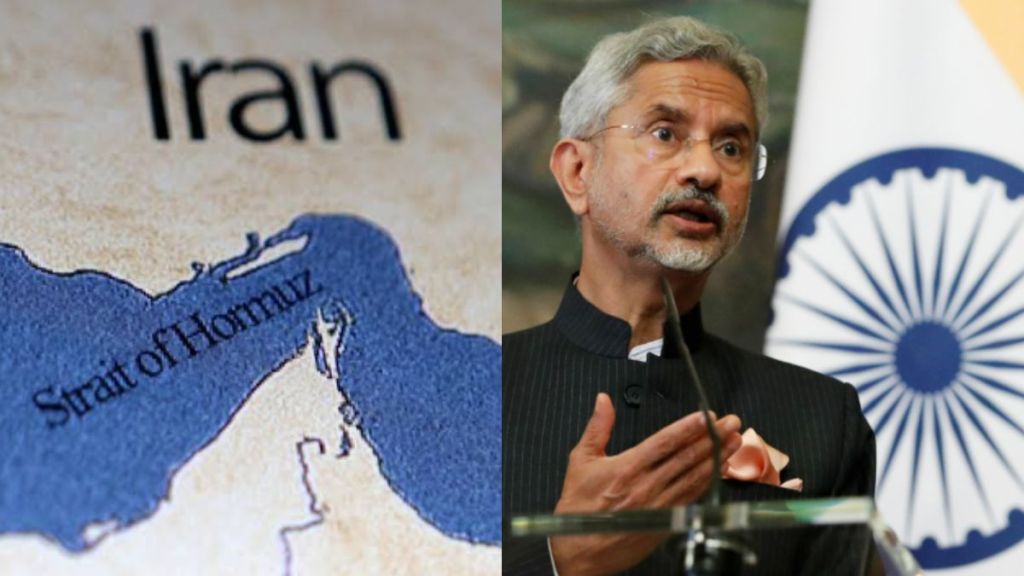

The United States and Iran are nowhere closer to resolving the West Asia conflict, which has now prolonged over seven months and continues to hamper the global flow of energy supplies. As the two sides drag out their tussle for authority over the critical maritime waterway, the Strait of Hormuz, confirmed tanker attacks in the region have surged to wartime highs.
Despite the surge in attacks, oil prices still fell Monday due to a separate global crisis development. International benchmark Brent crude futures for December delivery dropped 1.65% to $102.99 a barrel, while US West Texas Intermediate futures for November slumped 1.92% to $90.09 a barrel, CNBC reported. At the time of writing (8:20 am IST), Brent price was $102.97.
The sudden drop was tied to US President Donald Trump’s announcement of a new diesel deal between the US and Russia to ease global market supply. He also claimed that Russia and Ukraine will no longer target each other’s infrastructure and facilities. Simultaneously, Iran contacted Saudi Arabia after a slew of Houthi attacks on the kingdom, especially Riyadh’s international airport.
India also delivered more devastating news amid the deepening Hormuz crisis as it condemned the attacks on commercial vessels in the region on Saturday.
India issues statement on vessel attacks in Strait of Hormuz
Issuing a statement Sunday, the Ministry of External Affairs shed light on two different vessels, MT PETRO DOLPHIN (a Nicaragua-flagged tanker) and MT VALTHERA (a Marshall Islands-flagged tanker), which were struck in the Hormuz region.
Each vessel had 11 Indian seafarers onboard. While two of the 11 Indian nationals on the former were reported missing after a drone hit the tanker, all 11 Indian seafarers onboard MT VALTHERA were reported safe.
The Embassy of India in Muscat also separately stated that it was closely monitoring the situation related to the Nicaragua-flagged tanker and coordinating with the Omani authorities and ship management companies so that the rescue of missing Indians could be easily facilitated.
“The safety and security of Indian seafarers remain a priority for the Government of India,” the MEA added in the statement. “The recurring attacks on commercial shipping in the region are deeply concerning and risk further aggravating an already volatile situation.”
The Indian government reiterated the need for immediate de-escalation, pushing for a resolution to the ongoing conflict through dialogue and diplomacy.
“Attacks on commercial vessels, seafarers and civilian infrastructure must cease. Freedom of navigation and the safe, unimpeded flow of maritime commerce through international waterways, in accordance with international law, must be upheld,” the MEA stated.
Merely days ago, India’s foreign ministry reported that 12 crew members were injured after an unknown projectile hit On Peace, a Panama-flagged oil tanker, as it was passing through the Strait of Hormuz.
Hormuz tanker attacks hit war-time high
According to maritime security sources tracking incidents, attacks on tankers passing through the Strait of Hormuz hit their highest level last week of any week since the war began in late February, Reuters reported.
Analytics firm Kpler’s revised shipping data revealed that only seven commodity vessels passed the strait on Tuesday, the lowest figure since July 23, in light of the soaring attacks.
“Crude crossing the strait fell 27% from a wartime high the week before, to at least 10.1 million barrels a day,” Kpler analysts Emmanuel Belostrino and Yui Torikata wrote in a note on October 6. “That is back to its September average, but 74% of its pre-war level.”
On the contrary, export from the Gulf of Oman coast and the Red Sea increased to 6.7 million bpd, more than twice pre-war levels, the analysts added, as cited by Reuters. This helped compensate the supply loss tied to Hormuz, keeping overall exports of Middle East crude at the pre-war level.
Data from three maritime security sources who analysed incidents based on information received from the area indicated at least 12 attacks on oil, LNG and liquefied petroleum gas tankers around the Strait of Hormuz in the week of September 28-October 5, 2026, as cited by Reuters.
In the meantime, separate data put together by the United Nations’ shipping agency, the International Maritime Organisation (IMO), showed nine incidents involving vessels in the same week.
Alluding to the spate of attacks in the Hormuz Strait, the Joint Maritime Information Center, which is a coalition of US-allied militaries headquartered in Bahrain monitoring regional maritime security, issued a warning to commercial ships in a Thursday notice: “These actions continue to demonstrate Iran’s intent to assert [its] presence along key transit lanes and maintain pressure on transiting vessels.”
How much oil is crossing Hormuz now?
As has long been established, the Strait of Hormuz was responsible for the flow of the world’s 20% of oil and LNG supply before the war started.
Even as attacks continue, crude oil exports from the Middle East somewhat returned to pre-war levels in September. The massive shift was largely triggered by the US military escorting ships through the channel using a route along Oman’s coast. Maritime intelligence firm Kpler’s data recently revealed that daily oil flow from the Middle East hit 92% of its pre-war baseline in the final week of September. The flow of refined products, including diesel, however, still remains severely impacted.
Kpler shared that at least 16.5 million barrels per day left the Hormuz region in September. This equalled the pre-war average, excluding Iran, and is 10.5 million barrels per day higher than August’s monthly average, i.e. the first weeks of the Iran war.
The September figures supplied by Kpler noted that about 40% of the total oil exported from the region, without crossing the strait, went through overland pipelines to ports on the Red Sea or the Gulf of Oman, as cited by the BBC. The figure was up from 17% before the war. The report, citing Kpler data, further showed that more than 70% of the crude oil passing through the waterway in August was transferred from “shuttle tankers” to other vessels in the Gulf of Oman.
Iran, however, hasn’t loaded any crude oil exports since late August due to the ongoing US naval blockade of Iranian ports, according to Kpler data released last week and as cited by CNBC.
Kpler data suggested that just under 20% of crude is exiting the region from ports on the Red Sea at the end of Saudi Arabia’s East-West pipeline, recording more than four million barrels per day of exports, the BBC reported. Additionally, almost a quarter of all crude bypassing the region is being piped past the strait to terminals along the Gulf of Oman, particularly the UAE city of Fujairah.
Iran presented a proposal to the US during the UN General Assembly, pushing for the reopening of the waterway within seven days if conditions were met.
US Central Command last week rejected Iran’s claims that the Strait of Hormuz was closed, stating that 20 million barrels of crude had passed through the waterway. According to a fresh statement issued by Iran’s security chief, Mohsen Rezaei, as quoted by state media on Sunday, America’s response to those conditions was “insufficient.” The United States is said to have replied to Tehran’s proposal via Qatari intermediaries.
As Secretary of the Supreme National Security Council, Rezaei said, “We presented seven conditions to the Americans and clearly stated that the Strait of Hormuz would not be opened to them, and no negotiations would take place, until these conditions are met,” adding, “In their response, they have accepted some of our conditions, while others remain unclear.”