


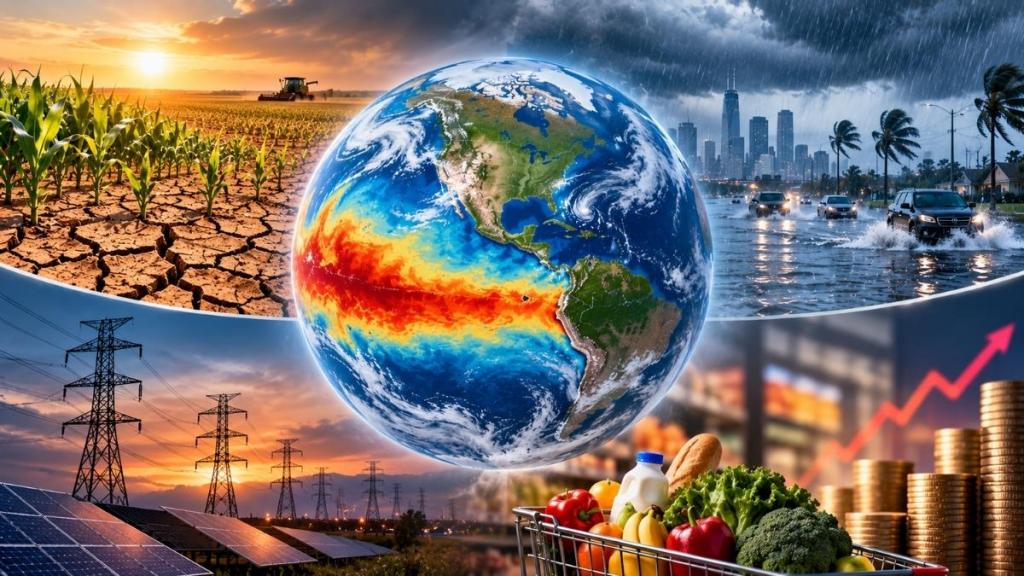

A failed monsoon, a prolonged drought or heavy rainfall can mean the difference between a good harvest and a failed one for millions of farmers. With a potentially powerful El Nino expected in 2026-27, these risks could become more severe, affecting food production, pushing up prices and leaving millions struggling to afford basic necessities.
A new report by Oxfam International, ‘Disaster Divide: How climate chaos deepens inequality and enriches the few’, warns that a ‘Godzilla’ El Nino, forecast to be among the strongest on record, could drive temperatures to record highs and bring drought to several regions.
The effects of El Nino are expected to continue through the end of 2026 and into 2027. The concern is that food systems are already under pressure from changing weather patterns, conflict and economic difficulties. A strong El Nino could make the situation worse, particularly for people who depend on farming for their income and food.
Echoes of 2015-16: Millions face food insecurity
The last El Nino of comparable strength occurred in 2015-16. According to Oxfam, around 60 million people were directly affected by the event. Agriculture and food security suffered major losses. The impact was also felt in people’s livelihoods, water supplies, sanitation and health. The report warns that similar effects could return over the next two years. The scale of the existing food crisis is already worrying. According to estimates by the Famine Early Warning Systems Network (FEWS NET), between 115 million and 125 million people would require urgent food assistance by December 2026. The estimate was made in June 2026. The report also notes that several countries were already facing the risk of famine.
Agriculture under pressure: Small farmers most vulnerable
Changing rainfall patterns and rising temperatures are affecting agricultural production across the world. Rain may arrive too early, too late or in quantities that crops cannot withstand. In some areas, prolonged dry spells are reducing the amount of food farmers can produce.
Oxfam says around 2.3 billion people, most of them in the Global South, faced moderate or severe food insecurity in 2024. The problem is particularly serious for communities that depend on agriculture and natural resources for their livelihoods. Climate-related shocks are also affecting food consumption and production in low-income households.
The report notes that floods, cyclones and other climate shocks, along with conflict, have pushed more than 87 million people into food insecurity across East Africa, southern Africa and the Middle East. Smallholder farmers are among those most vulnerable to changing weather conditions. Many depend on rainfall and have limited access to irrigation, crop insurance, credit and other resources that could help them deal with crop losses. Their farms are often located in rain-fed, dryland, mountainous and coastal areas, making them more exposed to droughts, floods and unpredictable rainfall.
The report estimates that around 1.7 billion people live in areas where food insecurity is linked to crop yield losses and land degradation. Fishing communities and pastoralists are also at risk. Their livelihoods depend on marine and freshwater resources, grazing land and seasonal weather conditions.
Larger agricultural businesses, meanwhile, are better placed to invest in irrigation, technology, insurance and other measures to protect their production. Smaller farmers often cannot afford these investments.
This difference in access to resources means that a failed harvest can have a much bigger impact on a small farming household than on a large agricultural business.
Economic inequality: Rising food prices hit poorer households hardest
A fall in food production can push prices higher, but the impact is not the same for every household. Poorer families spend a larger share of their income on food and have fewer savings to deal with price increases. Oxfam points out that in the United States, the poorest 20% of the population spend around 33% of their income on food. The figure is just 8% for the highest-income group.
The report also gives examples of how extreme weather has affected food prices. Droughts in Brazil and Vietnam contributed to higher coffee prices in 2024. Heavy rainfall in Indonesia and damage to cocoa crops in West Africa also affected supplies and prices.
When food becomes more expensive, families may have to cut spending on healthcare and education to meet their daily needs. Some may also reduce the quantity or quality of food they consume.
Women and children can face greater difficulties during such periods. The report notes that some households prioritise food for men and children, leaving women with less to eat.
Climate disasters could increase inequality
Oxfam argues that climate disasters affect poorer communities more severely because they have fewer resources to deal with the crisis. Wealthier people can move to safer locations, insure their homes and use their savings to recover from losses. Poorer households often live in areas more exposed to floods, droughts and extreme heat. They also have fewer resources to rebuild their lives after a disaster. Repeated climate shocks can push these families further into poverty and make it harder for them to recover before the next crisis hits.