


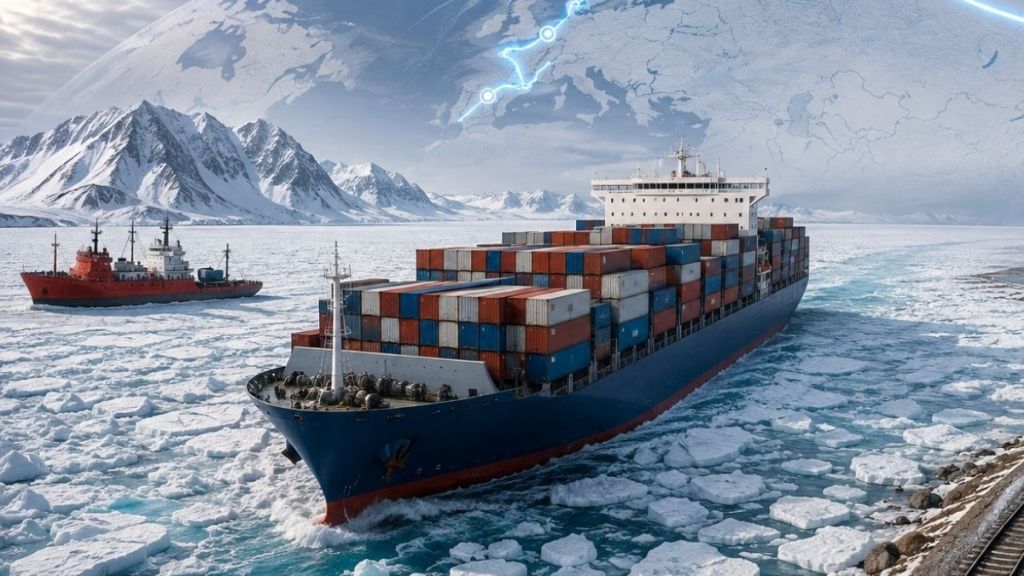

Greenland is attracting more cruise passengers eager to see its icebergs, glaciers and remote Arctic landscapes. But rising cruise activity is raising questions about emergency preparedness in a region where settlements are scattered, infrastructure is limited and rescue teams may have to travel long distances.
Greenland and its surrounding waters received 94,000 cruise passengers across 232 voyages in 2025, with up to 555 port visits, according to The Arctic Council. The passenger count was almost twice Greenland’s population.
A Business Insider report highlighted the risks of navigating Greenland’s waters, including drifting icebergs, sea ice, sudden storms and strong winds. A major accident could require the evacuation of hundreds of passengers, medical assistance, transport to shore and emergency accommodation, potentially alongside a response to environmental damage.
These challenges were discussed at the Arctic Council’s “Cold Seas, Critical Gaps” event, held from October 13 to 15 in Torshavn, Faroe Islands. The event focused on preventing passenger-ship accidents, strengthening emergency preparedness and identifying gaps in Arctic and North Atlantic rescue capabilities.
Why could a major cruise ship accident be difficult to manage in Greenland?
Greenland’s vast coastline and remote settlements could complicate a large-scale rescue. If a ship encounters trouble far from a major town, authorities may need to transport survivors over long distances while arranging medical care, shelter and onward travel. The number of people involved could overwhelm the resources of a small community.
The 2019 Viking Sky incident off Norway shows the scale of such an operation. The cruise ship, carrying more than 1,300 passengers and crew, lost power in rough seas. Rescuers used up to six helicopters to evacuate almost 500 people over about 18 hours, according to an Arctic Council account published in August 2019.
Despite the availability of rescue resources and relatively close access to populated areas, the operation required extensive coordination between public agencies, emergency services, the offshore industry and volunteers.
Owe Froland, a rescue coordination centre controller involved in the operation, told the Arctic Council, “If you don’t have the infrastructure, you don’t have the possibility to handle all the passengers and bring them to shore.”
Peter Holst-Andersen, then chair of the Arctic Council’s Emergency Prevention, Preparedness and Response Working Group, described the incident as a “best case scenario” compared with a disaster in more remote Arctic waters.
Conditions in Greenland could add further complications. Icebergs, sea ice and severe weather can make navigation and rescue operations more difficult. A serious accident could also threaten sensitive Arctic ecosystems through fuel spills or other pollution, requiring authorities to manage environmental damage alongside passenger safety.
What safety measures and rescue gaps have authorities identified?
Visit Greenland, the country’s national tourist board, warns that icebergs can break apart or overturn without warning. Glaciers can release large blocks of ice into the sea, generating waves that may endanger nearby vessels and coastlines.
Its guidance advises vessels to remain at least 200 metres from glaciers, preferably farther away, and recommends a minimum safe distance of 900 metres from icebergs in the Ilulissat Icefjord area. It also advises against taking passengers close to glaciers in small boats and recommends certified passenger vessels operated by crews familiar with local conditions.
According to Visit Greenland, passenger ships carrying more than 250 people must use a local pilot when sailing in Greenland’s national waters.
However, safe navigation is only one part of emergency preparedness. A major incident could require helicopters, rescue boats, medical teams, communications systems and suitable facilities on shore. Authorities would also need to coordinate evacuation, accommodation and onward transport for survivors.
The Viking Sky rescue demonstrated how cooperation between public agencies, private operators and volunteers can support an emergency response. Similar coordination could be essential in remote Arctic waters, where local resources may be limited and assistance from other countries could be required.
Cruise operators also need to coordinate with the communities they visit. Visit Greenland says that ship arrivals can place significant demands on small settlements and advises operators to inform destinations of port calls in advance and communicate schedule changes promptly.
The available sources do not establish that Greenland cannot handle a major ship disaster or provide a definitive assessment of its overall rescue capacity. They do, however, show challenges involving remoteness, weather, medical facilities and coordination.