


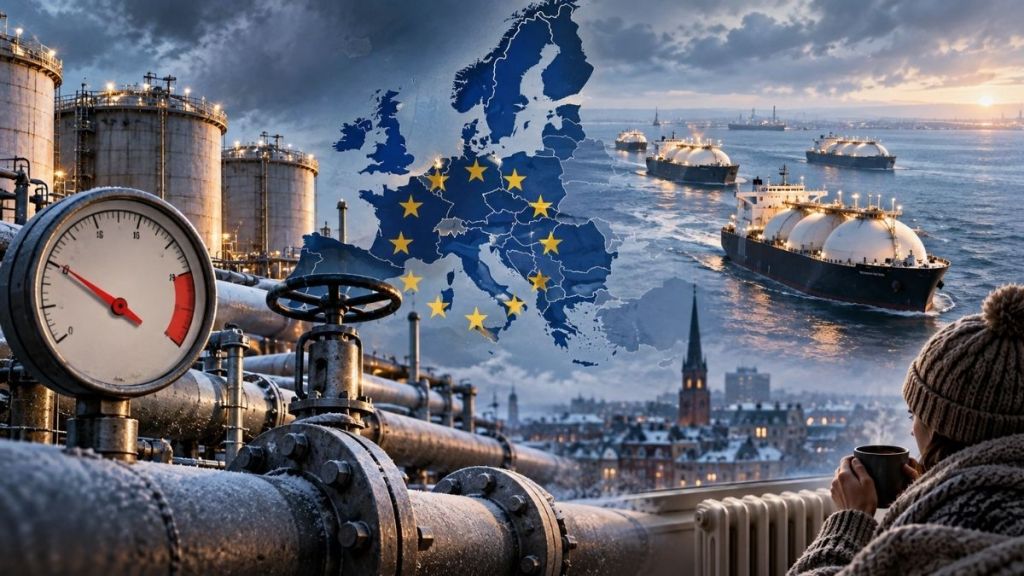

Europe is heading into winter with gas storage well below its normal seasonal level, leaving the region with less room to absorb a cold winter, supply disruption or a surge in demand for liquefied natural gas (LNG).
European gas storage facilities were about 69% full on September 17, compared with a five-year average of around 85% for this time of year, according to Gas Infrastructure Europe, reported Reuters. Germany and the Netherlands together account for about 35% of the EU’s storage capacity, making their relatively low stock levels particularly important for the regional market.
Europe’s benchmark gas price was around €81 per megawatt-hour on September 17, about 150% higher than a year earlier, reported Reuters. Morgan Stanley has warned that prices could reach €100 per MWh depending on winter weather.
The immediate risk is that if temperatures fall sharply or supplies are disrupted, Europe may have to compete more aggressively for LNG cargoes to replenish stocks, pushing prices higher.
Why is Europe entering winter with less gas?
Europe normally builds up gas inventories during the warmer months so that storage can be drawn down when heating demand rises in winter. This year, that restocking process has been slower.
Rystad Energy said in a September 10 white paper that European storage was about 67% full, compared with a five-year average of roughly 84%. Germany’s storage level was around 55%, according to Rystad.
The remaining window for injections is also becoming narrower as winter approaches. That leaves European buyers facing a difficult balance: they need to refill storage, but buying large volumes when the market is already tight can push prices higher.
The geopolitical situation has made that calculation harder. Disruptions linked to the war with Iran have added uncertainty to energy markets, while LNG flows through the Middle East remain vulnerable to shipping disruptions.
Europe has become much more dependent on LNG since reducing its reliance on Russian pipeline gas after Russia’s invasion of Ukraine in 2022. That means European buyers now compete with Asian markets for flexible LNG cargoes.
Asian demand is already showing signs of strengthening. Rystad said buyers in Asia, including India and Bangladesh, had returned to the LNG market after previously resisting prices of $27-$28 per million British thermal units. If Asian buyers increase purchases, some cargoes that might otherwise have moved towards Europe could be diverted to Asia.
That could leave Europe paying more to secure supplies even if global LNG production remains sufficient.
The Strait of Hormuz adds another layer of risk. Rystad said LNG traffic through the waterway remained well below pre-war levels in September. Any prolonged disruption could further reduce the amount of LNG available to global buyers.
What happens if winter demand rises?
A colder-than-normal winter would increase gas consumption for heating and electricity generation and force European countries to draw down storage faster. But even a normal cold winter could put pressure on inventories.
Jack Sharples of the Oxford Institute for Energy Studies told Reuters that a normal cold winter could leave European storage “very heavily depleted”. Europe could then need to import more LNG in 2027 to rebuild its reserves, potentially keeping global LNG markets tight even after winter ends.
That makes the problem bigger than household heating bills. Gas remains important for Europe’s power system, so higher gas prices can feed into electricity prices. Expensive energy can also raise production costs for industries such as chemicals, metals, automobiles and building materials.
Germany faces particular pressure because of its large energy-intensive industrial base. Higher energy prices can also complicate the European Central Bank’s inflation fight. Research from the Bank of Italy published in June found that gas-price shocks can produce stronger and more persistent inflation than oil-price shocks, with effects extending into underlying inflation.
That creates a difficult policy trade-off. Higher energy costs can push inflation higher while simultaneously reducing household spending and putting pressure on industrial activity.
ECB policymaker Peter Kazimir told Reuters that his focus had shifted from oil and fuel prices towards gas and electricity prices.
Governments also have to decide how much support to provide households and businesses.
Subsidies, tax reductions and other measures can reduce the immediate impact of higher energy costs, but they also put pressure on public finances. Italy, for example, said it would scrap road tax for 14.5 million cars and motorcycles from next year at a cost of more than €2 billion, reported Reuters.
The biggest change in Europe’s energy market since the 2022 crisis is its increased dependence on global LNG. That has given Europe more flexibility than when it relied heavily on Russian pipeline gas, but it has also exposed the region to competition from buyers elsewhere.
If Asian demand rises at the same time that Middle Eastern LNG flows remain disrupted, European buyers would have to pay a premium to attract cargoes.
Shipping costs are another variable. Longer journeys, higher insurance costs and disruptions around major maritime routes can make each LNG cargo more expensive.
The same problem applies to the Strait of Hormuz, where any sustained disruption could affect LNG supplies from major producers in the Middle East.
Europe therefore needs storage, imports and stable shipping routes to work together. A problem in any one of those areas can put additional pressure on the others.
Is Europe facing another 2022-style energy crisis?
Europe has diversified its energy supplies since the 2022 crisis and is less dependent on Russian pipeline gas. That provides a stronger starting position than it had four years ago. But the region is entering this winter with a smaller storage buffer.
That means the impact of any new disruption will depend heavily on three factors: weather, LNG availability and how quickly storage can be rebuilt.
A cold winter would increase demand. Stronger Asian LNG purchases could intensify competition for cargoes. And continued disruption around Middle Eastern shipping routes could further tighten the market.
Morgan Stanley’s €100-per-MWh scenario is a forecast, not a certainty. Gas prices could remain below that level if winter weather is mild, LNG supplies increase or geopolitical tensions ease.
But Europe has less room for error than it would have had with storage closer to its normal seasonal level.
For households and businesses, the immediate concern is therefore not necessarily a repeat of the 2022 crisis. It is the possibility that a combination of low storage, tighter LNG competition and another supply disruption could turn an already expensive gas market into a fresh winter price shock.