



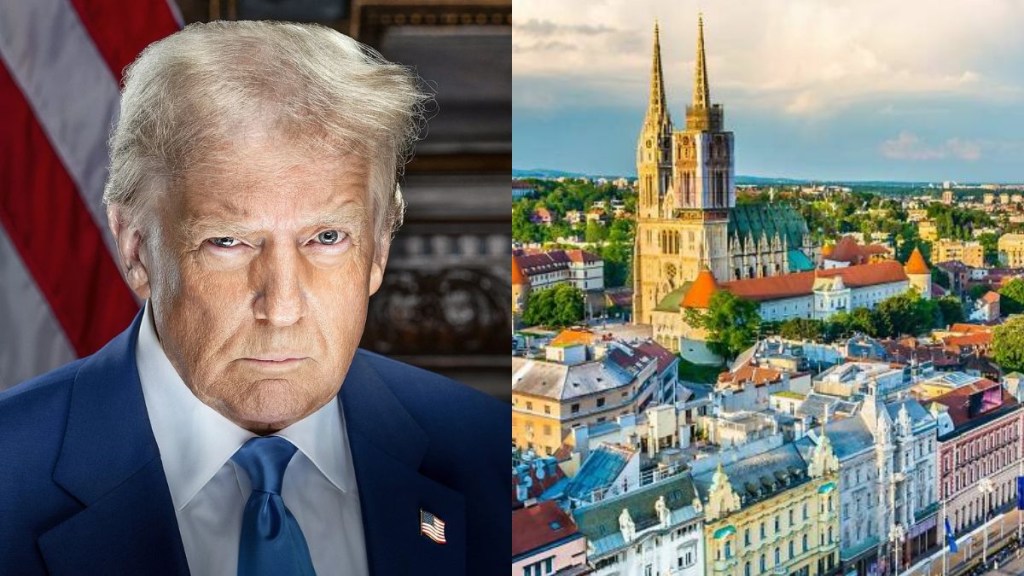
US President Donald Trump has been selected as the Europe’s most powerful person. POLITICO selected the most powerful people in Europe by examining who is truly shaping events on the continent in the year ahead.
The newsroom evaluated leaders not just by their titles or popularity, but by their real ability to influence decisions, shift policies and challenge the existing order.
According to Politico, months of reporting across Europe, multiple draft lists and newsroom debates helped narrow the choices. The final ranking explains who holds the most power to make things happen, or stop things from happening during a period of uncertainty, rather than who is most liked or traditionally important.
Donald Trump
According to Politico, Trump’s influence dominates European diplomacy, security and economic policy. European leaders view him as unpredictable and at times threatening, yet they remain reliant on the United States for military protection and stability.
His open outreach to Russia’s Vladimir Putin and public humiliation of Ukraine’s Volodymyr Zelenskyy rattled governments, along with his administration’s hardline messaging, including claims that Europe is facing “civilizational erasure” from migration has pushed the continent’s politics rightward.
The early months of his second term saw European leaders rushing to Washington in attempts to keep him appeased, even as he questioned NATO’s Article 5 and forced Brussels into an unbalanced trade deal that left Europe relieved but embarrassed.
Trump’s imprint is also reshaping Europe’s internal power dynamics and global identity. His administration has blurred the line between diplomacy and political campaigning, with Vice President JD Vance publicly criticising European governments and Trump amplifying far-right leaders like Marine Le Pen and Viktor Orbán.
His America First energy push has weakened Europe’s Green Deal ambitions and emboldened critics of EU regulations, from digital policy to artificial intelligence. As the US pressures allies while loosening oversight at home, European officials are quietly working on strategic autonomy, investing in defense and distancing themselves from Washington’s dominance.
Mette Frederiksen
Mette Frederiksen earned her place on the list because she has become one of Europe’s most influential leaders, shaping major policies across the continent. Her blend of strong welfare politics with strict migration and defense measures has been adopted by other countries, though her push for Europe to become more self-reliant on security has shifted the EU’s direction.
As Denmark’s prime minister, she has guided the bloc’s response to the war in Ukraine, driven higher defense spending and played a key role in migration talks. Even with political pressure at home, her ideas continue to reshape Europe, making her one of the most powerful voices in European policymaking today.
Friedrich Merz
Friedrich Merz earned his spot on the list because he has dramatically shifted Germany’s role in Europe at a crucial moment. As chancellor, he has broken long-standing national taboos by ramping up defense spending, borrowing aggressively and pushing for Europe to become less dependent on the United States.
His willingness to take risks, from seizing frozen Russian assets to challenging EU budget plans, has placed Germany back at the center of Europe’s political and security decisions. Despite domestic pressure and rising competition from the far right, Merz remains one of the few leaders with the economic strength and authority to influence the direction of the entire continent.
Marine Le Pen
Marine Le Pen was chosen for the list because she remains one of the most influential and disruptive forces in European politics, even while facing a legal ban from holding office.
Her far-right National Rally party is stronger than ever, and she continues to shape France’s political direction by pressuring President Emmanuel Macron and positioning her movement for major electoral gains.
With a real chance of returning through the appeals process or seeing her protégé Jordan Bardella succeed in her place. she is a central figure in Europe’s political future, capable of redefining the balance of power in France and across the continent.
Vladimir Putin
Vladimir Putin was included on the list because he continues to shape Europe’s security, politics and stability through constant military and hybrid aggression.
His actions, from the invasion of Ukraine to drone incursions and destabilisation campaigns, have forced European governments to rethink defense spending, alliances and national security.
Even under pressure from sanctions and the war’s costs, he remains one of Europe’s most influential disruptors, capable of throwing the continent off balance and compelling NATO and the EU to respond to his moves.
Nigel Farage
Nigel Farage was selected because he continues to shape Britain’s political direction without holding major office, driving national debates and influencing both the ruling and opposition parties.
His Reform UK party has surged in popularity, making him the most prominent challenger to Prime Minister Keir Starmer and pushing mainstream politics toward his positions on immigration and economic nationalism.
With a realistic chance of winning significant power under the U.K.’s electoral system, Farage remains one of Europe’s most disruptive figures, capable of reshaping the political landscape ahead of the next election.
Ursula von der Leyen
Ursula von der Leyen was chosen because she has effectively become Europe’s most assertive leader, often stepping into a role usually shared by national heads of state.
From vaccine deals and sanctions to major defense and trade decisions, she has expanded the power of the European Commission and taken charge during crises when others were politically weakened.
Despite criticism over her leadership style and transparency, her ability to influence Europe’s direction on security, Ukraine and relations with the United States makes her one of the continent’s most powerful decision-makers.
Mark Rutte
Mark Rutte was selected because he now plays a critical role in holding NATO together at a moment of historic vulnerability. As secretary-general, he is responsible for keeping the alliance united while managing two major challenges at once including Donald Trump’s unpredictable stance toward NATO and Vladimir Putin’s growing military pressure on Europe.
His experience as a calm and skilled negotiator, combined with his ability to maintain US support for Ukraine and push Europe to increase defense spending, makes him one of the most important figures shaping Europe’s security.
Giorgia Meloni
Giorgia Meloni was chosen because she has become one of the most influential far-right leaders in Europe, proving she can run a major EU country without destabilising the system.
Since becoming Italy’s prime minister, she has softened her rhetoric, supported Ukraine, and worked closely with EU partners, surprising critics who expected conflict with Brussels.
Her ability to blend nationalist politics with economic stability has made her a model for the rising far right across Europe and a key figure in shaping the continent’s political future.
Keir Starmer
Keir Starmer was selected because he has quickly reestablished the United Kingdom as a reliable partner in Europe and beyond, even while facing political challenges at home.
His calm, disciplined leadership style has helped repair the country’s image after years of instability, gaining respect from other leaders as he works closely with key partners on Ukraine and defense commitments.
Regardless of weak approval ratings and pressure from the rising Reform UK party, Starmer’s international influence and role in shaping Europe’s security priorities make him a significant figure on the continent.