


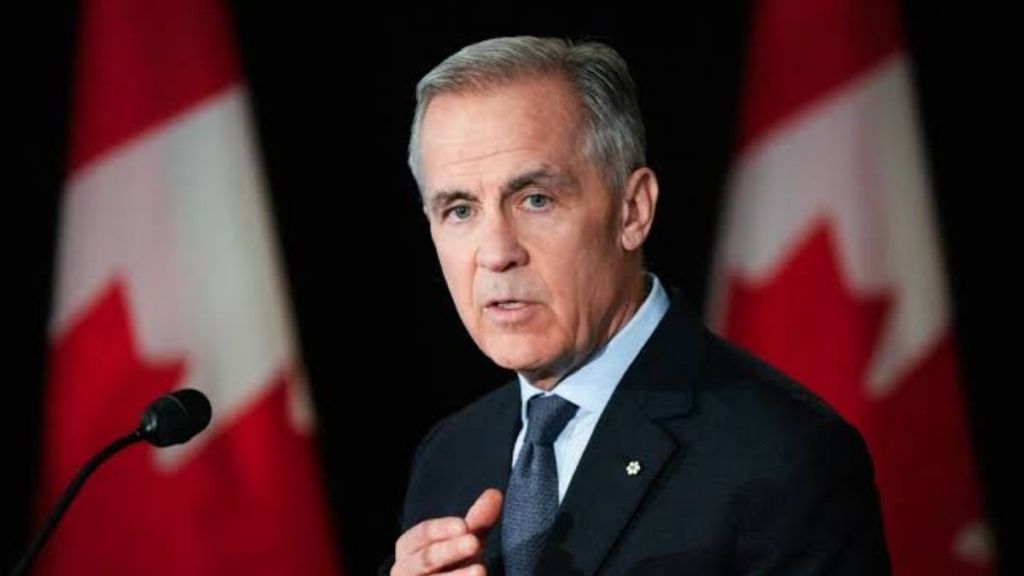

Alberta has voted against starting a process that could lead to separation from Canada, giving Prime Minister Mark Carney a political boost as he seeks to strengthen national unity amid trade tensions with the United States and President Donald Trump’s threats to make Canada the 51st US state. However, the result may not end separatist sentiment in the oil-rich western province, where resentment towards the federal government remains strong.
76% of voters supported remaining in Canada, while 24% backed starting a process that could lead to separation, based on unofficial results from Elections Alberta, reported AP. Over 1.8 million votes had been counted when AP reported the result early on Tuesday.
The vote was not a direct decision on independence. It asked voters whether Alberta should move towards a future binding referendum on leaving Canada. A victory for the separatist side would have opened the way for the next stage of that process.
“Albertans made a clear choice,” Carney said in a statement. “They chose unity, to build together, and to take care of each other. Above all, Albertans chose Canada,” he said, as reported by AP.
Why is Alberta result a political win for Mark Carney?
Carney, who grew up in Edmonton, Alberta’s capital, campaigned for the province to remain part of Canada. The result gives him an opportunity to shift the debate towards economic priorities, including trade diversification, infrastructure development and strengthening Canada’s position as a global energy supplier.
Canada faces US tariffs and repeated statements from Trump about making the country part of the United States. These tensions have increased pressure on Ottawa to demonstrate that Canada can remain united despite differences between provinces.
Alberta is central to that effort. The province is a conservative stronghold and a major centre of Canada’s oil industry. Its political priorities have often differed from those of the federal government, particularly over energy development and environmental regulations.
Economic grievances helped drive the separatist campaign. Some Albertans believe federal environmental policies have constrained the oil industry and that the province contributes more to the national economy than it receives in return, reported Reuters.
Carney has sought to address some of these concerns. He has reversed certain environmental policies and supported a proposed oil pipeline that could increase Alberta’s exports to Asian markets, reported Reuters. These measures form part of a broader effort to attract investment and reduce Canada’s dependence on the US market.
The referendum result gives Carney political room to pursue this agenda, but it does not mean that voters who opposed separation automatically support all his policies. Many may still want changes to energy regulations, federal spending and the distribution of economic benefits.
His political gain will therefore depend on whether the government can address the concerns that drove the separatist campaign. The vote has rejected the immediate route towards a separation referendum, but it has not resolved the wider dispute between Alberta and Ottawa.
Will Alberta’s separatist movement end after vote?
The result is a setback for the push towards a separation referendum, but separatist leaders have indicated that they intend to continue campaigning. Their argument is that the vote has exposed dissatisfaction with Ottawa, including among residents who may not necessarily want Alberta to become an independent country.
AP reported that Keith Wilson, a leader of the separatist movement, viewed the result as evidence that a substantial share of Albertans believe the province deserves better treatment.
“We don’t have the final results. I think the numbers are going to fluctuate, but it is fair to say that at least a quarter of Albertans feel that Alberta needs to be treated better,” Wilson said, according to AP.
Support for moving towards a referendum is not necessarily the same as support for independence. Some voters may have backed the proposal to press for greater provincial powers or changes to federal policies affecting Alberta’s energy industry.
A pre-vote Angus Reid poll, cited by Reuters, found that 66% of Albertans planned to vote to remain in Canada. Yet three in five respondents also believed the province’s separatist movement would never disappear.
“This issue is not going away now. Because the separatists are mobilized. They’ve networked. They’re connected,” Duane Bratt, a political scientist at Mount Royal University in Calgary, told Reuters.
The campaign has also created political challenges for Alberta Premier Danielle Smith. Although she opposes independence, she called the referendum after pressure from separatists within her governing United Conservative Party (UCP), giving the movement a prominent platform.
Smith welcomed the early result, saying: “Albertans have voted for a stronger Alberta in a united Canada,” according to AP. She said she would address the province on the result and Alberta’s future.
The vote could nevertheless reshape provincial politics. AP reported that Jeff Rath of the Alberta Prosperity Project said separatists would continue their campaign. Rath also called for Smith to be removed as UCP leader and suggested the party could split, potentially creating a separate pro-independence party.
For Smith, the challenge is to manage divisions within her party. For Carney, it is to prevent regional dissatisfaction from becoming a sustained threat to national unity.
Reuters reported that groups had published transition plans, but issues including defence, currency and border controls remained unresolved. The economic and administrative implications of separation could influence voters who are concerned about the costs of leaving Canada.
What does the result mean for Canada’s national unity?
Alberta’s vote gives Carney a stronger basis to argue that the province’s future lies within Canada. It also provides an opportunity for Ottawa to focus on trade diversification, energy exports and infrastructure at a time of uncertainty in relations with Washington.
However, the 24% support for starting a separation process shows that a significant minority of voters backed the proposal. Their concerns over energy policy, federal-provincial relations and the distribution of economic benefits are unlikely to disappear with the result.
The next challenge for Carney is to demonstrate that Alberta can pursue its economic interests while remaining part of Canada. That will require sustained engagement with provincial leaders and responses to concerns about the province’s role in the national economy.