



There is something wonderfully predictable about Indian sport. Give us a medal and suddenly everybody discovers the athlete.
The phone starts ringing. Congratulations pour in. Social media goes into overdrive. Politicians, celebrities, sponsors, federations and the neighbourhood uncle who once watched a five-minute highlights package all want a photograph. And then, of course, comes the money.
Not that there is anything wrong with that. Athletes deserve every rupee, every handshake and every headline that comes their way.
But watching the Asian Games unfold in Aichi-Nagoya, I kept wondering about a slightly uncomfortable question: where was all this enthusiasm when these athletes actually needed the money?
India finished the Games with 85 medals, including 21 gold, 27 silver and 37 bronze, retaining fourth place in the overall standings. There were plenty of remarkable stories — from shooting and archery to athletics, wrestling, hockey and cricket.
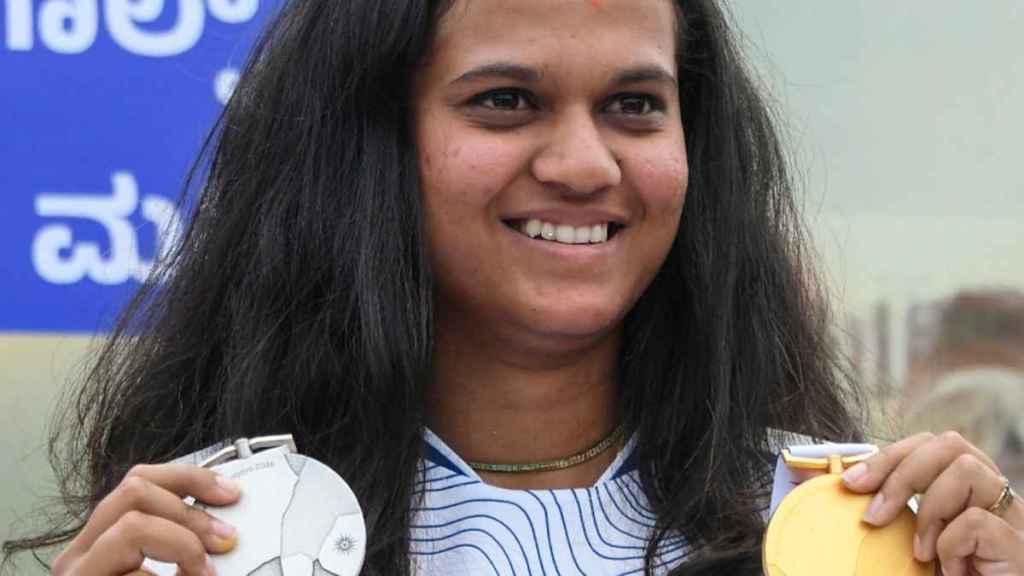
But for me, one story stood out particularly. Pranavi Urs. The 23-year-old from Mysuru walked into the final round of the women’s golf competition carrying a three-shot lead. Golf, naturally, decided that this was far too comfortable. So it threw a triple bogey at her on the third hole.
Three shots disappeared in one hole. At that point, most golfers would have started mentally calculating how much trouble they were in. Pranavi apparently decided she had better things to do.
She birdied the sixth, another on the 10th and then produced a crucial birdie on the 13th before parring her way home. She finished at 15-under 265, one shot ahead of China’s Yin Ruoning and Singapore’s Shannon Tan.
And with that, Pranavi became the first Indian woman to win an individual golf gold medal at the Asian Games. She also helped Aditi Ashok and Diksha Dagar win the women’s team silver, India’s first medal in that event. The trio finished at 14-under, behind China.
It was a fabulous piece of golfing. More importantly, it was a fabulous piece of competing.
Pranavi herself spoke about drawing inspiration from Rory McIlroy and Nelly Korda after the triple bogey. That is the beauty of sport. You can spend years learning technique, fitness, strategy and course management, but eventually there comes a moment when the scorecard is screaming at you and you simply have to convince yourself that the round isn’t over. She did. And India suddenly had a new golf hero.
The celebrations have been deservedly huge. IGPL announced a Rs 1 crore reward for Pranavi’s individual gold and Rs 25 lakh each for Pranavi, Aditi and Diksha for their team silver. The Indian Golf Union has also announced cash awards, including Rs 10 lakh for Pranavi and Rs 3 lakh each for the members of the silver-medal team.
Fantastic. But here’s where I want to rewind the tape.
Pranavi did not become an Asian Games champion on Saturday morning. The work started when nobody was watching. She started playing golf as a child in Mysuru and came through the junior programme at Jayachamaraja Wadiyar Golf Club. According to the club, promising juniors were given coaching, practice facilities and other support, including assistance with transportation.
And when Pranavi was 15, Dream Foundation, through GoSports, had helped her transition from amateur to professional by supporting in areas such as nutrition and strength and conditioning.
She also made a very simple observation at the time: the more sponsors who reach out to juniors, the more helpful it would be. There it is. That sentence should probably be pinned on the noticeboard of every sporting organisation in the country.
Because winning medals is expensive. Golf is particularly unforgiving. There are equipment costs, coaching, fitness, physiotherapy, travel, accommodation, tournament entry fees and an endless list of expenses that don’t disappear just because the player is talented.
And this is not unique to golf. Ask any athlete who has tried to move from promising junior to established professional. There is often a horrible gap between “you’re very talented” and “here is the money you need to become very good.”
That gap is where careers can disappear. Parents sell, borrow and sacrifice. Athletes skip tournaments because they cannot afford the trip. Coaches work for less than they should. Players travel economy, share rooms, carry their own equipment and sometimes wonder whether they are pursuing a dream or simply an expensive hobby.
Then comes the medal. Suddenly, the same athlete is called an inspiration.
I am not complaining about the rewards. Quite the opposite. If anything, I hope Pranavi’s Rs 1 crore becomes the beginning of something much bigger.
Because perhaps the real lesson from Aichi-Nagoya is not simply that India can win more medals. It is that India can produce more Pranavi Urses if we are prepared to invest before they become Pranavi Urs.
The irony is delicious. We are very good at celebrating the finished product. We are not always as good at funding the manufacturing process.
Pranavi’s gold also comes 24 years after Shiv Kapur won India’s last individual Asian Games golf gold, in 2002. That is a very long wait. So perhaps we shouldn’t wait another 24 years. Perhaps the cheque should come before the gold medal. Perhaps the sponsor should arrive when the youngster is 15, not when she is 23 and standing on the podium.
Perhaps the federation, corporate world, golf clubs and well-wishers should look at the players finishing 15th, 25th and 40th today and ask a simple question: what would happen if we gave this kid a little more help?
Because medals don’t suddenly appear around an athlete’s neck. They are built over thousands of mornings when nobody is watching. The Asian Games has reminded us that India has talent. Plenty of it.
Pranavi has reminded us that talent, when nurtured properly, can become history.
Now that the laurels and the money are flowing, let’s make sure we remember the most important part of the story. The next Pranavi may not need our applause yet. She may just need us to pay for her next tournament.
Rahil Gangjee is a professional golfer, sharing through this column what life on a golf course is like