


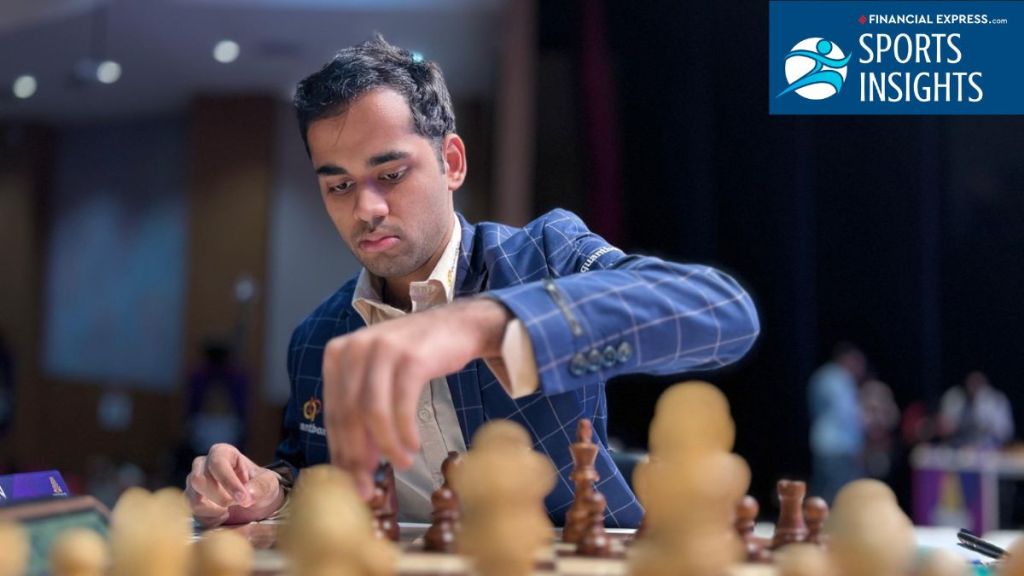

For three years, a boy in Warangal sat on the outskirts of a city that did not know his name, waiting for a chess academy to arrive. He was eight years old. The nearest coach was in Hanamkonda, a 45-minute auto-rickshaw ride through traffic that did not care about prodigies. His mother enrolled him in skating, swimming, music, dance. He dropped them all. He wanted the board. Nothing else.
This was 2011. India had produced 53 Grandmasters. Not one from Telangana. The state had no pipeline, no reputation, no infrastructure that anyone in Chennai or Mumbai or Delhi would recognise.
The boy’s father was a neurosurgeon, Dr. Srinivas Rao Erigaisi, a man who spent his days inside other people’s skulls and his evenings wondering if his son’s obsession was a phase or a diagnosis. His mother, Jyothi, managed the clinic’s paperwork and drove the auto-rickshaw routes.
His younger sister, Keerthana, would later become his decompression chamber after losses, the person he played Among Us with when the weight of a bad tournament felt like a physical object on his chest.
The boy’s name was Arjun. Named after the archer from the Mahabharata. His online handle, GHANDEEVAM2003, referenced Gandiva, the celestial bow. Mythology was not decoration in that household. It was instruction.
What nobody knew, not the coaches in Hanamkonda, not the state associations, not the family itself, was that this child was about to force Indian chess to redraw its map. The market had not priced him in. The ecosystem had not accounted for him.
And a quantitative trading firm in Singapore, four thousand kilometres away, would eventually stake $1.5 million on the hunch that a boy from a city without a chess culture could become the most expensive chess player India had ever produced.
But that was years later. In 2011, he was just a child with a board and a father who did not yet believe.
Warangal Was Not a Chess City — That Was the Point
The drought lasted longer than anyone remembers accurately.
Between 2016 and 2018, Arjun Erigaisi’s rating froze at 2300. Two years. For a competitive chess player, this is not a plateau. It is a verdict. His father, the neurosurgeon who understood dead ends professionally, began suggesting formal academics.
The boy had already stopped regular school. The family had relocated from Tirupati to Warangal specifically for chess. The investment was not paying out. The return on sacrifice was zero.
By mid-2018, the Erigaisi household treated an upcoming European tour as a final audition. The father shielded the son from the financial pressure, paying for flights and hotels and entry fees in silence. The mother travelled with Arjun to every tournament until 2019, managing logistics and emotional stability like a second job.
The sister stayed home, sending encouragement through phone calls. The boy trained with a peer named Nihal Sarin, another prodigy who would earn his Grandmaster title in the same month, at the same event, in Abu Dhabi.
From 2300 to Grandmaster in Four Months: The Breakthrough
Then, in four months, Arjun gained 200 Elo points. He secured all three Grandmaster norms. He became the 54th Grandmaster in Indian history. The first from Telangana. At 14 years, 11 months, and 13 days old.
The market had written him off. The market was wrong.
This is how chess became a business in India, and how one player became the proof of concept.
Chess in India has historically been a cottage industry. Viswanathan Anand, the five-time World Champion, was the exception that proved the rule. For decades, Indian chess operated on government stipends, family savings, and occasional corporate grants.
There was no salary. No franchise. No league with broadcast revenue. A Grandmaster’s income came from tournament prizes, which were irregular, and coaching, which was labour-intensive. The sport was intellectually elite and economically fragile.
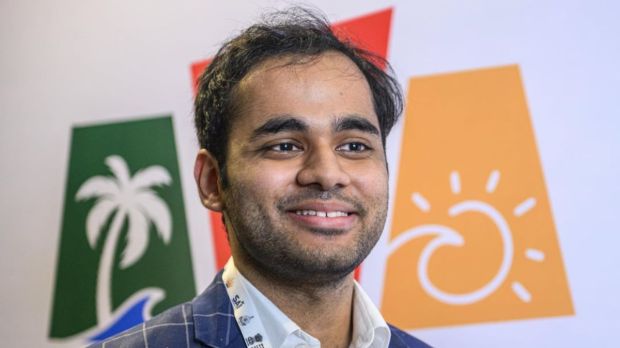
By 2022, Indian chess had produced multiple young Grandmasters. Online platforms like Chess.com had created streaming economies. The sport was becoming content. But the funding model remained precarious.
Elite chess requires supercomputer engine rentals, overseas travel, training seconds, physical conditioning. The annual budget for a top-10 player runs into tens of millions of rupees. Most Indian players funded this through family wealth or government support that was never enough.
Erigaisi’s father had paid in silence for years. The neurosurgeon’s income was substantial but not infinite. The family had made a calculation: invest in the son’s mind, hope for a return. But there was no institutional backstop. No salary floor. No safety net.
On December 13, 2022, that changed.
The $1.5 Million Sponsorship That Changed the Physics of Indian Chess
Quantbox Research, a high-frequency quantitative trading firm based in Singapore, signed Erigaisi to a five-year contract worth $1.5 million, approximately Rs 12.41 crore. The deal was brokered by Sreekar Channapragada and Manu Gurtu of MGD1, a sports management firm.
The annual payout was $300,000, roughly Rs 2.5 crore. This was not a sponsorship in the traditional sense. It was employment. It was a salary. It was the first time an Indian chess player had been treated like a professional athlete in a revenue sport.
Why a Quantitative Trading Firm Backed a Chess Grandmaster
The alignment was not accidental. Prashant Singh, Quantbox’s CEO, was a former competitive chess player. He understood that high-frequency algorithmic trading and Grandmaster-level chess operate on the same cognitive architecture: pattern recognition, risk management, rapid calculation under time pressure, decision-making with incomplete information.
The firm was not buying a billboard. It was buying a thesis. The thesis was that the same brain that could calculate a queen sacrifice in a blitz game could understand market microstructure. The marketing value was secondary. The intellectual alignment was primary.
This is the hidden value proposition of modern sports sponsorship. It is not about visibility. It is about identity. Quantbox Research wanted to be known as the firm that thinks like a Grandmaster. Arjun Erigaisi wanted to be known as a Grandmaster who does not have to worry about his next flight ticket. The transaction was mutual recognition disguised as commerce.
The money changed the physics of his career.
Before Quantbox, Erigaisi was a talented player with a funding problem. The talent was never in question. The funding had been. Now he could rent the best engines, hire the best seconds, travel to the right tournaments, build a physical conditioning programme that matched his cognitive ambitions.
Why Magnus Carlsen Called Him “The Madman”
In January 2023, he hired a personal fitness trainer. This was not vanity. It was survival. At the 2021 FIDE Grand Swiss, he had lost a seven-hour classical game because his brain fogged in the final hour. Cognitive exhaustion is physical exhaustion.
The mind is not separate from the body. It is the body. He began systematic gym workouts, running, swimming, table tennis, badminton. In marathon games against Yu Yangyi and Vincent Keymer, he maintained tactical clarity in the sixth and seventh hours while opponents faded.
This is the economics of elite performance. The $1.5 million contract did not buy him skill. It bought him time. It bought him recovery. It bought him the ability to play at full capacity longer than his competitors. In a sport where the difference between winning and losing is often a single move in the fifth hour, this is not an advantage. It is the advantage.
By late 2024, his published classical rating reached 2801. He became the 16th player in history to breach the 2800 threshold. The second Indian, after Anand. World number four. India’s top-ranked player.
The number is absurd. 2800 is the Everest of chess ratings. Only 15 people had done it before him. Magnus Carlsen at 2831. Fabiano Caruana at 2805. Hikaru Nakamura at 2802. Erigaisi at 2801. The gap between him and Carlsen was 30 points. In chess, 30 points is the distance between certainty and doubt.
Magnus Carlsen called him “The Madman.” Erigaisi does not accept dry positions. He does not play for draws. He wants to kill you in every single game. He seeks structural imbalances, complications, moments where opening theory ends and pure calculation begins.
With white, he plays the Trompowsky Attack, a line designed to bypass heavily theorised positions. With black, he plays the French and Sicilian Defences, sharp variations that demand courage.
He defeated Carlsen twice with queen sacrifices. Once at Weissenhaus in 2026. Once at the World Team Rapid Championship in Hong Kong in June 2026. In both games, he gave up his most powerful piece for a position that only he could see was winning.
This is not bravery. This is a specific cognitive skill: the ability to calculate deeper than your opponent believes is possible, and to trust that calculation when the position on the board looks like suicide.
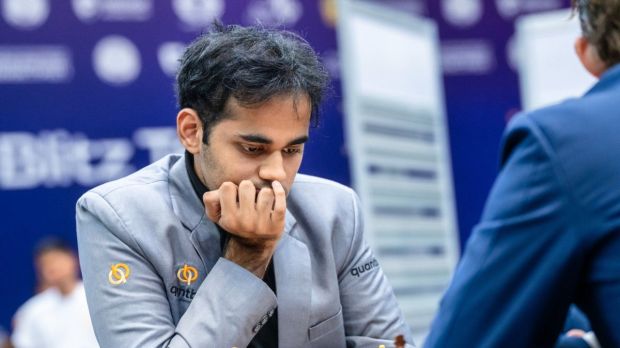
The market had not priced this in either. When Erigaisi was a 2300-rated junior, the chess economy saw a boy from a small city with a stalled trajectory. What it missed was the psychological architecture of a player trained by a neurosurgeon father to understand that the brain is a muscle that can be conditioned.
What it missed was the mother who managed logistics like a general. What it missed was the sister who provided emotional ballast. What it missed was the peer, Nihal Sarin, who trained alongside him and created a competitive ecosystem that pushed both boys beyond their individual limits.
The market sees ratings. It does not see the family sitting in the auto-rickshaw at 6 AM. It does not see the father learning chess so his son has company during lonely practice sessions. It does not see the mother giving up her own life to manage tournament travel. The market is efficient at pricing skill. It is terrible at pricing context.
Arjun Erigaisi Net Worth, Prize Money, and Earnings
His prize earnings in 2025 totalled $431,214, ranked eighth globally and first among Indians. His single largest payout was $115,000 for finishing fourth at the Esports World Cup 2025 in Riyadh. His cumulative online earnings on Chess.com across 66 digital events reached $271,304.59.
Government rewards added another Rs 70 lakh: Rs 25 lakh from the Telangana Chief Minister, Rs 25 lakh from the All India Chess Federation, Rs 20 lakh from the Sports Authority of India.
By mid-2025, his estimated net worth was $1.5 million, Rs 10 to 12 crore. He had become, by the metrics of Indian chess, a wealthy man. Financial Express has not independently verified these numbers.
But the wealth was not the point. The wealth was the enabler.
The Scholarship That Turned One Player’s Success Into a Pipeline
The sponsorship created a secondary economy.
In 2025, Quantbox Research expanded its commitment to Indian chess through the HelpChess Foundation, the charitable wing of ChessBase India. It established the Quantbox Research Scholarship, contributing Rs 60 lakh to support grassroots talent.
The fund distributes Rs 6 lakh annually to 10 promising junior players, providing a monthly stipend of Rs 50,000 for coaching, technology, and travel.
This is the generational change. Erigaisi’s contract was not just personal wealth. It was proof of concept. It demonstrated that an Indian chess player could be valued like a professional athlete.
The scholarship means that the next Arjun Erigaisi, whoever he is, wherever he lives, will not have to wait three years for a chess academy to arrive in her town. He will have a stipend. He will have infrastructure. Hhe will have a reason to believe that the investment will pay out.
The cultural significance is easy to miss. India has 1.4 billion people and a deep tradition of intellectual competition. It has mythology that valorises strategic thinking. But it has never had a commercial chess economy.
The Quantbox deal was a signal that this was changing. That the global chess market, worth hundreds of millions of dollars in streaming, sponsorship, and prize money, was finally recognising India not just as a source of talent but as a source of revenue.
The risk was substantial. Quantbox bet $1.5 million on a 19-year-old who had not yet breached 2700. The reward was a player who reached 2801, became India’s highest earner, and created a brand association that linked quantitative finance to cognitive excellence.
The risk-reward ratio, from a business perspective, was favourable. From a sports perspective, it was revolutionary.
Rating 2801, World No. 4: What Comes After the 2800 Club
Erigaisi’s peak rating of 2801, achieved in December 2024, was followed by a dip to 2777 at Wijk aan Zee in early 2025. The market does not forgive dips. But it also does not forget peaks. His double bronze at the FIDE World Rapid and Blitz Championships 2025 in Doha, alongside Carlsen, confirmed his versatility. He was not a one-format player. He was a multi-asset portfolio.
The city of Warangal is not Chennai, with its chess clubs and its Anand mythology. It is not Mumbai, with its corporate sponsors and its media infrastructure. It is not Delhi, with its government funding and its SAI centres.
Warangal is a city in Telangana with a medical college, a few engineering institutes, and until recently, no chess tradition. The fact that India’s first 2800-player from outside the established chess centres emerged from Warangal is not a footnote. It is the story.
It means that the talent was always there. The infrastructure was not. The Quantbox deal, the MGD1 management, the HelpChess scholarship. These are attempts to build the infrastructure that Warangal did not have.
The next generation will not need to wait three years for a coach. The next generation will have a stipend, a mentor, a path. This is what generational change looks like. It is not one player breaking through. It is one player breaking the door open for everyone behind him.
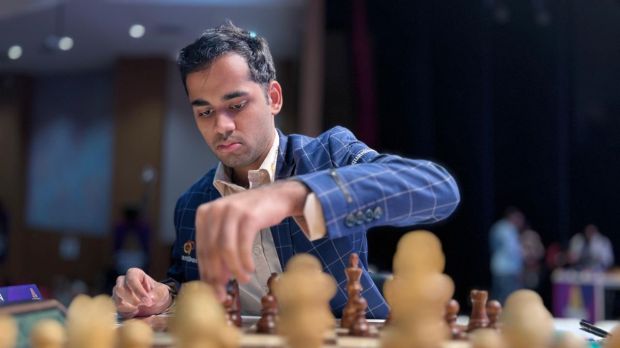
The father is still a neurosurgeon. The mother still manages logistics, though now from a distance. The sister still plays Among Us with him, though now they do it between tournaments in different time zones.
He still plays table tennis and badminton to unwind. His online handle still references a celestial bow from an epic poem written thousands of years ago. The $1.5 million has not changed the habits. It has only removed the anxiety that used to accompany them.
The neurosurgeon’s son became the most expensive chess player in Indian history. But on some evenings, when the tournament is over and the stream is off and the engine is shut down, he is still just a boy from Warangal who wanted the board and nothing else.