



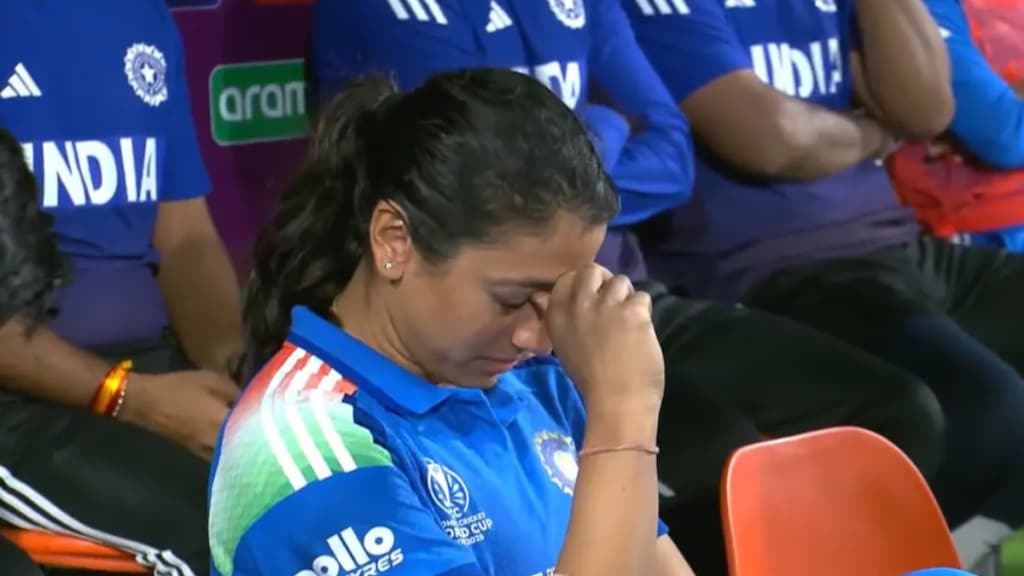
India kicked off their World Cup campaign with confidence. Two solid victories and the energy around the group was positive.
But then came a sharp turn. Three straight defeats, two of which were matches India would have won nine times out of ten. They had matches in their grip, yet somehow couldn’t hold on. In a few matches, India were almost there. Then, in the last few overs, the pressure got to them. Simple moments went wrong, and easy wins slipped away. Those close losses have now made things difficult, and the team needs to win both upcoming games to stay in the race for the semi-finals.
This isn’t something new. It has happened before too. It’s a pattern fans have seen too often; strong performances that somehow don’t get the result they deserve.
When Close Games Keep Slipping Away
India’s World Cup journey feels like a pattern they can’t quite break.
Against England, the chase looked under control. Smriti Mandhana was batting on 88, Harmanpreet Kaur was calm at the crease, and India had wickets in hand. The equation was simple, less than a run a ball. Then, out of nowhere, the collapse came. Wickets fell in a rush, and once again, a game that should have been India’s slipped away.
It’s not new. The script has played out before. Runs required, wickets in hand, the nation watching, and then the collapse.
The story keeps repeating, only the venue changes.
It’s not about lack of skill or intent. These are pressure moments, and India haven’t yet found the rhythm to manage them consistently. Handling that tension, not talent, is where the difference lies.
The Cricketing Reality: A Pattern, Not a Panic
There’s a difference between losing and not learning. Right now, India are stuck in that middle space.
They’ve built platforms, controlled chases, and looked dominant for long stretches, only to crumble under the weight of finishing.
In the last ten years, India’s women have won 72 ODIs and lost 46. Only Australia and England have better records. Out of 119 games, India have played 78 against top-four teams, Australia, England, South Africa, and New Zealand, the most by any side. Their consistency isn’t the problem; their timing is.
Since the 2022 World Cup, before this ongoing edition, India had won 25 out of 38 ODIs. Only Australia had a better win percentage in that period. Against England, they had won five of six. Against South Africa, they were unbeaten with five wins.
To add a bit of perspective, this Indian team has beaten Australia twice in ODIs since 2018. That’s no small feat, considering Australia have lost only five ODIs overall in those seven years.
The numbers show a strong, well-rounded side. But in tournaments, the nerves take over.
The comparison often made is with South Africa’s men’s team, dominant through the years yet unable to cross the ICC knockout line. The difference is that South Africa’s men are discussed for their cricket, while India’s women are questioned for their existence.
How the WPL Changed Things, But Not Everything
The Women’s Premier League was seen as the turning point, a stage to toughen players for big-match pressure. And to an extent, it has worked. Youngsters like Richa Ghosh, Shafali Verma, and Amanjot Kaur have gained exposure and experience that earlier generations didn’t have. Playing in packed stadiums, handling spotlight moments, all of it helps.
But learning to finish a chase under World Cup pressure is a different skill altogether. In the WPL, the finishing roles, the ones where you close games under tight conditions, are still largely handled by foreign players. Indian batters rarely get to play those end-overs scenarios where every ball counts. Until that changes, the same problem will keep returning in international games.
When Criticism Crosses the Line
After every loss, the noise begins. Instead of focusing on team balance or batting order, discussions quickly slide into casual sexism. Comments like “they should stay in the kitchen” or “why do they need equal pay” flood timelines, and even some so-called experts join in.
Here’s the truth. Equal match fees and equal salary are completely different things. Smriti Mandhana, who has over a decade of international experience and is the world’s top-ranked batter, earns 50 lakh rupees annually. That’s equal to a Grade C men’s contract, the same as players like Mukesh Kumar or Harshit Rana, who are just starting out.
So when people complain about “equal pay,” they’re not even talking about the same thing. These women are far from overpaid; if anything, they’re under-recognised for what they’ve achieved.
It’s fair to criticise performances. That’s part of sport. But the moment the conversation shifts from cricketing faults to personal attacks or gender bias, it stops being analysis and starts sounding like prejudice.
Say they need to improve finishing games. Discuss poor shot selection. Question team balance. But dragging gender into the debate reveals more about the critic than the team.
These women are pro cricketers, not pawns in some cultural debate. Their losses hurt, but they need understanding, not hate.
The Real Issue: Handling Pressure, Not Lack of Skill
When India dominate in bilateral series, the same players are ignored. When they fall short in global tournaments, the same players are labelled chokers.
Smriti Mandhana has been one of the best batters in the world for years. Deepti Sharma keeps taking wickets in every condition. Harmanpreet Kaur has played more international games than many male cricketers. This team clearly has the talent. What they are still trying to figure out is how to stay calm and finish games under pressure.
The players themselves know what’s going wrong. After the England loss, Smriti Mandhana didn’t hide behind excuses. “It started from me,” she said, admitting her shot selection triggered the collapse. Harmanpreet Kaur, too, called it “heartbreaking,” knowing how close they were. These aren’t excuses; they’re reflections from players aware of the responsibility that comes with the job.
India’s problem isn’t talent. It’s about finding calm in high-pressure moments and closing matches with the composure they show in bilateral cricket.
A Fair Lens, Not a Flawed One
The Indian women’s team deserves to be evaluated purely for their cricket. Nothing more, nothing less.
They are skilled athletes trying to push Indian women’s cricket ahead, step by step. It’s perfectly fine to expect more from them; they’ve earned those expectations through years of steady performance. But criticism should stay where it belongs: their tactics, their shot choices, and their mental strength. It should never turn into judgments about gender, physicality, or comparisons with men’s cricket.
The Road Ahead
India now have two matches left in the group stage, one against New Zealand and the other against Bangladesh. Both are must-win games and still very much possible. Their campaign can still be turned around, but more importantly, how people talk about this team needs to turn around too.
Beyond the points table, this campaign should force a wider reflection on how India approaches crucial moments and how the world approaches women’s sport.
The Indian women’s team doesn’t need sympathy. They need fair analysis and an audience that understands the difference between critique and prejudice. Until then, every defeat will say less about them and more about us.
Winning trophies will take time. Respect shouldn’t.