



For a long time I believed wealth came from one big break. A lucky stock, a bonus year, a single deal that changes everything. I suspect many readers of this paper have believed the same at some point.
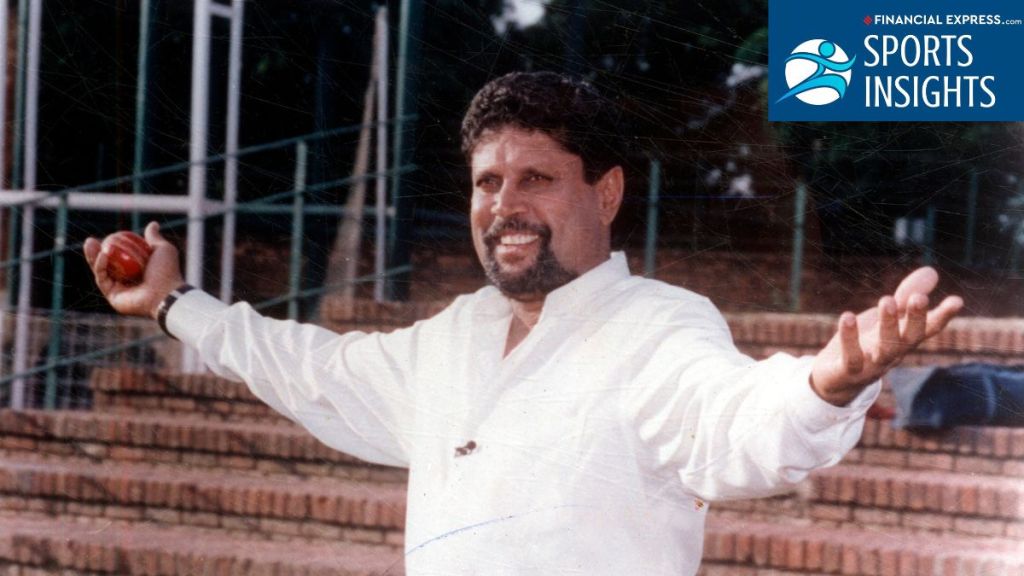
Then I went back to the story of a twelve-year-old in Chandigarh. The other boys were picking teams in a narrow lane, pointing at the usual faces. Nobody pointed at the thin boy in the wrong clothes. Kapil Dev Nikhanj was the leftover.
Years later that boy would hold the World Cup at Lord’s and build a business portfolio estimated at around ₹270 crore. When I looked closely at how he got there, I could not find a single big break. I found decades of small decisions, most of them dull and many of them doubted. Those are the ones worth studying.
1. Your first investment is in yourself, and it pays slowly
The evening he was left out, Kapil went home and told his mother he needed more chapatis because he was going to be a fast bowler. Raj Kumari cooked the extra chapatis every day, for years. Nobody in that kitchen was thinking about returns.
I think of that as the most patient investment in his story. Food, miles, bleeding fingers, an aching back, and no guarantee of anything. When he broke into the Haryana side in 1975, he took 121 wickets in his first season. From outside the payoff looked sudden. It had been compounding at home for years.
The pattern repeated later. When he was being considered for the India captaincy, some selectors said his English was not good enough. He told them talent should not be measured by language, then sat with books after training and asked teammates to correct his pronunciation. That same English later paid him again in the commentary box.
Most of us spend more time choosing a mutual fund than choosing what to learn next. I have been guilty of this. A skill gap costs money every year you carry it, and closing it is usually cheaper than we assume.
2. Low expectations have a price tag
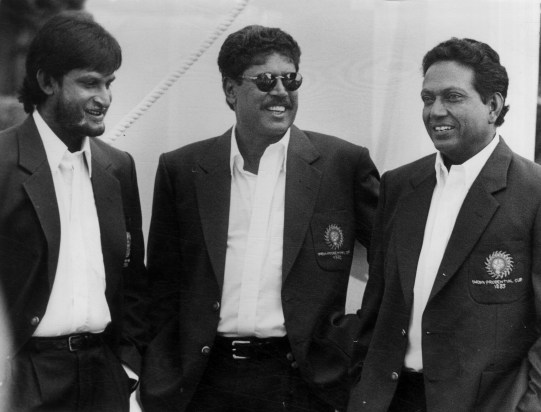
Before the 1983 World Cup, the team had booked return tickets with a stopover in America, leaving room for some sightseeing before heading home. With India hardly tipped to go far in the tournament, Kris Srikkanth treated the trip more like a holiday than a serious World Cup campaign.
The detail I love comes later. Srikkanth joked that Kapil owed him interest on the ten thousand rupees he spent changing those tickets. It is a funny line, and also a sharp lesson in money. The team had paid for its own failure in advance.
Investors do this all the time. Someone buys a stock and plans to exit at the first dip because they never really believed in it. Someone starts a side business with one foot so firmly out of the door that it never gets proper attention. Hedging against bad luck is sensible. Hedging against your own success is expensive.
At Tunbridge Wells against Zimbabwe, India were 17 for 5. Kapil walked in and made 175 not out, an innings the BBC never broadcast because of a strike. In the final at Lord’s, India defended 183 against a West Indies side that had won the previous two World Cups, after the bookmakers had stopped taking bets.
India won by 43 runs. Anyone who had priced that team by its own travel plans would have sold at the bottom.
3. A position that looks lost is not always lost
At the MCG in 1981, Kapil ruptured his thigh muscle on the first day and could barely walk for three days. On the final day Australia needed 143 with eight wickets in hand. Sunil Gavaskar suggested he rest and save himself for the next match.
Kapil said he was getting his rhythm back. He bowled 16.4 overs, took 5 for 28, and India won by 59 runs.
I want to be careful here, because “never give up” is terrible investment advice taken literally. Plenty of money has been lost holding on to bad bets out of pride. What strikes me is that Kapil knew something the scoreboard did not show. He could feel his own rhythm returning, and that told him the match was still alive.
That is the test I now use on my own decisions. When a holding is down, I ask whether the reason I bought it is broken or whether the price is just uncomfortable. The first calls for an exit. The second often calls for patience, which is the part most of us find hardest.
4. Build the second income before the first one stops
Kapil watched the stars of the 1960s and 70s struggle after cricket. Many ended up depending on selector jobs and board handouts from the system they once dominated. He decided early that this would not be his story.
In 1995, one year after he stopped playing, he started Dev Musco Lighting with an American company that understood stadium lighting. He brought his knowledge of stadiums. The timing is what I keep coming back to. He was setting up the next source of income while his name still opened doors.
Athletes have short earning windows, but if we are honest, so do many salaried professionals. A career that felt permanent at forty can feel fragile at fifty-five. I used to treat retirement planning as something you do with whatever is left over. His story made me see it as building a second engine while the first one is still running.
5. Boring businesses and clean paperwork protect wealth
Stadium lighting is unglamorous work. It meant government contracts, bureaucratic delays and cost overruns. Over time the company lit up the Mohali stadium, the Barabati Stadium in Cuttack and the Goa Cricket Academy.
In 2014 the Goa government questioned the company’s costs. Kapil did not look for political cover. He answered with documents and waited.
This is the least exciting lesson in the piece and probably the most practical. Whether you run a company or file taxes as a freelancer, the day someone questions your numbers is the day your record-keeping either saves you or sinks you. I spent an embarrassing weekend sorting years of old receipts after reading about Goa, and I hold this story fully responsible.
6. Start with security, then expand, and keep planting at any age
His hotel business began as Kapil Hotel in Chandigarh, a simple place meant to secure his retirement. It worked, so he expanded. It became Kaptain’s Retreat, and more outlets followed, including Kapil Dev’s Eleven in Patna, with sports memorabilia on the walls.
The order of those steps matters to me. First he made sure the floor was solid, and only then did he grow. Many people reverse it and take big risks before they have any cushion at all.
Then there is Karjat. In 2024 and 2025, at sixty-five, he bought forty-one acres near Mumbai for farmhouse development and agriculture. Most people that age are thinking about drawing down their savings. He was thinking about soil and the next twenty years. Between lighting, hotels, land, startups and endorsements, his income also does not hang on any one sector having a good year.
7. Back people you understand, and give them time
His venture investments look scattered at first. Harmonizer Solutions, with fourteen patents in power sector technology. Samco Securities and its Indian Traders League. GOQii fitness trackers. Gigzoe and WizCounsel, which connect freelancers to legal work.
The thread running through them is people. He backs technocrats who remind him of young cricketers with something to prove, and ideas that are slow to mature but solid underneath. With Samco he saw a parallel from his own world. He believed the Indian Traders League could do for stock market participation what T20 did for cricket viewership.
His 2018 association with Pumpkart, a B2B marketplace for agricultural pumps, had a personal root. It sits close to the world of his father, Ram Lal Nikhanj, the timber merchant who lost everything in Montgomery in 1947 and started again in Chandigarh.
I now try to follow a simple rule with my own money. Invest where your own experience lets you see something others might miss. If I cannot explain in two sentences why I own something, I probably should not own it.
8. Your name is the asset that funds everything else
In the 1980s Kapil became the face of Palmolive Shaving Cream, and then Boost. Children of that era can still say “Boost is the secret of my energy” without thinking. The campaign worked because people believed the man in the ad was the same man who lifted the World Cup.
Credibility like that takes years to build and very little to lose. When his recent comments on mental health and pressure drew a backlash on social media, he did not delete the interview or put out a clarification that took back what he said.
He explained himself again and let people disagree. As of 2025 his endorsements include Thriwe, Novo Nordisk and AIPL, brands that sit close to the wellness and motivation themes he has always stood for.
You do not need to be famous for this to apply. In any office or industry, people pay more for someone they trust, and that trust turns into better offers and better partners over a career. I have started counting reputation as something that belongs on the balance sheet.
What I am doing differently from tomorrow
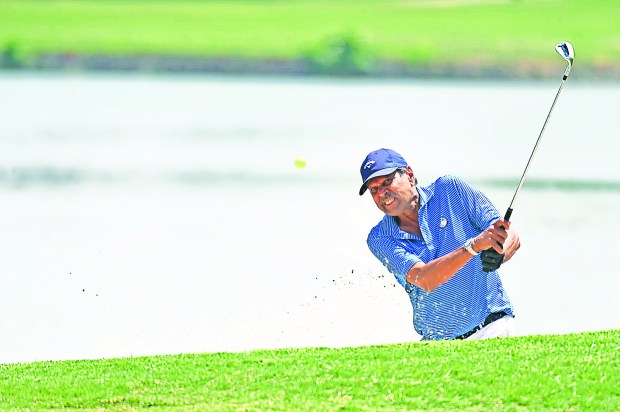
Kapil Dev is sixty-seven now. As President of the Professional Golf Tour of India, he argues that golf can be cheaper than cricket if public courses and school programmes bring costs down, and he has raised prize money and added tournaments. In June 2025 he opened Arche Global’s AI hub in Bengaluru and told engineers half his age that the principles of winning stay the same.
One June afternoon at Lord’s made him famous. His wealth came from somewhere else: a mother cooking extra chapatis, a lighting company started a year after retirement, a hotel built for security before ambition, and land bought at sixty-five.
Three things I am taking into tomorrow morning. Pick one skill gap that is costing you money and give it thirty minutes before work. Go through your investments and write down why you still own each one, then sell the ones where that reason has broken. And start the groundwork for a second income, however small, while your first income is still coming in.
The boy nobody picked spent his life making slow, unfashionable bets on himself. Most of us can afford to make at least one.
This piece is based on an original article about Kapil Dev’s business journey. Read it for the full story behind Dev Musco Lighting, Samco Securities, and how the 1983 World Cup captain built a ₹270 crore empire from the lanes of Chandigarh.