


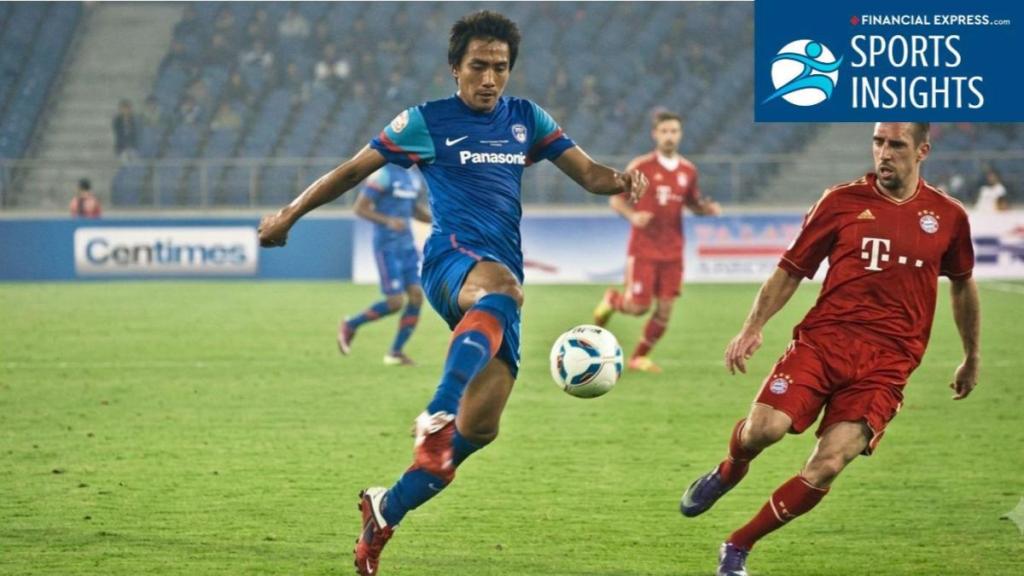

Most Indian footballers retire and disappear. They spent fifteen years chasing balls but never chased a balance sheet. Gouramangi Singh is different.
He went from a village in Manipur to captaining Churchill Brothers, then built a business empire worth ₹45 crores while his teammates were still figuring out their next club. That is not luck. That is a man who treated every match like an investment and every investment like a match.
The Boy Who Left Home to Learn Tackling
You have to understand Awang Sekmai in the late 1990s. A small town seventeen kilometers north of Imphal. Football was everywhere but money was nowhere. Kids played on mud. Shoes were optional. Dreams were free.
Gouramangi was born on January 25, 1986. His parents saw the same thing every family in Manipur saw. Boys played football. Boys got injured. Boys came home with nothing. But Gouramangi was tall. One meter eighty-six. Local coaches noticed. They told his family he had balance and positional sense. Words that meant nothing to farmers but everything to scouts.
So he left. Went to Jamshedpur. Joined the Tata Football Academy. TFA was not a school. It was a factory. Built in 1987, it took village boys and made them professionals.
Gouramangi trained with future national team players. Learned defensive positioning. Learned that career progression is slow and boring and requires patience. He was sixteen. Most boys that age want instant fame. He learned to wait.
From Academy Graduate to India’s Best-Paid Defender
He graduated in 2004. Joined Mohun Bagan. Then Mahindra United. Won the National Football League and Federation Cup double in 2005-06. But he wanted to start every game. So he moved. Sporting Clube de Goa. Then Churchill Brothers in 2007.
Five seasons at Churchill Brothers changed everything. He became captain. Won the I-League in 2008-09. Picked up two IFA Shields and two Durand Cups. His salary crossed one crore per year. He was now the highest-paid defender in Indian club football.
Not the flashiest. Not the most famous. The most expensive. Because the coaches knew what he did. He organized the backline. He read the game. He did not dive into tackles. He solved problems before they became problems.
Then came the Indian Super League in 2014. He joined Chennaiyin FC. Played for Bharat FC, FC Pune City, DSK Shivajians. Finished where he started, at home with NEROCA FC in 2019. Fifteen years of professional football. Seventy-one caps for India. Six goals. For a central defender, that is amazing.
The Night He Scored Against Cameroon
Some moments define a player. For Gouramangi, it was the 2012 Nehru Cup Final. India against Cameroon. A strong African team. India was behind. Nineteenth minute. Gouramangi scored the equalizer. The game ended two-all. India won on penalties.
He was a defender. His job was to stop goals. But he scored when it mattered. That is who he is. The man who shows up when the pressure is highest. Not with flair. With reliability.
He also played every minute of the 2008 AFC Challenge Cup. India won. Qualified for the Asian Cup after twenty-seven years. Three Nehru Cup titles. SAFF Championship in 2011. AIFF Player of the Year in 2010. The awards came because he was always there. Always consistent. Always prepared.
Two Trials That Taught Him Everything
In May 2010, he went to Australia. Trial with Melbourne Heart FC. Now called Melbourne City. Foreign player rules stopped the transfer. But he saw something that changed him. Australian clubs invested in youth training early. Scientific methods. Professional structures. He looked at Indian grassroots football and saw gaps. Big ones.
In late 2013, another trial. Danish Superliga. FC Vestsjælland. More exposure. More networks. More understanding that Indian football was behind not because of talent but because of systems. These trips were not about playing abroad. They were about learning what to build at home.
The Coach Who Became Boss
He retired in 2019. Did not sit idle. Got his AFC A Coaching License. Became Assistant Manager at FC Bengaluru United. Three years of learning. Then FC Goa called in July 2022. Assistant Coach. Working under Carlos Pena and Manolo Marquez. Handling defensive tactics and set pieces.
In July 2026, they promoted him. Head Coach. First all-Indian technical leadership team in FC Goa’s history. He did not ask for it. He earned it. The same way he earned his place in the national team. By being ready when the opportunity came.
How a Footballer Became Worth ₹45 Crores
Here is where the story gets interesting. Most Indian footballers of his generation made money and spent it. Gouramangi made money and planted it. Literally.
His net worth is estimated between ₹40 and ₹45 crores. Financial Express has not independently verified these numbers. The richest professional footballer in India. Not Sunil Chhetri. Not Gurpreet Singh Sandhu. The central defender from Awang Sekmai.
The wealth came from four places. First, peak playing contracts. One to 1.2 crores per year at Churchill Brothers. High ISL draft money.
Second, real estate. He bought land around Imphal during his early playing years. Infrastructure grew. Values exploded.
Third, farming. Commercial organic agriculture in his hometown.
Fourth, academies. The Kago Football Academy. Training kids. Creating pathways. Making money while solving a problem he faced as a boy.
The Academy That Brings Football Home
Kago Football Academy sits in Imphal West. Gouramangi built it because he remembered leaving home at sixteen. He remembered the cost. The loneliness. The risk that your family cannot afford.
So he created a local option. Structured coaching. Scientific training. But here is the smart part. Fee-paying students cover costs. Scholarships go to poor kids with talent. The academy also rents pitches. Hosts tournaments. Places players with ISL and I-League clubs. It is a business that looks like charity. Or charity that runs like a business. Either way, it works.
The Farm That Grew During COVID
In 2020, while the world stopped, Gouramangi expanded. His organic farm in Awang Sekmai had been a side project during playing off-seasons. Now it became serious. He saw supply chains break. Local markets struggle. He had land. He had workers. He grew chemical-free vegetables. Used drip irrigation. Soil testing. Modern methods on traditional land.
The farm employs locals. Sells produce across Imphal. Generates cash flow that does not depend on football matches or coaching contracts. This is what financial security looks like. Multiple streams. None of them fragile.
The Land That Waited
His real estate strategy was simple. Buy early. Buy along development corridors. Wait. He started during his Mahindra United and Churchill Brothers years. Family elders and financial advisors guided him. He listened. Most footballers buy cars. He bought plots.
Over two decades, Imphal expanded. Roads came. Buildings came. His land appreciated massively. He leases commercial sites. He holds long-term assets. The portfolio is boring. Boring is good. Boring makes you rich while others chase quick returns.
The Coach’s Salary and the Brand Value
At FC Goa, he earns executive management money. Fixed salary. Performance bonuses. Long-term stability. This is not a player contract where one injury ends everything. This is a career built to last.
He also represents brands. Sports apparel. Regional health companies. Libero Sports management. He gets paid for endorsements and appearances. But he is selective. He partners with companies that match his image. Disciplined. Reliable. Northeastern.
Why He Succeeded Where Others Did Not
Gouramangi played football like he invests. Calm. Positional. No reckless challenges. On the pitch, he read space and organized defenders. Off the pitch, he reads markets and organizes assets.
He avoids speculation. No crypto trading. No startup gambling. Real estate, farming, education. Things he can see and touch. Things that employ people from his state. His agricultural business in Awang Sekmai gives jobs to locals. His academy gives hope to kids who look like him. His coaching role at FC Goa lets him tell young players what he learned too late. Plan your exit before you need it.
The Man Who Never Forgot the Village
Every business decision connects back to Manipur. He could have invested in Mumbai or Bangalore. Chased faster returns. He chose home. Kago Academy keeps talent in the Northeast. The farm keeps money in Awang Sekmai. His real estate bets are on Imphal’s growth, not some metro bubble.
This is not nostalgia. This is strategy. He knows the region. He trusts the people. He understands the market because he grew up in it. That is why his investments work. They are not guesses. They are informed by memory.
What Comes Next
FC Goa Head Coach is just the start. Strong ISL performances could make him the most respected Indian manager in Asian football. AFC Champions League 2 exposure would elevate his profile beyond India.
He wants to expand Kago Academy into neighbouring Northeast states. Nagaland. Mizoram. Meghalaya. Create a regional talent network. Feed players to professional clubs across India. Build something that outlasts his coaching career.
The farm could grow too. Add processing. Packaging. Better margins. Stronger presence across the Northeast. The land around Imphal could become commercial sports venues. Leased properties. Further capital growth.
The Real Lesson
Gouramangi Singh’s story is not about football. It is about preparation. He spent his playing career learning defence. Positioning. Patience. Then he applied those same skills to money. He did not chase the biggest contract. He chased the smartest setup. He did not retire and panic. He retired and executed a plan he made years earlier.
The boy from Awang Sekmai who left home to learn tackling came back to teach everyone else how to build a life. Not with flash. With structure. Not with luck. With legwork. That is the fortune of 45 crores. It is not cash in a bank. It is farms and academies and land and coaching contracts. It is a life designed to last longer than a football career.
Most players leave the game with memories. Gouramangi left with assets. That is the difference between a footballer and a businessman. He was both. And he was better at the second because he was so good at the first.
Editorial Note: This is an independent profile. Gouramangi Singh and their representatives were contacted but did not respond prior to the time of publication. In the absence of direct comment, this article was reported using publicly available records and regulatory filings, where applicable. This content was produced in accordance with FinancialExpress.com’s editorial guidelines.