


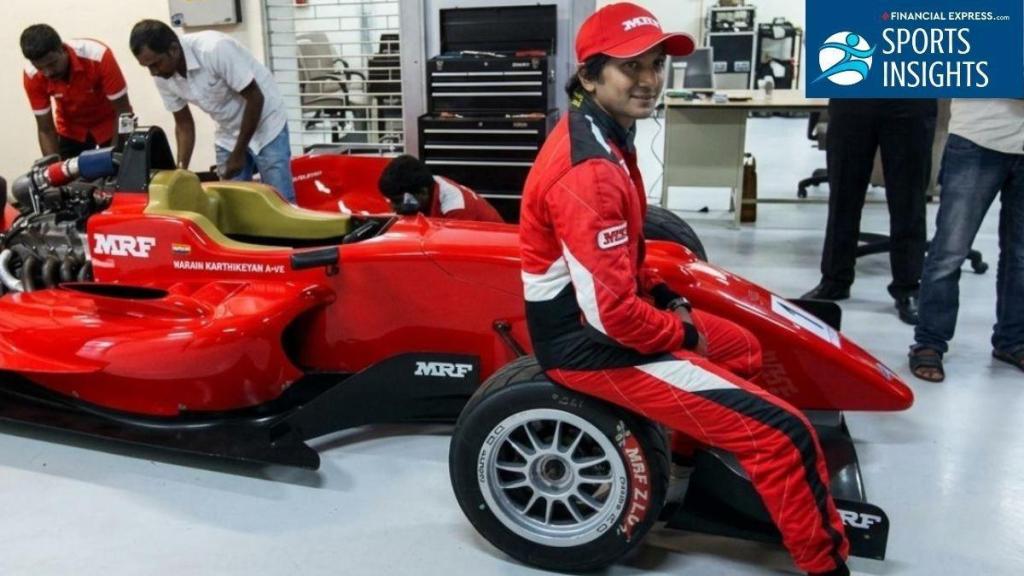

A boy in Coimbatore used to wait for the post. Not for letters, for tapes. VHS cassettes mailed by relatives in the UK, carrying Formula One races that had already finished weeks ago. He knew the results were stale news somewhere else in the world. Didn’t matter. He watched them anyway, over and over, trying to memorise braking points on cars he’d never even sat in.
That boy was Narain Karthikeyan. Cricket owned every conversation on his street back then, honestly it still does. Nobody around him talked about downforce or tyre wear. He did anyway, mostly to himself, at age ten, torn between two dreams, fighter pilot or racing driver.
He picked the track.
Three decades on, he’s still doing more or less the same thing. Looking at something everyone else ignored and deciding it deserves a proper look. Except now it isn’t a Grand Prix he’s chasing. It’s the second-hand two-wheeler market in India, a business that runs mostly on cash, trust and a fair bit of hope.
Racing was already in the family
Karthikeyan was born on 14 January 1977 and there wasn’t much chance of him ending up indifferent to motorsport. His father, G.R. Karthikeyan, won the South India Rally title seven times and took the Indian National Rally Championship on top of that.
The family also had links to the PSG Institutions, a well known industrial and education group in the south, and to S. Karivardhan, more or less the founding father of homegrown race car design in India.
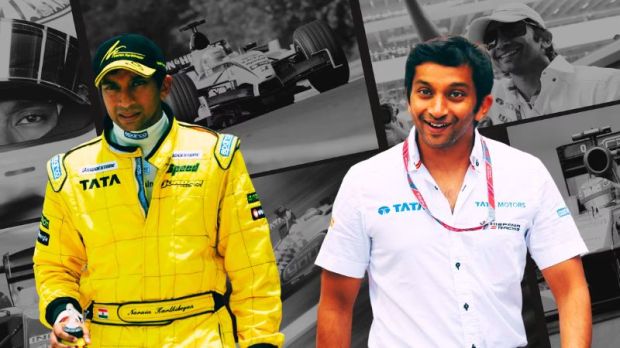
So when a teenager from Stanes Anglo Indian Higher Secondary School said he wanted to go race in France, the family didn’t talk him out of it. In 1992, at fifteen, he joined the Elf Winfield Racing School. Barely spoke the language. Had none of the karting background the other kids grew up with. Reached the semi-finals of the Pilote Elf Competition anyway.
That’s more or less the story of his whole career actually. Show up with less. Compete anyway. Figure it out.
Titles nobody expected an Indian driver to win
Back home in 1993 he debuted in Formula Maruti at Sriperumbudur and podiumed in his very first race. A year later he was in Britain, running Formula Vauxhall Junior and Formula Ford at the same time, and in 1994 he won the British Formula Ford Winter Series.
First Indian to win a motorsport title anywhere in Europe. In 1996, driving for Marlboro Castrol Meritus Racing, he became the first Indian, and the first Asian, to win the Formula Asia International Championship. A year after that, pole and a win at Donington Park in British Formula Opel.
By 2000, racing in British Formula 3, he’d given Carlin Motorsport its first ever podium and its first ever win, a result that helped turn Carlin into one of the biggest names in junior racing worldwide. He finished fourth that season and picked up the Korea Super Prix as well.
None of that paid for a Formula One seat though. That took actual money, and lots of it.
The year the money said no
In 2004, Minardi offered him a race seat. A real F1 offer, the kind most drivers never get in a lifetime. He couldn’t raise the sponsorship to take it.
Sit with that for a second. A driver good enough to be handed a Formula One seat, stopped not by lack of talent but by a spreadsheet. He spent another year in the World Series by Renault instead, winning at Valencia and Magny-Cours, and waited.
The wait ended on 1 February 2005, when Jordan Grand Prix signed him, backed by the Tata Group and Bharat Petroleum. He made his debut that March in Melbourne, qualified twelfth, finished fifteenth. Unremarkable stuff on paper.
Then Indianapolis happened.
Six cars, one Indian driver, one line in history
The 2005 United States Grand Prix is remembered for its chaos. Michelin’s tyres were failing under load and every team running them withdrew before the race even started. Only six cars, all on Bridgestones, actually raced.
Karthikeyan was one of them. He crossed the line fourth, behind Michael Schumacher, Rubens Barrichello and his own teammate Tiago Monteiro. Five championship points. First points ever scored by an Indian driver in Formula One.
Was the grid unusually thin that day? Sure, no argument there. But somebody still has to drive 73 laps clean when a country’s first F1 points are riding on it and he did.
He spent 2006 and 2007 as Williams’ reserve and test driver, working alongside Alexander Wurz and Kazuki Nakajima, quietly feeding data back for the FW28 and FW29. Years later, in 2011, he returned to the grid with Hispania Racing Team, driving cars that by his own admission had no business being competitive.
He still raced at India’s first home Grand Prix, at the Buddh International Circuit, finishing seventeenth in front of a crowd that had waited years for exactly this.
His final F1 start came at the 2012 Brazilian Grand Prix. 48 entries. 46 starts. Basically an entire country’s Formula One history carried on one man’s shoulders for most of it.
He kept going elsewhere too. Wins for India in A1 Grand Prix at Zhuhai and Brands Hatch. Le Mans in an Audi R10 turbo diesel prototype.
A season in NASCAR’s Truck Series in the US where fans voted him Most Popular Driver in 2010, in a Toyota Tundra, at tracks where nobody could pronounce his name properly. Years in Japan’s Super Formula and Super GT after that, wrapping up his driving career in 2019 with a win at the Fuji Speedway Dream Race.
Cricket was never really the enemy
People sometimes assume he played cricket at some point. He never did, not professionally anyway. What he did live through was a country where cricket soaked up nearly every rupee of sponsorship money, every hour of TV time, every young athlete’s attention. Motorsport had to grow in whatever was left over.
At the 2005 Spanish Grand Prix, Sachin Tendulkar walked into the Jordan garage during qualifying just to support him, one national name quietly showing up for another working in a completely different sport.
Karthikeyan has talked since about why the gap exists at all. Cricket built a financial engine strong enough to pay hundreds of domestic players a stable income for years. Sports like motor racing, golf, chess, they demand your own money upfront, long before there’s any return, if there’s a return at all. He doesn’t sound bitter saying it. It’s just how he describes the way sport gets funded in India.
From the racetrack to the repair shop
Karthikeyan stopped driving professionally in 2019. What he built after that says a lot about how he thinks.
India sells tens of millions of used two-wheelers every year, and almost none of it is organised. No standard pricing, barely any real quality checks, financing that rarely makes sense, mostly cash changing hands on a handshake.
In April 2020, right in the middle of Covid, he launched DriveX Mobility Pvt. Ltd. out of Coimbatore. It started as a scooter subscription service for people who suddenly needed their own transport and didn’t want to touch a bus.
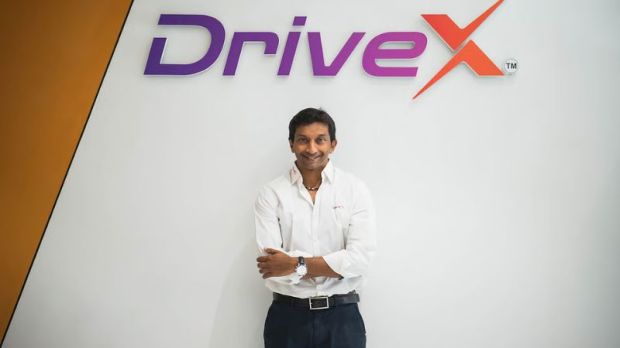
It grew into something much bigger than that. DriveX now runs its own Technical Refurbishment Centres, where every bike goes through the kind of multi-point check a race engineer would recognise instantly, before being sold through physical stores across cities big and small, at an average price of around ₹50,000.
There’s also DriveX Direct, which lets people sell to each other directly while DriveX still inspects the bike, checks its history and throws in a warranty. Chennai, Coimbatore and Bengaluru have taken to it fastest.
Here’s the number that got people’s attention. In August 2022, TVS Motor Company, one of India’s largest two-wheeler makers, bought a 48.27% stake in DriveX for ₹85.41 crore, close to $10.8 million. That puts the company’s valuation at roughly ₹177 crore.
Financial Express has not independently verified these numbers.
TVS Motor’s managing director, Sudarshan Venu, called it a natural fit between his company’s manufacturing scale and Karthikeyan’s grip on a problem nobody else had bothered to solve properly.
What does ₹85 crore actually change for a family in Coimbatore buying a used scooter? It means the bike a delivery rider picks up has been checked the way an F1 mechanic checks a gearbox before a race.
It means TVS’s dealer network and spare parts pipeline now sit behind a business that used to run purely on trust and luck. Later filings show TVS put in nearly ₹87 crore more the following year, with more capital lined up for automated refurbishment centres and franchise expansion.
The revenue growth tells the same story, just in smaller numbers. Around ₹9 crore in the first year. Up to ₹19 crore two years after that. Somewhere between ₹50 crore and ₹100 crore by FY25, with the company reportedly aiming past ₹200 crore in annual run rate.
Building the next Karthikeyan
He never really left the sport behind either. Back in 2006, well before DriveX existed, he started the NK Racing Academy to fix the exact problem he’d faced as a teenager, India’s total lack of a proper pipeline for young drivers.
The academy tied up with CRG, the Italian kart manufacturer whose machines carried Max Verstappen and Lewis Hamilton early in their careers. Brothers Arjun Maini and Kush Maini came up through the academy and went on to Formula 2, Kush also serving as an Alpine F1 Junior driver along the way.
Turtle Wax came in as a sponsor to help fund kids who couldn’t otherwise afford the sport. The academy has even started pulling sim racers off their screens and into actual karts now.
He also stays involved with the PSG & Sons’ Charities Trust in Coimbatore, which funds technical colleges training the next generation of mechanics and EV technicians, more or less the same skill set that keeps DriveX’s refurbishment centres running today.
The boy who waited for tapes
Go back to that kid in Coimbatore, watching Grands Prix that had already finished weeks earlier, on a TV that probably needed a good thump to behave.
He grew up to be the man other Indians pointed to when they wanted to say someone from here had actually made it in a sport nobody at home even followed. Then he retired, looked at a market everyone else had written off, and built something one of India’s biggest manufacturers thought was worth an ₹85 crore bet.
Somewhere in Coimbatore right now there’s probably another kid waiting for something, a stream that won’t load, a used scooter his family isn’t sure they can trust. Karthikeyan spent his whole life being the man who showed up anyway. Looks like he still is. Just on a different set of wheels this time.
Editorial Note: This is an independent profile. Narain Karthikeyan and their representatives were contacted but did not respond prior to the time of publication. In the absence of direct comment, this article was reported using publicly available records and regulatory filings, where applicable. This content was produced in accordance with FinancialExpress.com’s editorial guidelines.