


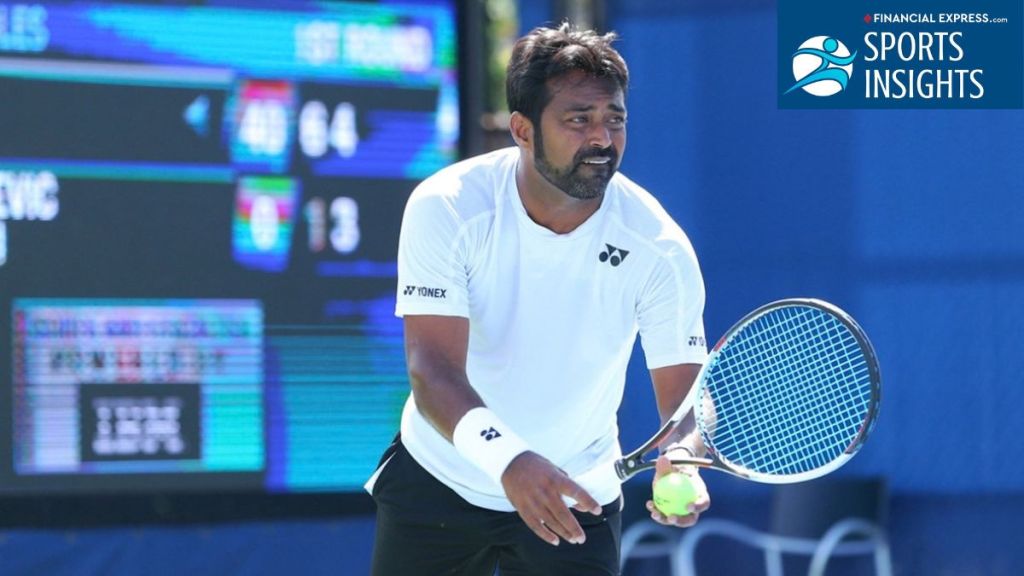

Somewhere in a Kolkata hospital in 2013, a 40-year-old man lay on a bed with tapeworm larvae lodged in his brain. The doctors had a name for it. Neurocysticercosis. They had a treatment plan too, heavy drugs, months of recovery, and a warning that his career was over.
Leander Paes heard none of it.
Within months, he was standing on Arthur Ashe Stadium in New York, holding the US Open men’s doubles trophy with Radek Stepanek. His sixth Grand Slam title in men’s doubles. His 14th overall. He was 40 years old. He had just survived a parasitic brain infection that could have killed him.
This is the story that corporate boardrooms across the world pay him lakhs to hear. Not because it is inspiring. Because it is insane. And because the man telling it has built something even more improbable than his comeback.
A business empire worth, by some estimates, $8 million to $10 million. That is roughly ₹65 crore to ₹80 crore. From a sport that barely pays its doubles players.
To understand how, you have to go back further. Much further.
The boy who was not supposed to play
Calcutta, 1973. A Goan Catholic father and a Bengali mother, both Olympians. Vece Paes played hockey for India at the 1972 Munich Games. Jennifer Paes played basketball. The household breathed sport.
Young Leander ironed his parents’ national team jerseys as a child. He has told this story many times. The ritual of pressing the fabric, smoothing out the wrinkles, staring at the tricolour. It was his way of touching greatness before he understood what it cost.
But the boy’s body was failing him before it ever got a chance to prove itself. Chickenpox. Mumps. Four severe convulsions between ages 3 and 5. Then came the diagnoses that should have ended everything.
A microvalve prolapse in his heart. Osgood-Schlatter disease, a condition that makes the knee joint scream in active adolescents. Doctors told Vece Paes, a medical professional himself, to keep his son away from competitive sport.
Vece ignored them.
The decision changed Indian sporting history. But it also created something else. A psychological framework in which adversity was not an obstacle. It was the default setting. Paes grew up believing that his body was something to be fought, not trusted.
That belief would carry him through 30 years of professional tennis, a brain infection, ruptured tendons, and partnerships that exploded in public view.
He was so good at football that PSV Eindhoven, one of Europe’s most prestigious clubs, scouted him as a teenager in the 1980s. He chose tennis instead. In 1985, he enrolled at the Britannia Amritraj Tennis Academy in Madras. By 1990, he won Junior Wimbledon and became World No. 1 in juniors. In 1991, he turned professional.
India had never seen anything like what came next.
The bronze that built a brand
Atlanta, 1996. Paes entered the Olympics as a wild card. Nobody gave him a chance. He was a doubles player trying to win in singles. He had a wrist that was falling apart, tendons rupturing with every serve. The medical staff told him to withdraw.
He played on.
He beat Fernando Meligeni of Brazil in the bronze medal match. The score did not matter. What mattered was that India had won an individual Olympic medal after 44 years. The last one was K.D. Jadhav’s wrestling bronze in Helsinki in 1952. Paes ended nearly half a century of waiting with a wrist that was medically destroyed.
The Government of India gave him the Rajiv Gandhi Khel Ratna. But something more valuable happened in the weeks that followed. Corporate India woke up to a non-cricketer who could sell products.
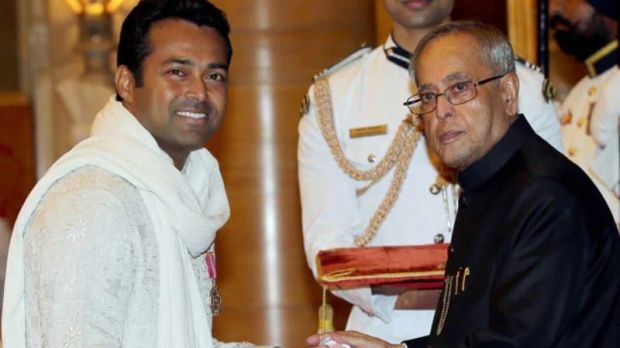
In 1997, Titan Watches signed him. The partnership lasted over two decades, one of the longest brand associations in Indian sports. Pepsi came calling. This was the late 1990s. Indian sport was not the commercial machine it is today.
There was no IPL. No Pro Kabaddi. No sports marketing agencies. Paes had to invent the playbook for how an Indian athlete, playing a non-cricket sport, could build a personal brand that corporations would pay for.
He did not just sign endorsements. He studied commerce at St. Xavier’s College. He understood early that prize money alone would never make him wealthy. Doubles tennis, his eventual speciality, paid poorly even at the top.
Reportedly, his entire career prize money was $8,587,586 across 30 years. That averages to roughly $286,000 a year. After taxes, coaching fees, travel, and medical expenses, the net was thin for someone of his stature.
So he did what any smart businessman would do. He built a company.
The company that sold sport itself
In 2005, Paes founded Leander Sport Pvt. Ltd., a sports management and consulting firm operating out of Bangalore and Kolkata. The company raised angel financing with advice from Viedea Capital Advisors. It was not an ego project. It was a serious business with multiple revenue streams.
The firm managed other athletes. Not just Paes. It handled commercial interests for Muttiah Muralidaran and Sanath Jayasuriya, two of Sri Lanka’s greatest cricketers. It represented Asian Golf Tour player Rahil Gangee and A1 Grand Prix driver Parthiv Sureshwaran. Paes was building a talent agency before talent agencies were fashionable in India.
But the real money was in infrastructure consulting. India was about to go through a sports infrastructure boom. Private academies. Corporate-sponsored facilities. Government-backed training centres.
Leander Sport positioned itself as the firm that could design, build, and manage these projects from concept to completion. It was a B2B play that most athletes would never think of. Paes saw it clearly. If India was going to invest billions in sport, someone had to build the facilities. Why not him?
The firm also developed sports education content and managed media properties. Recurring revenue. Not dependent on his performance on court. This was the key insight that separated Paes from every other Indian athlete of his generation. He treated his career as a diversified holding company, not a one-man show.
The numbers tell the story. Conservative estimates put his net worth at $8 million to $10 million. That is about ₹65 crore to ₹80 crore. Financial Express has not verified these numbers independently.
The difference is not accounting error. It is the compound growth of early real estate investments, the corporate valuation of his agencies, equity in franchise leagues, intellectual property rights, and three decades of sustained endorsement income.
Paes understood something fundamental. In sports economics, diversification beats prize money. Every time.
The partnership that broke Indian tennis
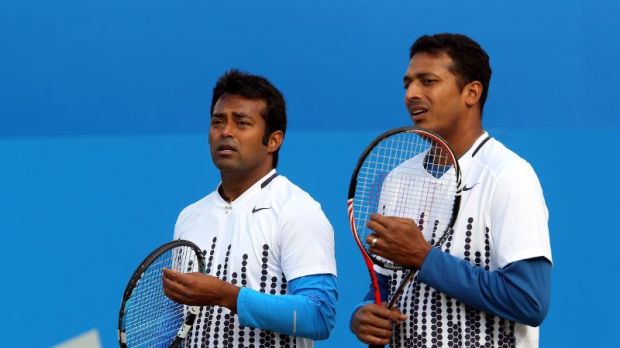
Here is where the story gets messy. Because you cannot talk about Leander Paes without talking about Mahesh Bhupathi. And you cannot talk about them without talking about what went wrong.
In 1999, the “Indian Express” reached the finals of all four Grand Slams. They won the French Open and Wimbledon. They became World No. 1. They were young, aggressive, and unmistakably Indian. The chest bumps. The raw emotion. They were not just tennis players. They were a statement about what modern India could look like on the world stage.
By 2000, they were barely speaking.
The breakup was not clean. It was a slow, public, toxic divorce that poisoned Indian tennis for over a decade. The 2021 docuseries Break Point, directed by Nitesh Tiwari and Ashwiny Iyer Tiwari, laid it bare.
Clashing egos. Communication breakdowns. Paes distrusted Bhupathi’s coach, Enrico Piperno. There were rumours of personal betrayals. Locker room politics. Two alpha personalities who could not share the same court anymore.
The pattern repeated. In 2006, after a poor showing at the Doha Asian Games, Paes publicly questioned Bhupathi’s fitness. In 2008, Bhupathi, Prakash Amritraj, and Rohan Bopanna revolted against Paes’ leadership as Davis Cup captain.
In 2012, Bhupathi refused to partner with Paes at the London Olympics, calling him a “back-stabber” in public. Bopanna joined the refusal.
The All India Tennis Association was forced to send two separate men’s doubles teams. Sania Mirza was ordered to partner Paes in mixed doubles. She said she was used as “bait” to pacify his ego. Vece Paes demanded written assurance from Mirza that she would comply.
In 2016, Paes arrived late to the Rio Olympics, prioritising a World Team Tennis event over Olympic preparation. He and Bopanna lost in the first round. Critics said his obsession with a record seventh Olympic appearance hurt the team.
In 2017, Bhupathi, now Davis Cup captain, dropped Paes from the squad for the tie against Uzbekistan. The first time Paes had been dropped since his 1990 debut. A leaked WhatsApp conversation revealed the depth of the hatred between the two men.
And yet.
Bhupathi publicly defended Paes during his ugly custody battle with former partner Rhea Pillai over their daughter Aiyana. Pillai had made allegations of domestic abuse. Bhupathi said he believed Paes could never be abusive. That he was a doting father.
Even in their worst moments, there was a grudging respect. A recognition that they were both fighting the same war, just on different sides of the battlefield.
This is the part that fascinates corporate audiences when Paes speaks today. Not the Grand Slams. Not the Olympic medal. The fact that he kept winning while everything around him was on fire. He won the 2013 US Open with Stepanek while fighting a brain parasite.
He won the 2012 Australian Open while the Bhupathi feud was at its peak. He compartmentalised trauma the way elite investors compartmentalise risk. Coldly. Completely. Without sentiment.
The speaker who sells survival
Today, Paes commands top-tier fees on the global corporate speaking circuit. Agencies like Outstanding Speakers Bureau, Celebrity Speakers India, and London Speaker Bureau manage his bookings. He has spoken to Microsoft, GE, Nestle, Tata Motors, and Coca-Cola.
His themes are “Sustained Excellence,” “Mental Resilience,” and “High-Performance Partnerships.” The irony of the last one is not lost on anyone who followed the Bhupathi saga. But that is exactly why it works. Paes does not speak from a textbook.
He speaks from a career that should have ended multiple times. A body that was declared unfit at age 5. A wrist that was ruptured during the biggest match of his career. A brain that was infected with tapeworm larvae. Partnerships that exploded in the most public way possible.
He packages all of it into lessons about change management and organisational resilience. And companies pay premium rates because they know their executives are not just buying a speech. They are buying proximity to a man who should not exist. A man who was told no by doctors, by partners, by federations, by the press. And who kept winning anyway.
The margins on speaking are extraordinary. No overhead. No inventory. Just a man, a microphone, and a story that no one else on earth can tell.
The final move
In 2021, Paes launched the Leander Paes Foundation, a not-for-profit registered in Kolkata. The focus is grassroots sports development and financial literacy for athletes. He has been vocal about the need for money management education, pointing to the systemic bankruptcy that plagues retired Indian sportspersons.
He also entered politics. In late 2021, he joined the Trinamool Congress ahead of the Goa elections. In March 2024, he switched to the BJP ahead of the West Bengal polls. The moves were strategic. In India, land allocation for sports infrastructure requires political connections. Government clearances require political goodwill. Paes was not playing politics for ideology. He was playing it for access.
He serves as Player Ambassador for the Asian Tennis Federation and sports ambassador for Haryana. He is aligned with Guru Samruddhi House of Investments as brand ambassador for their sports vertical and the GS Delhi Aces franchise in the Tennis Premier League.
He has invested in sports-tech startups, animation, and lifestyle apparel through angel networks that include Sachin Tendulkar and Abhinav Bindra. He is backing Beta Project 25, an initiative to create 25 global Indian brands over 25 years, including a revival of the BAT Academy where his own journey began.
In 2024, he became the first Asian man inducted into the International Tennis Hall of Fame.
What the numbers actually mean
Strip away the Grand Slams and the controversies. What remains is a financial blueprint that no Indian athlete had drawn before him.
Paes entered professional tennis in 1991, before liberalisation had fully transformed the Indian economy. There was no template for an athlete to build wealth outside cricket.
He created one. He signed long-term endorsements when other athletes were chasing short-term cash. He built a consulting firm when other athletes were building trophy cabinets. He invested in real estate and startups when other athletes were spending on cars and watches.
The 18 Grand Slams are impressive. The seven Olympics are historic. The Davis Cup record of 43 doubles wins is untouchable. But the true legacy of Leander Paes is this. He proved that an Indian athlete, playing a sport that most of the country does not watch, can build a business empire that outlasts the body that built it.
He is 53 now. The knees that were declared unfit at age 5 have carried him further than anyone thought possible. The heart that had a microvalve prolapse has pumped through 30 years of professional sport. The brain that was infected with parasites has outsmarted opponents, partners, federations, and an entire system that was designed to keep athletes dependent and broke.
Somewhere in Kolkata, a young boy is ironing a jersey. Staring at the tricolour. Dreaming of Olympic glory.
Leander Paes was that boy once. He became something the system never planned for. A businessman who happens to hold a tennis racket. A survivor who happens to have won 18 Grand Slams. A man who was told to quit at age 5 and instead built an empire worth ₹80 crore.
The doctors were wrong about him. Everyone was wrong about him. That is the only thing that has ever been certain.
Editorial Note: This is an independent profile. Leander Paes and their representatives were contacted but did not respond prior to the time of publication. In the absence of direct comment, this article was reported using publicly available records and regulatory filings, where applicable. This content was produced in accordance with FinancialExpress.com’s editorial guidelines.