


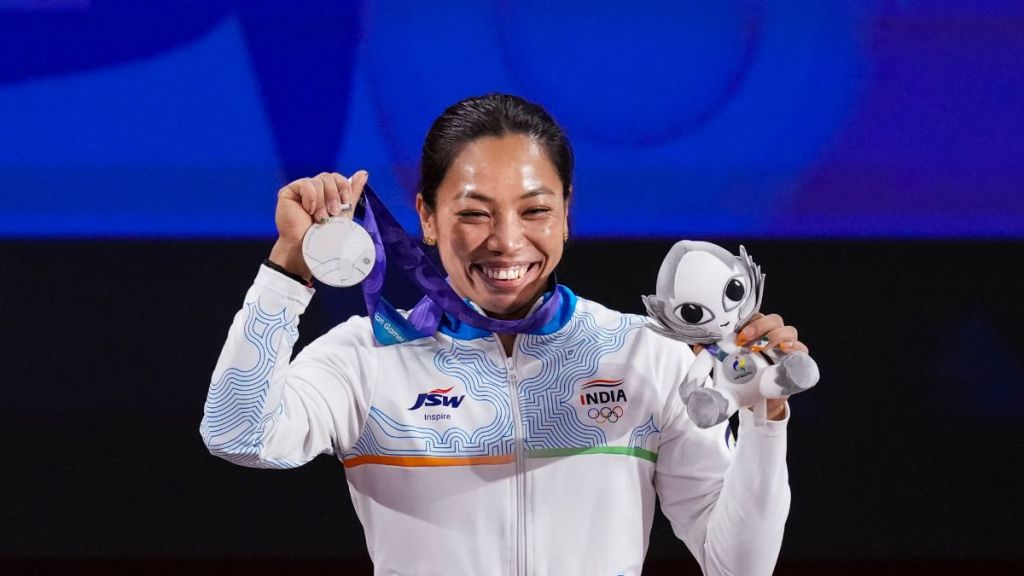

The bar weighed 107 kilograms. Mirabai Chanu walked up to it on Wednesday morning in Nagoya, chalked her palms, and for a few seconds stood at the top of the standings in an event she had never once medalled in, in three tries across twelve years.
Then Ri Song Gum came out and lifted 121 kilograms in her final attempt, a world record, and the gold slipped away again.
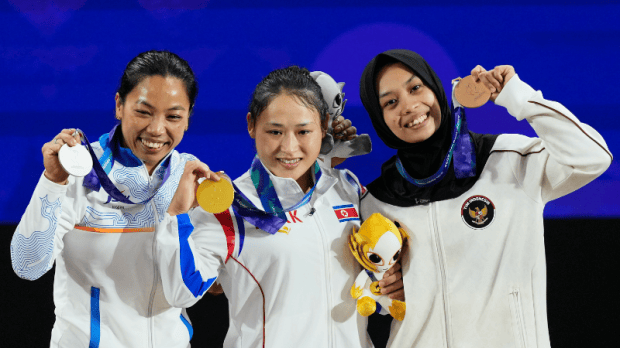
But this time Chanu did not walk off the platform in fourth place. She finished with a total of 198 kilograms to win the silver medal, India’s first Asian Games weightlifting medal since Karnam Malleswari’s silver way back in 1998. Twenty eight years. A whole generation of Indian lifters had come and gone in that gap.
For a country that treats Olympic medals like festivals, a silver at the Asian Games might sound small. It is not. Ask anyone who has watched Chanu since 2016, and they will tell you this medal means more than most golds.
A girl who carried wood, not weights
Before any of the money, before the 10x jump in her brand fee, before the academy in Ghaziabad, there was a 12 year old girl in Nongpok Kakching, a village near Imphal, hauling firewood with her older brother. He struggled. She did not. That was the whole scouting report.
She wanted to shoot arrows, not lift iron. She walked into the Sports Authority of India complex in Imphal hoping to join archery. Nobody was training that day. She wandered into the weightlifting hall instead, saw footage of the Manipuri legend Kunjarani Devi, and stayed.
For years after that, she travelled close to 40 kilometres a day to train, hitching rides with sand and timber truck drivers because there was no bus money to spare. That detail matters later. It explains a lot about who she chose to thank once the medals started coming.
The collapse that nearly ended everything
Rio 2016 should have been her coronation. She had broken Kunjarani Devi’s 12-year-old national record. She was a genuine medal hope. Instead, she walked onto the platform and froze. Three attempts. Three failures.
All in the Clean and Jerk. The bar would not go up. The crowd went quiet. India went loud. Social media can be cruel to a 22-year-old who carries a nation’s expectations and drops them.
Chanu went into depression. She thought about retiring. The thought stayed for months.
Her coach Vijay Sharma did not let her go. They rebuilt everything. The technique. The psychology. The belief. She enrolled in a Sports Psychology degree at Amity University Online, studying why the mind breaks under pressure and how to stop it from breaking. She applied what she learned to herself first. Then, years later, she would apply it to others.
In 2017, at the World Championships in Anaheim, California, she lifted 194kg total and won gold. First Indian in 22 years to do it. The comeback was real. Then Tokyo 2020, held in 2021 because of the pandemic. She lifted 202kg total. Silver medal. India’s first medal of those Games. The girl who failed at Rio stood on the Olympic podium wearing her mother’s gold earrings.
This is the emotional ledger behind every commercial number that follows. Sponsors did not just buy a medal. They bought a comeback story, and comeback stories sell.
What silver is actually worth
Before Tokyo, brands paid Chanu somewhere between 10 and 20 lakh rupees a year. After the Olympic medal, her management agency, IOS Sports and Entertainment, which has run her career since 2018, renegotiated everything. Her fee jumped roughly tenfold, to around a crore a year per deal.
Who pays that kind of money, and why?
Amway put her at the front of its Nutrilite supplement line. Adidas signed her into a global multi sport campaign. Mobil Engine Oil wanted her face next to words like endurance and reliability, which is really just advertising language for what she does with a barbell every four years.
Star Cement wanted strength. Domino’s picked her up after a viral moment following one of her medals and kept the relationship going for the long haul. An electric mobility company called HOP signed her as a sustainability partner, betting that fans who trust her with their health will trust her with their commute too.
None of this happens without the lift itself working. A missed clean and jerk does not just cost a medal. It costs renewal meetings, it costs the next campaign shoot, it costs the story a brand wants to tell. That is the quiet pressure sitting under every attempt she takes at a competition, heavier in some ways than the bar itself.
Building something that outlives her own barbell
Most athletes with this kind of money take the easy route. They invest in a startup, or they put their name on a gym chain and let someone else run it. Chanu went a different way.
In 2024, along with Olympic Gold Quest and her long time coach Vijay Sharma, she co-founded the Weightlifting Warriors Academy in Ghaziabad. It is a residential training centre, with a biomechanics lab attached, built specifically to find lifters from places like her own village, places nobody else is scouting.
It is already producing results. A 17 year old athlete from the academy, Koyel Bar, won gold and set a youth world record in the 53kg category at a Commonwealth junior event in Ahmedabad. Chanu is now planning a second academy back home in Manipur.
Think about what that actually is. It is not charity. It is not a vanity project either. It is infrastructure, the unglamorous kind, built by someone who remembers exactly what it felt like to not have any.
The drivers, again
After Tokyo, before she did anything else, Chanu went looking for the truck drivers. Not sponsors, not media, the drivers who used to give her free rides to training two decades earlier. She found more than 150 of them and threw them a feast at her home in Manipur, giving each one clothes, traditional scarves and a bit of money.
It is a small story next to the crore figures and the world records. But it is the story that explains everything else. A woman who remembers exactly who helped her when she had nothing does not build an academy by accident, and she does not sign only the brands willing to write the biggest cheque either.
The Missing medal
The Asian Games have been her white whale.
Incheon 2014. She was 19. Ninth place. Total lift 175kg. Just happy to be there. Jakarta 2018. She was the favourite. World champion, Commonwealth champion, everything champion.
A stress fracture in her lower back forced her out weeks before the event. Hangzhou 2023. She carried a thigh strain into the competition. On her final Clean and Jerk attempt at 117kg, going for bronze, her hip gave way on the platform. She collapsed. Fourth place. Missed the podium by 8kg. The pain was visible from the stands.
No Indian weightlifter has won an Asian Games medal since Karnam Malleswari took silver at Bangkok 1998. Chanu has been trying to end that drought for over a decade.
Now it is September 23, 2026. Aichi-Nagoya, Japan. The Asian Games are here again. Chanu arrives fresh from winning her third consecutive Commonwealth Games gold in Glasgow, where she lifted 190kg total in the 48kg class and beat her nearest rival by 22kg.
She did not go home to celebrate. She went straight to the national camp in Modinagar. Her rule was simple. No going home till I win a medal at the Asian Games.
She has been working with Dr. Aaron Horschig, an American physical therapist and strength coach, to fix her wrist and shoulder stability. The target is to cross 90kg in the Snatch, a number she has chased for six years. She moved back up to 49kg, her Olympic weight class, after competing at 48kg in Glasgow.
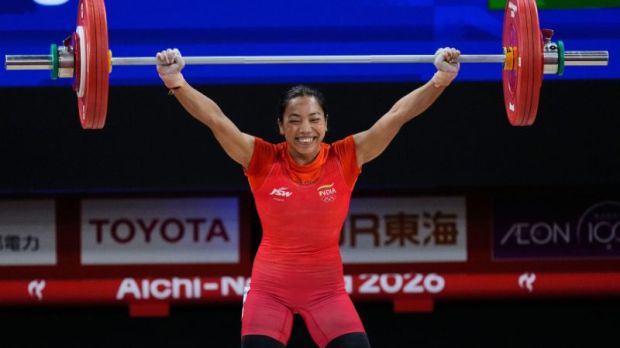
The field opened up when China decided not to enter a lifter in the 49kg division. That left Chanu in a direct fight with Ri Song Gum of North Korea, the reigning champion and world record holder, who declared 210kg. Chanu declared 200kg. Fang Wan-ling of Chinese Taipei entered at 201kg. Luluk Diana Tri Wijayana of Indonesia, a world junior champion, also at 200kg.
On the morning of September 23, at the Nagoya City Trade and Industry Centre, standing on a podium that had eluded her through Incheon, through a withdrawal in Jakarta, through a hip injury in Hangzhou that took her down mid lift, Chanu finally had something.
Silver around her neck that said Asian Games on it. Ri Song Gum’s world record total of 215 kilograms meant gold was never really in reach on the day. It did not matter as much as it once might have.
Some medals are about winning. This one was about finishing something.
28 years after Karnam Malleswari, and nine years after a girl who once could not lift a bar in Rio thought about walking away from the sport altogether, Mirabai Chanu did not walk away. She just kept lifting, one bar at a time, until the numbers on the scoreboard finally matched the years she had put in.