



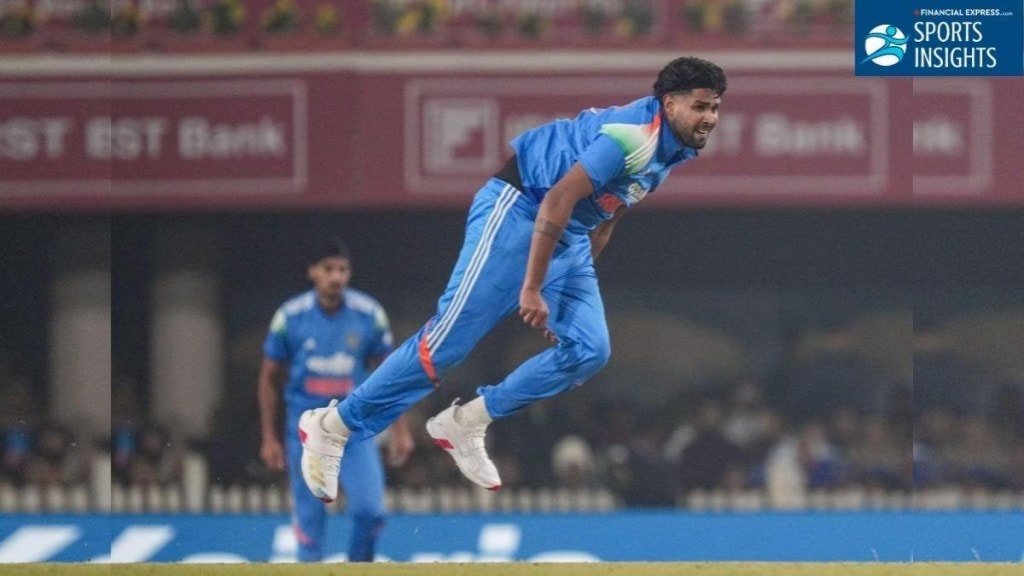
The Transformation: From Online Hate to On-Field Heroics
Social media can make you a villain for breathing wrong. One day you are living your dream, the next day strangers are typing essays about why you should not exist. Harshit Rana knows this feeling better than most. The Indian team management picked him, backed him, kept faith when he did not take wickets in his first few games. And Twitter went mad. Instagram exploded. People wrote long posts saying he was getting favored, that he did not deserve the chances, that there were better players sitting at home. They made it sound like it was his fault for getting selected. As if he should have said no thank you, I am not good enough, please give my spot to someone else.
But here is the thing. In two straight ODIs now, against two top sides, in completely different conditions, he has shown why that backing was not charity. It was smart. It was vision. While Virat Kohli and Rohit Sharma were making headlines with their batting, this 23-year-old kid from Delhi was quietly tearing batting lineups apart. And he was doing it with a smile that said, I told you so, but politely.
How Gambhir and Dravid Built Confidence Amidst Criticism
They called him the management’s pet. They said he was getting free rides. Every time his name appeared in the playing eleven, the comments section started screaming. Rana would see these things. Of course he saw them. He is 23, not blind. He would sit in his hotel room and scroll through his phone and read people questioning his place in the team.
What people did not see was the work. They did not see him in the nets at KKR, bowling until his fingers bled. They did not see Rahul Dravid pulling him aside in South Africa when he was just an India A net bowler, telling him specific things to fix. They did not see Gautam Gambhir looking him in the eye and saying, “Mere ko tere pe trust hai. Tu match jeetake aayega.” That trust costs something. It is not given for free. Rana paid for it with sweat and tears and rejection after rejection.
A Match-Winning 4/39 vs Australia in Sydney
Last month, third ODI at Sydney. Australia were cruising at 183 for 3 in the 34th over. Then Rana came on. He took four wickets. Four for 39. Australia collapsed to 236 all out. What the scorecard does not show the silence in the Sydney crowd. It shows numbers. 4 for 39. But those numbers meant everything for Rana.
Ranchi Analysis: Defying Dew to Dismantle South Africa
Yesterday in Ranchi, everyone talked about dew. The experts said the ball would be slippery, that South Africa would chase easily, that India needed 400 to be safe. Rana heard all this. In his very first over, he took two wickets in three balls. Two. In three balls. The dew did not matter. The ball was swinging, seaming, doing everything. Later, when Dewald Brevis looked dangerous, Rana came back and got him too. Three wickets. The match turned.
He finished with three for 65. Sometimes cricket is that simple. You bowl well, you get wickets, you win. The rest is just noise.
Harshit Rana 2025 Stats: Leading the Charts with 19 Wickets
Nine ODIs. Nineteen wickets. Average of 20.9. Strike rate of 21.1. He is India’s leading wicket taker in 2025. Nobody else has even fifteen wickets. Think about that. A kid who was supposed to be a liability is now the most important bowler in the team. The numbers sit there quietly. They do not scream. They do not need to. Anyone who understands cricket can see what they mean. They mean Rana is not just taking wickets, he is taking them when it matters. In the powerplay. In the middle overs. When the captain throws him the ball and says, do something, he does something.
IPL 2024: The Blueprint Nobody Noticed
Chennai final. Rana’s first over. Three straight slower offcutters into the red soil. The ball gripped and bounced like an offbreak. Aiden Markram and Reddy wanted to break free. They were stepping out, making room, doing everything batters do when they are desperate. Rana watched. He waited. Then he cranked the fourth ball up to 146kph. Angled in, seamed away, Reddy nicked it. Out.
He got 19 wickets in 13 games that IPL. Most by any uncapped Indian player. Ten of his wickets came from slower balls. Ten. While everyone was talking about pace, Rana was proving that thinking is more important than speed. That final over against Klassen was not luck. It was a plan. It was a mind working faster than the bat in front of it.
People Who Made Him
Rana says three people made him. His father Pradeep, who never gave up when his son kept getting rejected. His coach Amit Bhandari, who taught him the technical stuff. And Gautam Gambhir, above everyone else. Gambhir changed how Rana thinks about pressure. At the elite level, skills are common. Everyone can bowl 140kph. But not everyone can handle the moment when the game is on the line. Gambhir told him he trusts him. That trust is everything.
Dravid had a word with him in South Africa. Rana was injured. Dravid came to him, told him specific things to work on. For two and a half months, Rana worked on those exact things. He learned about diet, training, recovery. He learned that getting better never stops. The senior players showed him that.
Rejection That Built His Mind
In an interview with Nagraj Gollapudi from ESPNCricinfo, Rana mentioned that he did not play Under-14. He did not play Under-16. He played three matches in Under-19 for Delhi. Then he got rejected from Under-25. He would go for trials and not even get shortlisted. No reasons given. Just no after no after no. He would cry in his room. His father would tell him, “I am here. Why are you taking tension? Play with a free mind.” That advice stuck.
When he got picked for Zimbabwe after IPL 2024, he called his father. His father said, “You have fulfilled my 35-year-old dream. Thank you.” They both cried. That moment was bigger than any wicket. It was bigger than any match.
A Unique Record: Three Wickets in Three Debuts
Test debut in Perth against Australia. Three wickets. First T20I against England in Pune. Three wickets. ODI debut against England in Nagpur. Three wickets again. He is the only Indian to take three wickets in his debut across all formats. The numbers are weird. They feel like they belong in a storybook. But they are real. They happened.
At 23, Rana is learning. He is not the finished product. But he has the main ingredients. He can think. He can handle pressure. He can bowl the right ball at the right time. That is rarer than pace. That is what wins matches.
The trolls have gone quiet now. They have moved on to someone else. That is how it works. But Rana remembers. He remembers the posts, the comments, the threads. He remembers his father telling him to keep going. And he keeps going. That is the human angle here. Not the wickets. Not the stats. The fact that a boy who was told no his whole life is now saying yes, I belong, with every ball he bowls.