


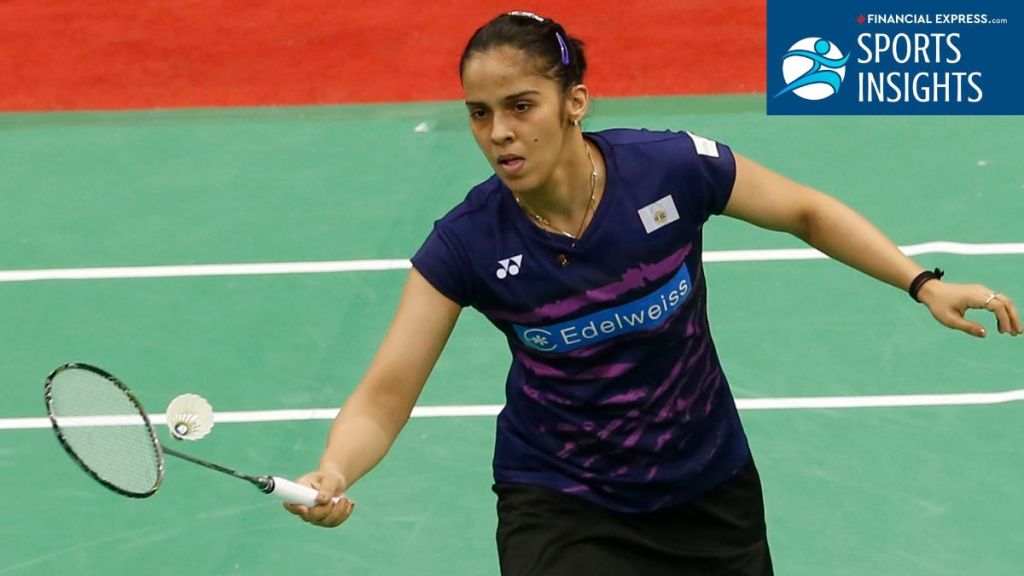

It is 4 in the morning in Hyderabad, sometime in the late 1990s. A small girl sits on the back of a two-wheeler, eyes closing every few seconds. Her father is riding. The stadium is far, and the round trip is 25 km.
Her mother sits behind her on the pillion. She is there for one reason: to hold her daughter and make sure she doesn’t slip and fall on the road.
That child was Saina Nehwal. The routine went on until 1999, when the family finally moved closer to the stadium. Nobody on that scooter could have known that the girl would one day win India’s first Olympic medal in badminton, become the world’s best player, and later sit across the table from startup founders deciding whose company deserves her money.
The money part of this story begins much earlier, though, and it begins with her father.
The money nobody talked about
Saina was born on March 17, 1990, in Hisar, Haryana. Badminton was already in the house. Her parents, Dr Harvir Singh Nehwal and Usha Rani Nehwal, had both been Haryana state champions.
When the family moved to Hyderabad, coach Nani Prasad spotted her at the Lal Bahadur Stadium. The talent was clear. The problem was the money.
In the early 2000s, keeping her in the sport cost about ₹12,000 a month. That covered imported Yonex rackets, good shuttlecocks, proper shoes, restringing charges and daily travel. For a salaried family, that is not pocket money. It is a second rent.
So her father did what many Indian fathers quietly do. He withdrew from his Provident Fund, and he did it more than five times. The amounts ranged from ₹30,000 to ₹10 lakh, each withdrawal eating into the savings meant for his own old age.
Saina did not know. Her parents made sure of that, because they did not want her worrying about money on court.
Her mother handled the other side. Usha Rani was strict and demanded that her daughter play to win, whatever the situation. Ask any athlete who grew up like this and they will tell you the same thing. The scolding at home stays with you longer than any coaching manual.
Relief came slowly. Yonex began sponsoring her equipment in 2002. Bharat Petroleum Corporation Limited (BPCL) came in 2004, and the Mittal Champions Trust in 2005.
Keep that PF story in mind. It explains almost everything she did with money later.
Breaking a wall that had stood for decades
For a long time, women’s singles badminton belonged to China and East Asia. Indians took part. They rarely won the big ones.
Saina started chipping away early. In 2006, as an unseeded teenager, she won the Philippines Open, a 4-star event. In 2008 she became the first Indian to win the World Junior Championship.
Then came June 2009. She won the Indonesia Open, the first Indian ever to take a BWF Super Series title. The Arjuna Award followed that year, and the Rajiv Gandhi Khel Ratna for 2009-2010.
In 2010 she won gold at the Commonwealth Games in Delhi, in front of a home crowd that expected nothing less. That kind of pressure breaks people. She got the Padma Shri that year and was named BWF’s Most Improved Player.
London 2012 was the one that changed the sport in India. Her bronze in women’s singles was the country’s first Olympic medal in badminton. The Andhra Pradesh government gave her ₹5 crore and the Badminton Association of India added ₹1 crore.
Think about that ₹5 crore for a second. A decade earlier, her father was emptying his retirement fund in pieces of ₹30,000.
In April 2015 she reached World No. 1 in the BWF rankings, the first Indian woman to get there. The Padma Bhushan came in 2016. She won gold again at the 2018 Commonwealth Games in Gold Coast, in singles and in the team event. By the end she had 24 international titles, 10 of them Super Series crowns. SRM and Mangalayatan universities later gave her honorary doctorates.
Plenty of children in Indian cities picked up a racket because of her. Equipment shops, coaching academies and local tournaments all grew on that wave. That is the kind of business impact no balance sheet records properly.
The partner in the corner
Parupalli Kashyap has been in her life since 1997, when they both trained at the Pullela Gopichand Academy. They married on December 14, 2018, in Hyderabad.
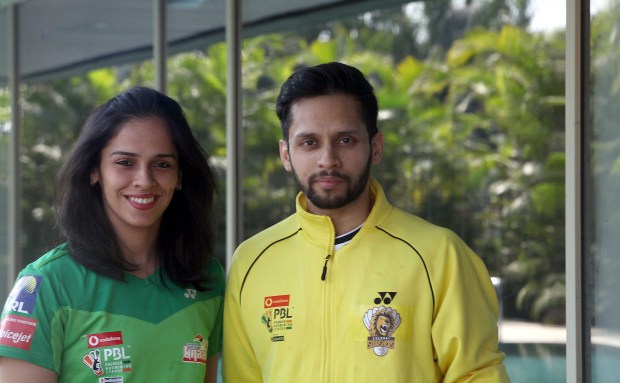
When injuries hit her hard, Kashyap stepped in as strategist and coach. He helped guide her to a bronze at the 2018 Asian Games. That support stretched her playing years, and those extra years gave her time to plan what came after.
A girl from a ‘PF family’ learns to negotiate
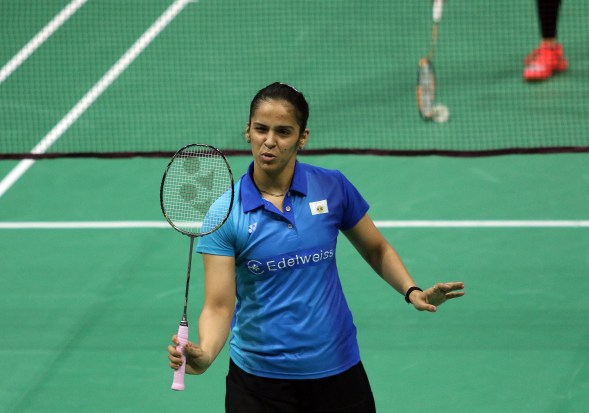
At her peak, Saina charged ₹1 crore to ₹3 crore per brand every year. Herbalife, BPCL, Edelweiss, Max Life and Kellogg’s all signed her. In 2012 she signed a ₹40 crore deal with Rhiti Sports, one of the first multi-crore management contracts for any Indian athlete outside cricket. She later moved to KWAN Entertainment.
Cricket used to swallow almost all sponsor money in India. She was one of the people who proved a shuttler could pull it too.
The Yonex deal that kept paying
The smartest deal may be the quiet one with Yonex. They supplied her gear, yes, but she also got her own signature product line with a 4% share of profit on global sales. She was paid to hold the racket, and she also earned a cut every time someone bought one with her name on it.
What her name is worth
Her other numbers tell you how much her name was worth. A short appearance at an event costs ₹5 lakh to ₹10 lakh, and a full day can go up to ₹30 lakh. A social media campaign brings in ₹25 lakh to ₹1 crore, and a single post ₹1 lakh to ₹3 lakh.
She lives in a Hyderabad home, in the Jubilee Hills and Gachibowli area, valued at more than ₹5 crore. The garage has a BMW, a Mercedes-Benz and a Mini Cooper. As of 2026, her net worth is estimated at ₹42 crore to ₹50 crore, roughly $5.5 million to $6.5 million. Financial Express has not verified these numbers independently.
That is a comfortable life by any measure. What she has chosen to do with the money is where the story gets more interesting.
The first bet: Pads and Prejudice
In 2014, Saina became brand ambassador for Paree sanitary pads, made by Noida-based Soothe Healthcare, founded by Sahil Dharia. Most stars would have stopped there, taken the fee and moved on.
In November 2015 she put her own money into the company.
Her reasoning was practical. In India’s tier-2 and tier-3 towns, a lot of women still could not easily find or afford sanitary products. That is a social problem, and it is also a very large market that bigger brands had not served well.
Her money helped push marketing and spread the product across shops. Later, serious investors arrived: A91 Partners, Sixth Sense Ventures, Northern Arc and the US International Development Finance Corporation (DFC).
In total the company has raised ₹175 crore. Its pads now reach women through government programmes under the National Health Mission as well as regular retail.
She came in as the face on the packet and ended up as one of its owners. Most celebrities never make that move.
The second bet: A young brand from Nashik
On March 5, 2025, she invested in Naarica, a femtech startup from Nashik founded in 2023 by Shruti Chand. She also became its brand ambassador.
Naarica makes reusable, antibacterial period underwear and intimate wear, meant to replace disposable products. For an athlete who spent years competing through her cycle, comfort and reliability are not marketing words. She has lived them.
The company is small. Revenue in FY25 was ₹81.3 lakh. But it was ₹20.2 lakh a year before, which means sales grew 301.5%. The seed money is going into operations, new products and reaching women in poorer areas.
Getting in this early on a company growing this fast is where an investor makes real money. It is also where she can lose it.
The third bet surprised people
Then she did something nobody expected from a sportsperson.
On June 27, 2025, she joined a $10 million Series A round in Hyderabad’s Brihaspathi Technologies Limited, investing alongside foreign institutions and private equity names like Kingsman and Citrus Global.
This is not a consumer brand. Brihaspathi builds AI-based video analytics, IoT hardware and smart city systems, and also works in rooftop solar and e-mobility. Its yearly revenue is somewhere between ₹100 crore and ₹500 crore.
The money is going into a new factory at TSIIC’s Industrial Park, 400 new jobs, and preparation for a stock market listing planned for FY27.
Those 400 jobs mean 400 families in and around Hyderabad, the same city where her own family once counted every rupee.
Why move from pads to smart city hardware? Badminton gives the answer. You do not play every opponent the same way. Spreading money across consumer health and heavy technology means a bad year in one sector does not sink everything.
What the scooter taught her
Look closely and her investing has a pattern.
She avoids wild bets. She prefers companies that already sell something people need, with numbers to show for it. A child who watched her father break his retirement savings learns early that money lost is not easily replaced.
She backs what she understands. Years of training made her an expert on the body, on endurance, on what a product must do under pressure. That is why women’s health keeps showing up in her portfolio.
And she waits. Badminton made her train for years before the big wins arrived. Brihaspathi’s IPO is still some distance away, and she seems fine with that.
Beyond the cheque
Through Soothe Healthcare and Naarica, she supports programmes for schoolgirls in rural India that hand out free sanitary products and talk openly about menstruation, a subject many families still avoid.
She has given donations to the Prime Minister’s National Relief Fund and to state relief efforts during disasters and health emergencies. She also pays for equipment and scholarships for junior players from poor families, working with centres like the Saina Nehwal Badminton Academy.
One global list ranked her 18th among the world’s most charitable athletes.
Back to the pillion seat
Somewhere in Hyderabad right now, a parent is probably checking how much is left in the PF account. A child is asleep on the way to a 4 AM practice. The family is doing the maths and not telling the kid.
Saina was that kid. Her father paid with his retirement. Her mother held on to her on a moving scooter.
Today she is the one deciding whose dream gets funded. Founders from Noida, Nashik and Hyderabad now sit where her parents once sat, hoping someone believes in them enough to put money on the table.
She knows exactly what that feels like. She just happens to be on the other side of the scooter now.
Editorial Note: This is an independent profile. Saina Nehwal and their representatives were contacted but did not respond prior to the time of publication. In the absence of direct comment, this article was reported using publicly available records and regulatory filings, where applicable. This content was produced in accordance with FinancialExpress.com’s editorial guidelines.