


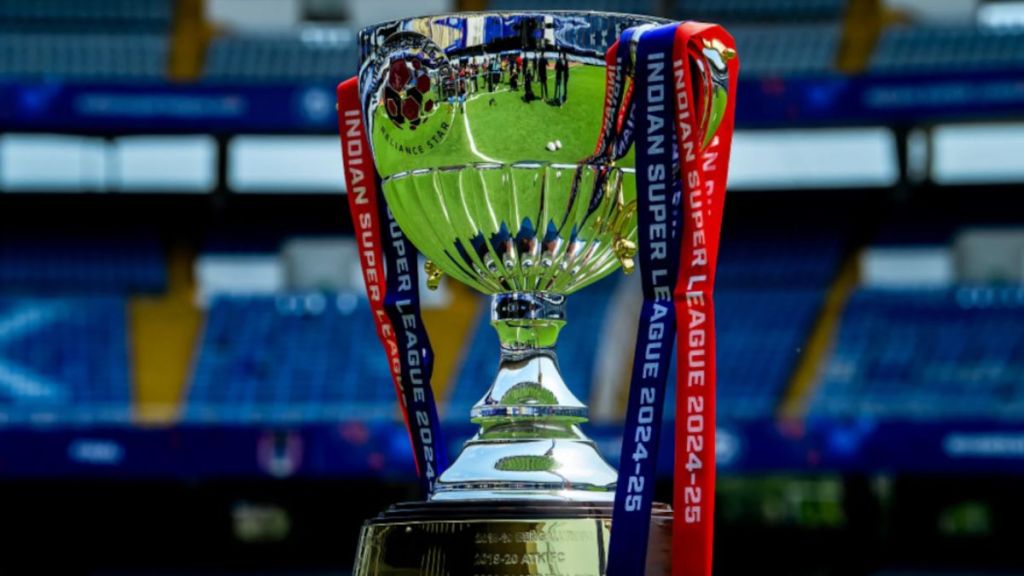

The Indian Super League (ISL) has a television broadcaster again. But for a league that spent months grappling with uncertainty over its future, securing a media partner is only the first step towards rebuilding its commercial appeal.
Sony Sports Network has returned as the television partner for the 2026-27 season, while SonyLIV will stream all 163 matches. YouTube has also joined as the league’s digital distribution partner, with all matches scheduled to be available live and free on the platform.
The arrangement, announced in October, gives the ISL three routes to reach viewers: traditional television, subscription-based streaming and free digital streaming. However, the coverage is not identical across platforms. Sony Sports Network is expected to televise more than 80 matches, rather than the entire 163-match season.
The league has made a substantial move towards improving access, but fans who prefer watching football on television may still find that not every fixture is available on their preferred channel.
The more important question for the business of Indian football is whether the new distribution model can deliver the audience, sponsorship revenue and commercial stability that the league needs.
From a broadcast crisis to a new distribution model
The latest arrangement follows a period of considerable disruption for the ISL.
The 2025–26 season was delayed amid uncertainty surrounding the league’s commercial structure and its future. The All India Football Federation (AIFF) subsequently conducted a fresh media-rights process, with FanCode emerging as the media partner for a shortened campaign.
The season eventually resumed in February 2026 in a reduced format of 91 matches, a significant departure from the league’s usual schedule.
FanCode’s appointment also exposed an important distinction in sports broadcasting. A digital platform can distribute matches online, but television coverage requires a separate arrangement with a broadcaster that operates linear channels.
In February, FanCode sub-licensed television rights for the 2025–26 season to Sony Sports Network. The partnership enabled the competition to reach television audiences even though FanCode was the original media-rights holder.
The arrangement for 2026–27 represents a further change. Sony is now part of a broader distribution structure that combines television coverage with streaming on SonyLIV, while YouTube offers another route to audiences.
Why a streaming deal does not guarantee every match on television
Sports media rights are not a single, indivisible product.
A league can sell or allocate rights across television, subscription streaming, free streaming, highlights and other forms of digital content. The number of matches available on each platform depends on the terms of the agreements, rather than simply the identity of the overall media partner.
For the ISL, Sony Sports Network provides a television distribution route, SonyLIV carries the full season online, and YouTube is intended to make every match available without a subscription.
The reported television commitment of more than 80 matches means that fans should not assume that all 163 fixtures will be shown on Sony’s linear channels. The full schedule is available digitally, but television coverage is more limited. There are several commercial reasons why a broadcaster might choose to televise only part of a competition’s schedule.
First, television channels have finite capacity. A broadcaster must accommodate other sports, studio programming and existing rights commitments. A fixture may be available online even if it is not selected for a linear television slot.
Second, the economics of television and streaming differ. A match shown on television can generate advertising inventory and attract viewers who do not use streaming applications. Online distribution, meanwhile, can offer greater flexibility in scheduling and can provide audience data that helps platforms and sponsors understand viewing behaviour.
Third, broadcasters must weigh the cost of acquiring and producing rights against the revenue those rights can generate. The commercial value of a league depends not only on the number of matches it offers but also on audience size, engagement, advertiser demand and the strength of its sponsor base.
The exact contractual reasons behind the ISL’s television match allocation have not been publicly established. It would be premature to attribute the decision to a particular financial, scheduling or production constraint without confirmation from Sony or the league.
The economics behind the ISL’s media-rights reset
The new distribution arrangement comes against the backdrop of a sharp fall in the reported value of the league’s media rights. For the 2024-25 season, the previous media-rights arrangement was reported at about ₹275 crore for 163 matches, equivalent to approximately ₹1.69 crore per match.
For the shortened 2025–26 campaign, FanCode’s winning broadcast-only bid was reported at ₹8.62 crore for 91 matches, or roughly ₹9.5 lakh per match. The comparison is striking. On those reported figures, the per-match value fell by more than 94%.
However, the figures should not be treated as a perfectly like-for-like comparison without examining the contracts. The seasons differed in duration, the number of matches, the surrounding commercial arrangements and the uncertainty facing the competition. The 2025–26 bid also related to a shortened season rather than a full campaign.
Even with those qualifications, the contrast highlights the scale of the challenge facing the league. Media rights are an important source of revenue for sports competitions. A league with stronger and more predictable rights income can offer greater commercial certainty to clubs, attract sponsors and invest in the production and promotion of its matches. When rights values fall sharply, the pressure to identify alternative revenue streams increases.
For the ISL, the immediate priority is to rebuild confidence in the competition as a consistent media property. A full season, a clearly communicated broadcast schedule and reliable distribution across platforms can help make the league more attractive to advertisers and commercial partners.
The reported value of the new Sony arrangement should be verified independently before being used to assess whether the ISL has recovered any of the ground lost during the previous rights cycle.
Why YouTube could be as important as television
The inclusion of YouTube adds another dimension to the ISL’s distribution strategy.
Free streaming removes the need for viewers to purchase a subscription or have access to a television channel carrying a particular fixture. It also makes matches easier to discover through searches, recommendations, club channels and links shared on social media.
For a league trying to broaden its audience, that accessibility could be valuable. Indian football has supporters with strong local and regional loyalties, but converting that interest into consistent national viewership has long been a commercial challenge.
A free platform could help the league reach occasional viewers as well as committed supporters. It could also make it easier for younger audiences, who increasingly consume sports content across mobile devices and connected televisions, to follow teams and players.
There is a commercial trade-off, however. A large number of streams does not automatically translate into a corresponding increase in revenue.
The league and its partners will need to demonstrate that digital reach can attract advertisers, improve sponsor visibility and encourage viewers to return regularly. Live-match views, watch time, repeat viewing, audience retention and engagement around club content will be more informative than headline view counts alone.
YouTube’s presence also does not make television redundant. Television remains an important route to households that prefer scheduled programming, while regional-language coverage can help clubs connect with audiences in their home markets.
The three platforms could therefore serve complementary purposes rather than compete for exactly the same viewers.
What changes under the club-led model?
The media-rights agreement also needs to be viewed in the context of the ISL’s changing commercial structure.
The league is moving towards a club-led model in which clubs have a greater role in managing commercial rights and generating revenue, while the AIFF continues to oversee the competition’s administration and regulatory framework.
That shift changes the incentives around distribution. Clubs have a direct interest in reaching supporters, improving sponsorship opportunities and increasing the commercial value of their brands. They also need a predictable competition calendar and a media arrangement that allows them to plan campaigns around fixtures.
A multi-platform agreement can support those objectives, but only if the arrangements are clear and consistently implemented.
For example, clubs need to know which matches will be televised, how regional-language coverage will work, how digital content can be used for promotion and what rights they retain to publish highlights or other material. Sponsors, in turn, need clarity on where their branding will appear and how audiences will be measured.
The answers will help determine whether the new model creates additional commercial value for clubs or merely changes the route through which matches reach viewers.
The financial implications also extend beyond the broadcaster. Production costs, match-day operations, sponsorship income and other commercial expenses all affect the resources available to clubs. A rights deal is an important component of the business, but it cannot by itself guarantee the financial sustainability of the competition.
The next test is audience growth, not simply availability
The ISL’s new media arrangement addresses an immediate problem: fans now have multiple ways to watch the competition, including a free digital option.
But distribution is only the beginning.
For Sony, the challenge is to make the competition commercially viable across television and streaming. For YouTube, it is to convert free access into sustained audience engagement. For the ISL and its clubs, it is to translate a wider distribution network into stronger sponsorship opportunities, greater fan loyalty and more predictable income.
The league will also need to ensure that its fixtures are easy to find and that viewers understand where each match is available. Confusion over channels or inconsistent promotion can undermine the value of a rights agreement even when the underlying coverage exists.
The longer-term measure of success will be whether the ISL can establish a stable annual calendar, attract a larger and more consistent audience, and improve the commercial returns available to clubs.
Sony’s return is therefore more than a change of broadcaster. It is an early test of whether the ISL’s new distribution and governance arrangements can restore confidence in Indian football as a sustainable media and commercial property.