


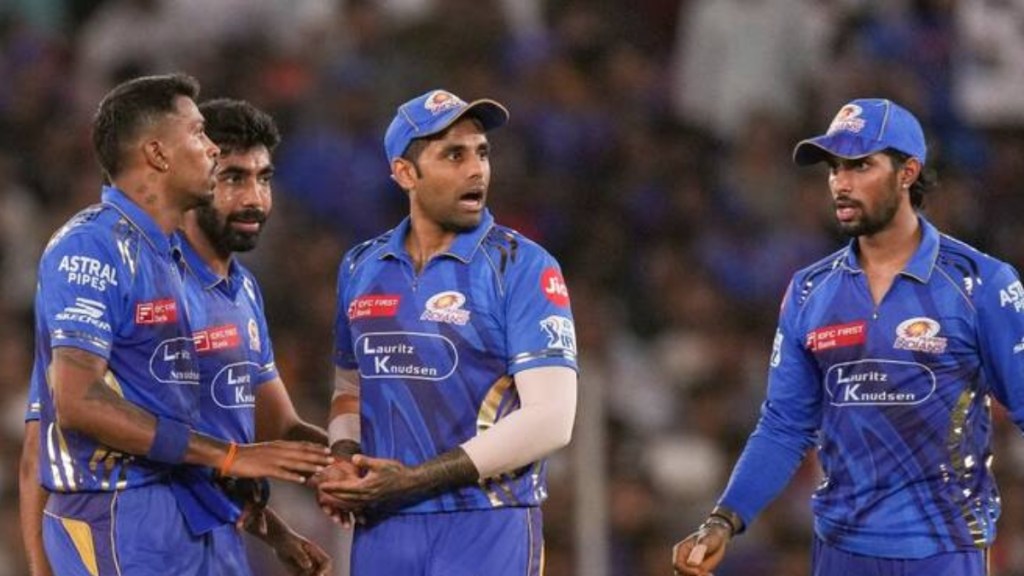

Mumbai Indians are the Indian Premier League’s (IPL) most valuable franchise, with an estimated valuation of $2.1 billion, according to Sportico’s 2026 rankings. But the more revealing number is not the valuation itself. It is the premium investors are prepared to pay for the league’s commercial model.
Sportico estimates that the IPL’s 10 franchises are worth a combined $17 billion, with an average value of $1.7 billion each. The average franchise generated an estimated $74.4 million in revenue during the 2026 season, putting the league’s average valuation at 22.9 times annual revenue.
That multiple offers a different way to understand the IPL’s financial strength: investors are paying not just for teams, star players or championship prospects, but for access to a competition with a substantial central revenue pool and significant commercial reach.
Why the IPL commands a premium
The IPL’s revenue structure is a major part of its appeal. According to Sportico’s analysis, around 75% of an average franchise’s revenue comes from central distributions made by the Board of Control for Cricket in India (BCCI).
These distributions are largely supported by broadcasting rights and league-level commercial income. The IPL’s 2023-27 media-rights package was valued at approximately $6.2 billion, providing a substantial foundation for the competition’s finances. Individual franchises also earn money through sponsorships, ticket sales and merchandise.
The importance of central distributions is that franchises do not depend entirely on their own commercial teams or their performance in a particular season to generate revenue. A large portion of their income is linked to the economics of the league as a whole.
That does not eliminate financial or sporting risks. However, it helps explain why investors may value IPL franchises more aggressively than teams whose earnings rely more heavily on local commercial activity or match-day income.
A valuation multiple that stands apart
Sportico puts the IPL’s average revenue multiple at 22.9, compared with 14.6 for the National Basketball Association (NBA), 12.7 for the National Football League (NFL), 9.4 for the National Hockey League (NHL) and 7.2 for Major League Baseball (MLB).
A revenue multiple compares a business’s valuation with its annual revenue. It indicates how much investors are willing to pay for every dollar the business earns, although it does not measure profitability or cash flow directly.
The IPL’s multiple is therefore notable even against established American sports leagues. It suggests that buyers see considerable value in the competition’s future commercial prospects, centralised revenue arrangements and relatively concentrated franchise ecosystem.
The premium also raises a question: how much future growth is already reflected in these valuations? High multiples can reward owners if revenue and cash flows expand as expected, but they can also leave less room for disappointment if commercial growth slows.
Mumbai Indians top a tightly packed valuation race
Mumbai Indians lead the rankings at $2.1 billion, ahead of Royal Challengers Bengaluru at $1.85 billion and Chennai Super Kings at $1.75 billion.
Kolkata Knight Riders are valued at $1.73 billion, followed by Delhi Capitals at $1.7 billion. Rajasthan Royals are estimated at $1.65 billion, Sunrisers Hyderabad at $1.62 billion, Gujarat Titans at $1.58 billion, Punjab Kings at $1.53 billion and Lucknow Super Giants at $1.5 billion.
The $600 million gap between Mumbai Indians and Lucknow Super Giants is relatively narrow when viewed against the league’s combined valuation. Every franchise is estimated to be worth at least $1.5 billion.
Mumbai Indians were acquired by Reliance Industries in 2008 for $111.9 million. Sportico’s current estimate puts the franchise’s value at nearly 19 times its original price. The figures are estimates of enterprise value, however, and should not be treated as equivalent to cash that owners could realise in a sale.
The long-term winners are not necessarily the most expensive buys
The history of franchise values offers another perspective on the IPL’s growth. The original eight teams were sold in 2008 for a combined $723.6 million, averaging about $90 million per franchise. The current 10-team league is now estimated to be worth approximately $17 billion.
Rajasthan Royals, bought for $67 million in 2008, are now valued at $1.65 billion. Kolkata Knight Riders, whose original price was approximately $75.1 million, are valued at $1.73 billion.
Both franchises have recorded substantial increases relative to their original acquisition prices. By comparison, Royal Challengers Bengaluru cost approximately $111.6 million in 2008 and is now valued at $1.85 billion. Its growth multiple is lower than those of Rajasthan Royals and KKR, despite its on-field success.
The comparison shows why the initial purchase price matters when assessing investment returns. A franchise can be among the league’s most valuable today without having delivered the highest percentage increase in value since its launch.
It also underlines the distinction between sporting achievement and financial performance. Titles can strengthen a team’s brand and commercial appeal, but acquisition timing, the price paid and the league’s overall growth also influence an owner’s return.
What the $17 billion figure really tells us
The IPL’s valuation boom is not simply a story about cricket becoming more popular. It is also about how the league packages and distributes its commercial value.
A strong central revenue pool, a valuable media-rights cycle and continued investor interest have helped create a market in which every franchise is estimated to be worth at least $1.5 billion. The recent high-value transactions involving RCB and Rajasthan Royals provide further evidence of buyers’ willingness to pay a premium for IPL exposure.
The key question now is whether franchise revenues and cash flows can grow enough to justify the prices being attached to these teams. Valuations capture expectations about the future, not just the money earned today.
For the IPL, that is the more consequential business story: the league has built a model that makes its franchises valuable beyond the boundaries of the cricket field. The challenge is to keep turning that commercial strength into sustainable financial growth.