


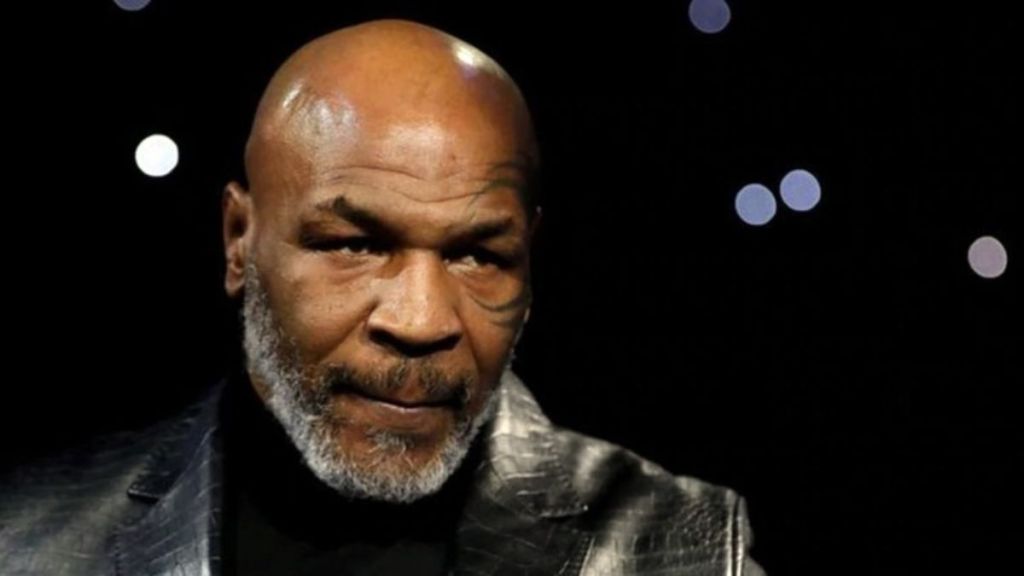

There was a time when Mike Tyson seemed almost impossible to stop.
Inside the ring, the numbers were absurd. He became the youngest heavyweight champion in boxing history at 20, unified the WBA, WBC and IBF belts and built a reputation around knockouts that made him one of the most recognisable athletes on the planet. Outside it, the numbers became even more extraordinary.
Tyson earned an estimated $300 million to $500 million during his boxing career, according to contemporary reports and his own later account. In 2003, however, the man who had once been one of sport’s biggest earners filed for Chapter 11 bankruptcy protection. His debts had overtaken his assets.
The story of Tyson’s bankruptcy is not simply about a boxer who spent too much money. It is about what happens when income becomes so large that normal financial discipline stops feeling necessary.
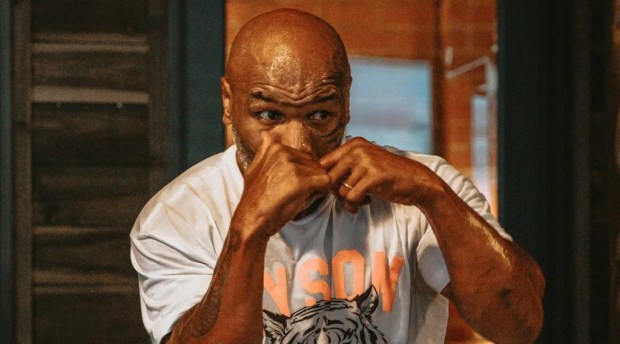
The money arrived very quickly
Tyson grew up in a poor neighbourhood and entered boxing as a troubled teenager. Under trainer and guardian Cus D’Amato, he developed into one of the most feared fighters of his generation. His rise was remarkably fast.
Tyson won his first professional fight in 1985 and became heavyweight champion in 1986. By the following year, he was the undisputed champion.
The money followed. In 1987, Tyson signed an eight-fight HBO deal worth a reported $27 million. In 1990, he later signed a huge pay-per-view agreement with Showtime reported at around $120 million. His biggest fights could generate enormous individual paydays.
The problem was that Tyson’s spending grew alongside his earnings and eventually began to outpace them.
The lifestyle became the business
Tyson did not merely buy expensive things. He built an expensive world around himself.
Contemporary bankruptcy reporting described a portfolio that included multiple mansions, luxury cars, jewellery, exotic animals and extravagant gifts for members of his entourage. By 2004, The Washington Post, citing bankruptcy records, reported that Tyson had owned six mansions and 110 cars at the height of his wealth.
That is the first important lesson in the Tyson story. A single Ferrari is expensive. A lifestyle built around dozens of Ferraris is something else entirely.
According to US Bankruptcy Court records reported by The Washington Post in 2004, Tyson was $38 million in debt after blowing an estimated $400 million fortune. Tyson had spent nearly $4.5 million on cars and motorcycles, $3.4 million on clothes and jewellery and another $7.8 million on personal expenses.
And those were only the numbers that eventually appeared in court documents.
Then there were the gifts
Tyson’s generosity towards friends and his entourage became part of his financial problem. In the 1990s, he reportedly spent hundreds of thousands of dollars on mobile phones and pagers for himself, friends, family and staff. His birthday parties were equally extravagant.
For his 30th birthday in 1996, Tyson spent $410,000 on a celebration at his Connecticut mansion. There were 13 chefs, cigar rollers, a red carpet and a large security presence, according to Tyson’s own later recollection in his autobiography, Undisputed Truth (published in 2013 by Plume/Penguin Books).
The striking part is not the $410,000 itself. It is that $410,000 was a party expense for one evening in a life already filled with enormous recurring costs.
The $2 million bathtub
Then came perhaps the most famous example of Tyson’s spending. For his first wife Robin Givens, Tyson reportedly bought a gold bathtub costing around $2 million.
It was an extravagant Christmas present in 1988. The marriage did not last. Neither, ultimately, did the bathtub’s place in Tyson’s life. The episode has become shorthand for Tyson’s excesses, but it also illustrates something larger: when millions arrive almost effortlessly, the relationship between price and value can begin to disappear.
Tigers were only the beginning
Tyson famously owned Bengal tigers. The animals were housed at his properties and became part of the mythology surrounding the boxer.
Contemporary reports put the cost of maintaining the animals at significant sums, including money for their care and trainers. But the tigers were not an isolated eccentricity. Tyson also had racing pigeons, reportedly owned hundreds of vehicles over his lifetime and accumulated homes with pools, sports facilities and other luxuries.
His spending was no longer about buying a few expensive possessions. It was about maintaining an entire ecosystem of expensive possessions.
The invisible costs were even more damaging
This is where the Tyson story becomes more interesting than a celebrity-spending list. Luxury purchases are visible. Financial leakage is not.
Tyson relied heavily on other people to manage his career and finances. His bankruptcy lawyer said in 2003 that, as a professional fighter who had relied on others to manage his affairs, Tyson discovered that his debts far exceeded his assets.
He also became embroiled in disputes with former promoter Don King, alleging that King had taken millions from him. Tyson filed a $100 million lawsuit against his former promoter. Then came legal bills.
According to contemporary reports from Tyson’s divorce proceedings, he spent around $9 million on legal fees between 1995 and 1997. That is a remarkable figure even for a millionaire athlete.
It is even more remarkable when combined with another reported expense from the same period: around $230,000 on pagers and mobile phones. The lesson is simple. A fortune can survive a few ridiculous purchases. It struggles to survive thousands of them.
Prison changed the economics of his career
Tyson’s financial story cannot be separated from his personal life.
He was convicted of rape in 1992 and served three years in prison before returning to boxing in 1995. The interruption came during a period when his earning power was enormous. Then came further legal troubles, suspensions and lawsuits.
Every year away from the ring was not simply time away from boxing. For a fighter whose income depended heavily on bouts, pay-per-view and endorsements, it was also time away from the primary source of cash flow.
Yet the lifestyle built during the boom did not necessarily shrink at the same speed. That is another crucial part of the bankruptcy story: expenses can become permanent even when income is temporary.
The final knockout came in 2003
By 2003, the mathematics no longer worked. Tyson filed for Chapter 11 bankruptcy protection.
Contemporary reports said he had squandered hundreds of millions of dollars and accumulated tens of millions in debt. The Washington Post, citing bankruptcy records, later reported that Tyson was about $38 million in debt and had been down to just $1,250 in cash at one point. Think about that number.
A boxer who had earned hundreds of millions. A former undisputed heavyweight champion. Someone who had once spent millions on cars and jewellery. $1,250 in cash. That is what financial collapse looks like at the other end of extraordinary wealth.
Tyson’s own explanation is even more revealing
Years later, Tyson offered perhaps the simplest explanation for what happened. In a 2022 appearance on The Pivot podcast, he said he had made approximately $500 million as a boxer, but had eventually spent it all. He said his final $1 million went towards rehabilitation.
His description of the period was blunt: it lasted around 15 to 16 years, and the money that had once appeared endless eventually disappeared. Tyson did not become broke overnight. He had roughly a decade and a half in which enormous earnings and enormous spending fed each other.
Bankruptcy did not end Mike Tyson
The story does not end with bankruptcy. After retiring from boxing in 2005, Tyson rebuilt a public career through acting, entertainment, business ventures and eventually another major payday in the ring.
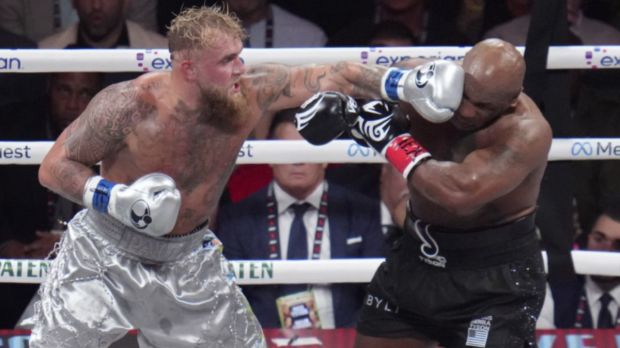
His 2024 fight against Jake Paul, when Tyson was 58, reportedly earned him around $20 million, although the fighters’ official purses were not publicly disclosed. The fight was less about competitive boxing than the commercial power of the Tyson name. And that may be the most remarkable part of the entire story.
Tyson lost his fortune. He did not lose his brand. The same personality that once sold pay-per-view fights could later sell movies, television appearances, podcasts, merchandise, businesses and another Netflix fight. The asset that survived the bankruptcy was not a mansion. It was Mike Tyson himself.
What Tyson’s bankruptcy really tells us
Sudden wealth can create a problem that few athletes are prepared for. The money arrives faster than the knowledge required to manage it. The entourage grows, expectations change, family pressures intensify and decisions that once involved hundreds of dollars suddenly involve millions.
Former India cricketer Robin Uthappa recently described a similar shock after receiving his first IPL contract in 2008, worth ₹3.2 crore. Writing about the experience on LinkedIn, Uthappa said that when a middle-class family suddenly receives that kind of money, there is no ready-made playbook for deciding whom to trust, what to invest in or how to deal with people seeking access to the new wealth.
The cricketer’s experience may not have ended in bankruptcy nor are there any comparisons between the two cases but the underlying warning is strikingly similar: money can arrive long before the ability to handle it.
Tyson’s story shows the consequences when that gap remains open for years. The money came in through the ring. Then it flowed out through houses, cars, jewellery, lawyers, taxes, gifts, relationships and an entourage. Eventually, the flow reversed.
In 2003, one of the richest athletes in the world filed for bankruptcy. Mike Tyson spent years knocking opponents out in minutes. It took roughly 15 years for his own lifestyle to knock out his fortune but like a true boxer, Tyson came back again.