


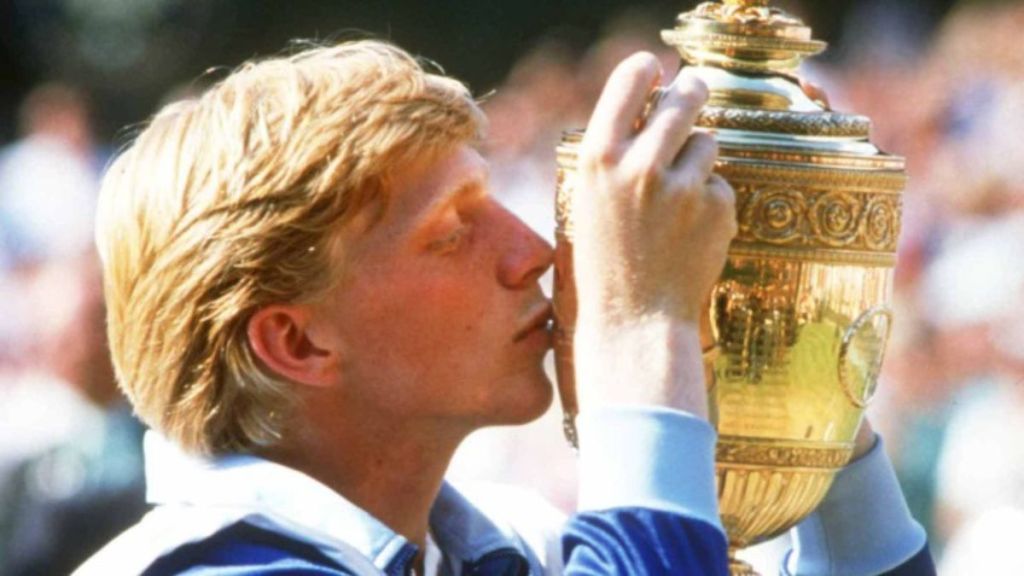

There was a time when Boris Becker seemed to have everything.
At 17, he became the youngest Wimbledon men’s singles champion. He won six Grand Slam singles titles, reached world No.1 and accumulated $25,080,956 in official ATP prize money during his professional career. Then the numbers changed.
In June 2017, Becker was declared bankrupt by the High Court after a petition from private bank Arbuthnot Latham over a debt of £3,348,582.57 connected to a property development in Mallorca. The collapse that followed was not simply a story of a sports star losing money.
It became a long-running insolvency case involving undisclosed assets, missing information, advisers, creditors and eventually a prison sentence.
By the time his bankruptcy was discharged in April 2024, the High Court recorded that his trustees had recovered 81 items of memorabilia, but the proceeds were not enough to pay creditors in full.
Flashback: The teenager who became a global sporting star
Becker’s financial story is difficult to understand without first understanding how quickly his career took off. Born in Germany in 1967, Becker turned professional as a teenager and announced himself on the biggest stage at Wimbledon in 1985. He was only 17.
He successfully defended the Wimbledon title the following year and won a third championship at the All England Club in 1989. He also won the US Open in 1989 and the Australian Open twice, in 1991 and 1996.
By January 1991, Becker had reached world No. 1, becoming the ninth player to occupy the top position in men’s tennis. He spent 12 weeks at the summit. His career eventually produced 49 tour-level titles and six Grand Slam singles championships. The money followed.
ATP records show that Becker accumulated more than $25 million in official career prize money alone. That figure does not represent sponsorships, appearance fees or other income, but it shows the scale of his success on the court.
Then came the Mallorca property
The financial problems that eventually led to bankruptcy centred on The Finca, a property in Mallorca. According to the sentencing remarks of Westminster Crown Court, Becker had borrowed money from Arbuthnot Latham in connection with the development.
By July 2016, the bank had issued a statutory demand for the outstanding debt after attempts to settle the matter or raise money elsewhere had failed. Becker contested the proceedings.
His application was dismissed in April 2017. A bankruptcy petition was then presented to the High Court for £3.348 million. Becker’s attempt to resist the order was dismissed and he was declared bankrupt on 21 June 2017. The number is striking.
The man who had earned more than $25 million in official tennis prize money was now facing bankruptcy proceedings over a debt of just over £3.3 million. But the case was about to become much more complicated.
The problem was not just the debt
After the bankruptcy order, Becker had obligations to disclose his assets to the Official Receiver and his trustees. The court later found that he had failed to disclose several assets.
One was Im Schilling, a property in Leimen, Germany. The court put its latest valuation at £1,053,720. Another was a €825,000 loan from Bank Alpinum in Liechtenstein, secured against the property. The third involved 75,057 shares in Breaking Data Corp.
Becker was convicted of failing to disclose these assets.
His defence was that he had relied on advisers and believed the assets had been disclosed. But the sentencing judge rejected that explanation.
“It was clear from the evidence that you knew that the obligation was on you, not them,” the judge said in the sentencing remarks. The distinction mattered.
The court was not simply examining whether Becker had made poor investments. It was examining whether he had complied with the legal obligations imposed after bankruptcy.
€426,930 that never reached the bankruptcy estate
The most serious of the four offences involved money removed from a company account after the bankruptcy order.
The court found that payments totalling €426,930.90, roughly £390,000 at the exchange rate used by the court, were lost to the bankruptcy estate.
The money came from proceeds connected to the sale of Mercedes car dealerships and was paid to others between June and September 2017. The judge said the entire amount had been lost to the bankruptcy estate, to the detriment of creditors.
It was one of the factors that ultimately sent Becker to prison.
The trophies became part of the bankruptcy
Even Becker’s sporting legacy became entangled in the insolvency process.
The trustees recovered 81 items of memorabilia that had vested in the bankruptcy estate, according to the High Court’s 2024 judgment. But some trophies remained unaccounted for.
In 2024, Becker told the court that he was incapable of doing more to account for or deliver up assets, particularly the trophies. The judge noted that certain trophies were still missing.
The irony was difficult to miss. The trophies represented some of the greatest achievements of Becker’s career — Wimbledon titles, Grand Slam victories and the years when he was one of the most famous athletes in the world.
They had now become assets in a bankruptcy estate.
Becker blamed poor advice. The court did not accept that as an excuse
Becker later told the High Court that he had had advisers and representatives from an early age and had relied heavily on them to manage his financial and business affairs.
He said that, in hindsight, some of the advice he received was “wildly” wrong and that some advisers had not acted in his best interests.
But the court’s position was straightforward: professional advice did not remove Becker’s personal obligations.
The sentencing judge said Becker had increasingly left communication with the trustees to others and had used advisers as a shield against requests for information and compliance.
It was a costly lesson in the difference between having financial advisers and understanding your finances.
From bankruptcy to prison
The bankruptcy itself was not the end of Becker’s legal problems. A jury convicted him of four offences under the Insolvency Act. He was acquitted of 20 other charges. In April 2022, the court sentenced him to 2 and a half years in prison.
The sentence covered the removal of property and the failure to disclose the German property, the Bank Alpinum loan and the shares.
The judge also noted Becker’s previous conviction for tax evasion as an aggravating factor. Becker served part of his sentence before being released and deported from Britain in December 2022.
The fall from grace was complete
The sentencing remarks contain perhaps the most powerful summary of Becker’s financial collapse.
The judge said he had “lost his career, reputation and all of his property” as a result of the bankruptcy.
Becker had gone from one of tennis’s most recognisable champions to an undischarged bankrupt facing a prison sentence.
But the bankruptcy did not last forever.
In 2024, after a settlement with his trustees, the High Court lifted the suspension of his bankruptcy discharge. Becker’s bankruptcy was discharged from 27 April 2024.
The terms of that settlement were confidential.
The fortune figure remains difficult to pin down
A figure of $185 million is often cited as Becker’s peak fortune. But the official court and ATP records do not establish that figure, or provide a single number for how much Becker lost over the years.
What they do establish is the scale of the fall.
Becker earned $25.08 million in official ATP prize money, won six Grand Slam singles titles and became world No. 1. Three decades later, he was declared bankrupt over a £3.35 million debt. The bankruptcy estate pursued assets including a German property valued at more than £1 million, a €825,000 loan and shares in a listed company. Becker was later jailed for failing to disclose assets and for transferring money that should have remained available to creditors.
His bankruptcy was eventually discharged in 2024.
But the case left behind a lesson that goes beyond well beyond a former tennis champion: earning a fortune and preserving one are two very different financial skills.