



The FIFA World Cup has produced some of sport’s greatest moments but football’s biggest tournament has also been shaped by controversy.
Across almost a century, the competition has been overshadowed by allegations of political interference, disputed refereeing decisions, acts of indiscipline and incidents that changed the way the game is governed.
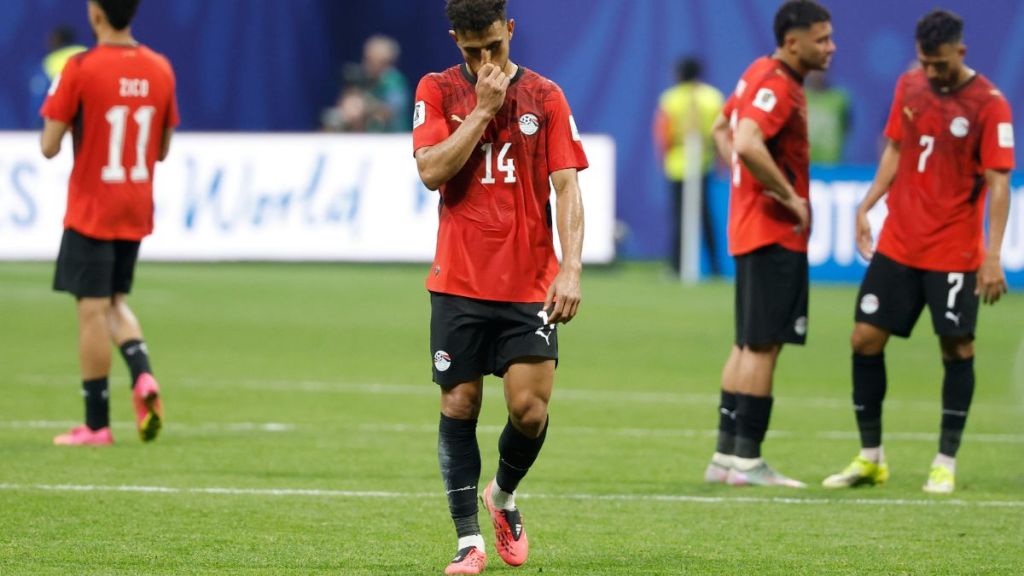
The 2026 tournament has added another chapter after Egypt formally protested following their dramatic Round of 16 defeat to Argentina, reviving debates over refereeing, VAR and FIFA’s decision-making.
Here is a look at some of the most significant controversies in World Cup history.
Politics, power and matches that changed football
The relationship between politics and the World Cup stretches back to the early decades of the competition.
1934: Mussolini’s Italy
The 1934 World Cup, hosted by Italy, remains one of the most politically charged tournaments in football history. Benito Mussolini used the competition as a showcase for Fascist Italy.
The quarter-final replay between Italy and Spain remains controversial, with Swiss referee Rene Mercet accused of favouring the hosts after allowing several heavy challenges and disallowing Spanish goals. Italy won 1-0 before lifting the trophy. Mercet was later suspended by the Swiss Football Association.
1938: Football meets fascism
Four years later, Italy again became the centre of controversy. Against hosts France, the defending champions wore black shirts instead of their traditional blue kit, a move widely interpreted as a political statement aligned with Mussolini’s Fascist Blackshirts during a period of growing tension across Europe.
1978: Argentina and Peru
Perhaps no World Cup result has generated more debate than Argentina’s 6-0 victory over Peru in 1978. The hosts, Argentina, needed to win by at least four goals to reach the final ahead of Brazil and comfortably achieved the target. The result has fuelled allegations and long-running speculation.
Investigative reports and historians have questioned whether political pressure, economic agreements between the military governments of Argentina and Peru and other external factors influenced events surrounding the match. Questions were also raised over Peru goalkeeper Ramon Quiroga, who had been born in Argentina. However, no conclusive evidence has ever proved the match was fixed.
Many members of Argentina’s 1978 squad have consistently rejected the allegations. They argue the side, coached by Cesar Luis Menotti and inspired by Mario Kempes, simply outplayed an ageing Peru team. Historians have also pointed out that Peru created early chances, including one effort that struck the post, suggesting the match was genuinely contested. The debate remains one of the most enduring in World Cup history.
1982: The disgrace of Gijon
The final group-stage match between West Germany and Austria fundamentally changed World Cup scheduling. West Germany scored after 10 minutes against Austria, a result that would send both teams into the next round at Algeria’s expense.
What followed was almost 80 minutes of cautious passing and little attacking intent, prompting outrage among supporters inside the stadium. The backlash was so severe that FIFA introduced simultaneous kick-offs for the final round of group matches, a rule that remains in place today.
Football’s most controversial moments on the pitch
While politics shaped several tournaments, individual incidents have become just as memorable.
1986: Maradona’s ‘Hand of God’
Few World Cup moments have been replayed more often than Diego Maradona’s opening goal against England in the 1986 quarter-finals. Maradona punched the ball beyond goalkeeper Peter Shilton but the referee allowed the goal to stand.
After the match, Maradona famously described it as being scored “a little with the head of Maradona and a little with the hand of God”. Only minutes later, he scored what is widely regarded as one of the greatest goals in football history.
1994: The death of Andres Escobar
The darkest episode linked to any World Cup came after the 1994 tournament in the United States. Colombia defender Andres Escobar scored an own goal against the hosts during the group stage as Colombia exited the tournament early.
Days after returning home, Escobar was shot dead outside a nightclub in Medellin. The murder shocked world football and highlighted the dangerous links between organised crime, gambling and the sport in Colombia during that period.
2006: Zidane’s final act
Zinedine Zidane’s career ended in extraordinary fashion during the 2006 World Cup final. After an exchange with Italy defender Marco Materazzi, the France captain headbutted his opponent in the chest and received a red card.
Italy went on to win the World Cup on penalties, while Zidane’s final appearance remains one of football’s most unforgettable images.
2010 and 2014: Luis Suarez at the centre again
Luis Suarez twice became the focus of global debate. In 2010, he deliberately handled the ball on the goal line to prevent Ghana scoring in the closing moments of extra time. Suarez was sent off but Asamoah Gyan missed the resulting penalty before Uruguay progressed via a penalty shootout.
Four years later in Brazil, Suarez bit Italy defender Giorgio Chiellini during a group-stage match. FIFA later suspended the Uruguay striker for four months from all football-related activity.
Egypt’s 2026 protest adds another chapter
The latest controversy arrived during the 2026 World Cup after Egypt’s dramatic 3-2 defeat to Argentina in the Round of 16.
Egypt led 2-0 before Argentina mounted a late comeback, with Lionel Messi scoring and creating another goal before Enzo Fernandez struck the winner in stoppage time.
The Egyptian Football Association has since lodged a formal complaint with FIFA over the officiating team, according to multiple reports.
Egypt’s frustrations centred on two key decisions: a goal ruled out after a VAR review when they were leading, and a penalty appeal that was not reviewed before Argentina’s winning goal.
After the match, Egypt coach Hossam Hassan suggested external influences had shaped the contest.
“We looked better than the reigning champions, but the result was influenced by internal factors on the pitch and external factors off it,” Hassan told reporters.
He added that some people “wanted the world champion to remain in the tournament”.
FIFA has not publicly responded to those allegations and Argentina progressed to the quarter-finals.
Whether the protest changes anything remains to be seen but it has ensured the 2026 World Cup joins a long list of tournaments remembered not only for brilliant football, but also for the controversies that continue to divide fans long after the final whistle.