


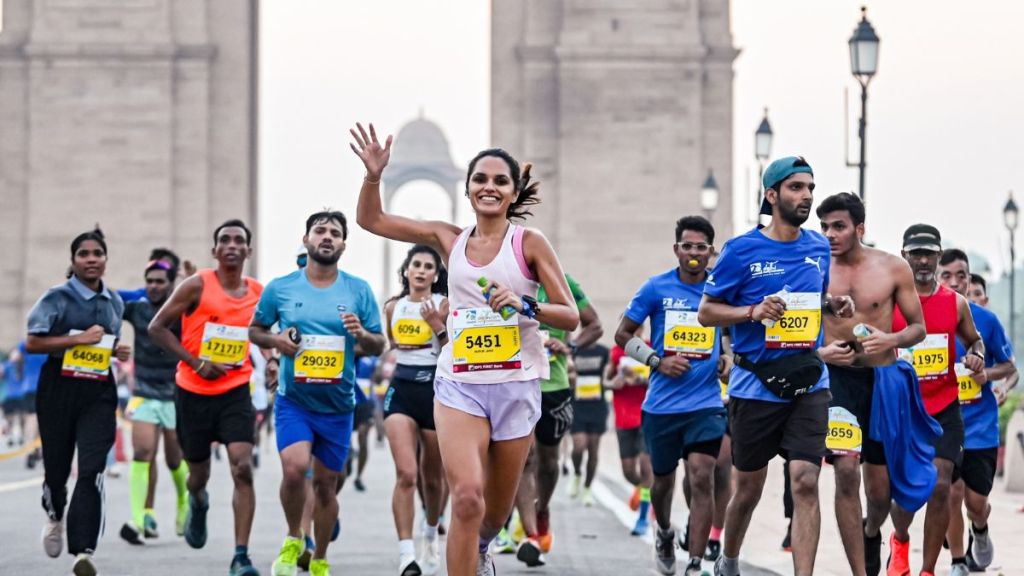

India’s running boom is increasingly becoming a business story, and Procam International wants to position its races at the centre of that emerging economy.
The company, which has spent more than two decades building India’s major road-running events, says the Vedanta Delhi Half Marathon generated an estimated Rs 433.88 crore in socio-economic impact in 2025, according to a report prepared by Miranda House, University of Delhi. The 2025 race had 39,513 participants, including 9,709 women.
For Procam co-founder and joint managing director Vivek B. Singh, however, the significance of the number goes beyond the money spent around race day.
“It’s not an event. It’s a movement,” Singh told financialexpress.com in an exclusive interview.
Unlike spectator sports, where a consumer may buy a ticket, watch a game and leave, participative sports require the consumer to invest time, money and effort well before the event.
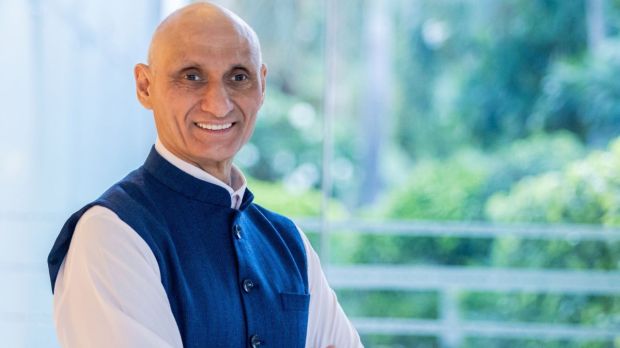
“From June to October, he’s (the participant) thinking, talking, eating, planning about Vedanta Delhi,” Singh said, describing the journey of a participant preparing for the Delhi race.
“That is the social and emotional goodwill and equity we bring to the table.”
The 2026 Vedanta Delhi Half Marathon is scheduled for October 18 and is entering its third decade with its 21st edition. The race is a World Athletics Gold Label event and has categories ranging from the half marathon and Open 10K to the Great Delhi Run and a senior citizens’ run.
A ₹40 crore race and an economy around it
Putting together an event of this scale is itself a significant business operation.
“The event itself costs more than ₹40 crore to put,” Singh said, adding that the funding comes from the title sponsor, other partners, registration fees and other components of the event.
But Procam’s argument to sponsors is not based simply on the number of people who turn up on race day.
Singh said participative sport offers brands a deeper engagement with consumers because participants spend months preparing for the event. In his view, that creates a different kind of brand association from conventional spectator sport.
The economic impact also extends far beyond Procam’s own event expenditure.
The 2025 socio-economic impact report found that participants travelling from outside Delhi generated ₹24.71 crore in travel and hospitality spending. Another ₹251.34 crore was spent by participants on technology, gear, equipment, shoes and apparel, according to figures released around the 2026 event.
That effectively creates an ecosystem around a race- hotels, restaurants, transport providers, sporting-goods companies, fitness technology, coaches, nutrition businesses and apparel brands all potentially benefit from the growth in participation.
Singh sees this as one reason running has become one of India’s fastest-growing participative sports.
“Running is the biggest platform for philanthropy,” he said, arguing that the activity also creates a base for other emerging fitness and sports formats.
The expansion is visible in Procam’s own portfolio. Its four flagship events include the Tata Mumbai Marathon, Vedanta Delhi Half Marathon, TCS World 10K Bengaluru and Tata Steel World 25K Kolkata. Its Procam Slam encourages runners to complete all four races within a 12-month period.
What began with just seven participants registering for the Slam in 2018 has grown into a much larger community. Singh expects about 10,000 people to have committed to completing the four-race challenge by the completion of the 2027 Tata Mumbai Marathon.
The commercial significance is that a single race is no longer necessarily a standalone transaction. The participant can become a customer across multiple events, while brands get repeated engagement across cities and throughout the year.
From 90 women to 10,000: Selling a running culture
Procam’s expansion has also coincided with a fundamental change in who participates.
When the Delhi Half Marathon began in 2005, Singh recalled that only 90 of the 15,000 participants were women.
That has changed dramatically. Procam expects about 10,000 women to participate in the 2026 Vedanta Delhi Half Marathon, while the 2025 event had 9,709 female participants.
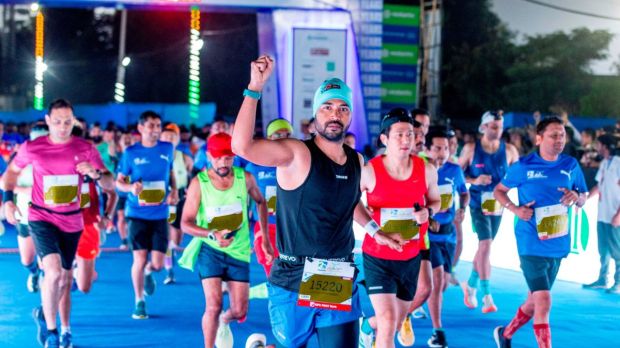
Singh believes this represents more than a participation statistic.
“If a woman decides to run, what goes on the table changes,” he said, linking women’s participation in running with broader household health and wellness decisions.
For the business, however, the more important change may be the creation of a recurring consumer base.
Procam has deliberately maintained shorter and entry-level categories such as the Great Delhi Run and Open 10K to bring first-time participants into the ecosystem before encouraging them to progress towards longer distances.
The company’s strategy is therefore not simply to maximise registrations for one flagship race. It is to create a pipeline of participants.
That pipeline is now being extended beyond organised races.
Procam recently acquired the Hundred Days of Running property, an initiative designed to make running and walking more accessible to people who may find large races intimidating.
Singh said participants can begin with as little as 2.5 km of running or walking a day, while the initiative also includes cycling. The idea, he said, is to bring people into fitness who may never consider entering a marathon.
The commercial opportunity lies in expanding the addressable market.
Singh estimates that about three million people in India are actively involved in running, but argues that the potential audience is much larger because millions more may be unwilling to participate in a traditional race.
“Running for many has become intimidating,” he said. “The idea is to bring in more people and democratise.”
For Procam, that could eventually mean more participants, more events, more sponsors and a larger ecosystem of products and services around fitness.
India’s distance-running infrastructure is catching up
The growth is also reflected in India’s international standing in distance running.
Singh said that when he joined the board of the Association of International Marathons and Distance Races (AIMS), India had no AIMS-certified races. He said the country now has 35, making it the world’s leading country by the number of registered AIMS races.
Procam’s flagship races are also World Athletics-certified, with the company’s events carrying Gold Label status. Procam says it is the only promoter globally with four World Athletics Gold Label races.
The company is also putting money into elite Indian distance running. Its PRIDE programme provides performance-linked financial benefits, travel support and hospitality to Indian elite athletes participating in its events.
But Singh argues that the real measure of success cannot be reduced to the number of runners or the revenue generated.
Procam’s original proposition when it entered the marathon business was built around five pillars: pride and prestige for the host city, social harmony, health and fitness, philanthropy and support for Indian athletics.
The company now points to initiatives outside the races as evidence of that model. Singh cited the Tata Mumbai Marathon’s work in planting 20,000 trees and rehabilitating about 100 acres of farmland in drought-affected Solapur.
That broader approach is also reflected in the Delhi race’s philanthropy programme. The 2025 event raised ₹4.12 crore for charitable causes, according to figures released for the 2026 edition.
For Singh, the next stage of the running business is therefore not simply about making races bigger.
“The truth is you have to think of your event as not an event but a movement in society,” he said.
The commercial proposition follows from that philosophy: if the race becomes a habit, the runner becomes a recurring participant; if participation becomes a culture, more businesses can build around it.
And that may be the bigger opportunity in India’s running economy, turning a few hours of racing into a year-round consumer ecosystem.