


For families preparing for the upcoming wedding season, jewellery is often one of the largest planned expenses. And with gold prices remaining elevated, many are looking for ways to balance traditional wedding purchases with an overall budget that may already have several competing demands.
This is making gold exchange an increasingly practical option.
Rather than paying entirely in fresh money for new jewellery, families can exchange old pieces that are no longer being worn and use their value towards new purchases. In effect, gold already held by the household can become part of the funding for the next jewellery purchase.
The proposition becomes more relevant as consumers keep checking the gold market price today before making a purchase. With rising gold prices, understanding the gold value today of jewellery already owned can help families make more informed decisions about how much new gold they need to buy.
For a wedding, this can mean exchanging old bangles, chains or necklaces and using the proceeds towards bridal jewellery, family gifts or other purchases planned for the occasion. The objective is not necessarily to buy less jewellery, but to make the existing jewellery budget go further.
However, the economics of exchange depend heavily on how the old gold is valued.
Purity testing, weighing, valuation, and deductions can all affect the final amount a customer receives. This has historically made trust one of the biggest considerations in old gold exchange, particularly when the jewellery being exchanged was purchased from another jeweller.
As organised jewellery retail expands, more attention is therefore being given to making the exchange process transparent and easy for customers to follow.
One established example is Tanishq Gold Exchange. According to company data, more than 36 lakh Indians have exchanged old gold with Tanishq over the years. The company also says that more than 14,000 kg of gold was brought back into circulation through its exchange programme in the last year alone.
At Tanishq stores, customers can see the exchange process from start to finish. Purity is assessed using Karatmeters, gold and stone weights are measured separately, and weighing, valuation and melting are conducted in front of the customer. The company accepts old jewellery purchased from any jeweller, across purities, even without bills.
The company says its exchange rates are the same as the gold buying rates, with no hidden deductions. For consumers comparing a gold exchange offer or looking at the gold exchange price, this can make it easier to understand the actual value they are receiving.
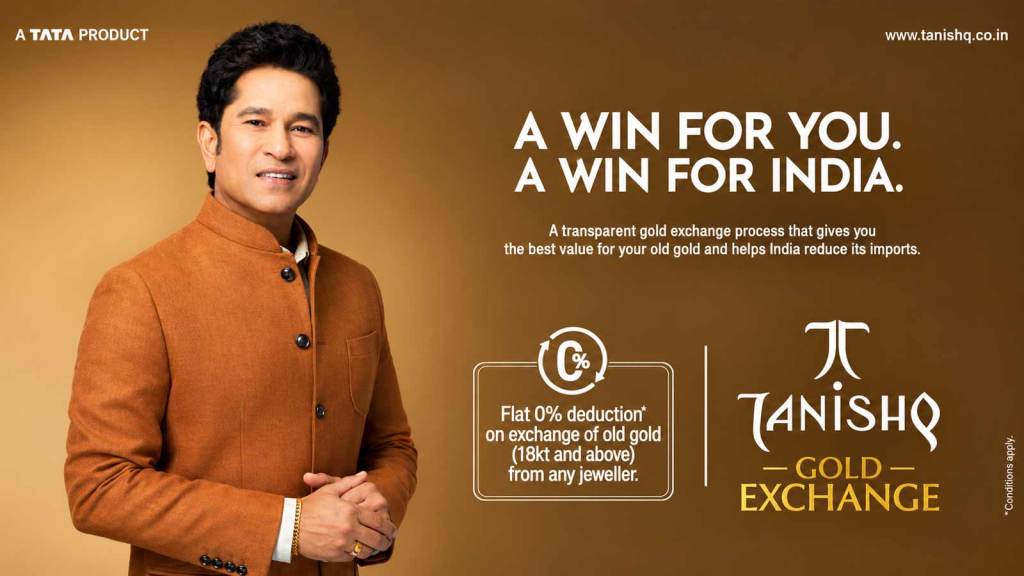
This month, Tanishq is also offering flat 0% deduction on the exchange of old gold of 18KT purity and above. For wedding shoppers, that gives another reason to evaluate jewellery lying unused at home before committing additional funds to a new purchase.
There is also a broader economic angle. India remains heavily dependent on imported gold even though Indian households already hold large quantities accumulated over decades. Bringing some of this existing gold back into circulation can help meet part of future demand without relying entirely on fresh imports.
For most families planning a wedding, however, the decision is more about managing a sizeable household expense. As consumers compare the gold price forecast, monitor price movements and plan their jewellery purchases, old gold can increasingly be viewed as an asset that already forms part of the family’s balance sheet.
That is perhaps why gold exchange is becoming a more relevant part of wedding jewellery planning. For someone considering gold exchange, the focus may ultimately be not just on finding the highest-looking offer, but on finding a jeweller that combines a fair valuation with a transparent process.
As the wedding season approaches, the jewellery budget may still be substantial. But for many families, some of that budget may already be sitting at home.