


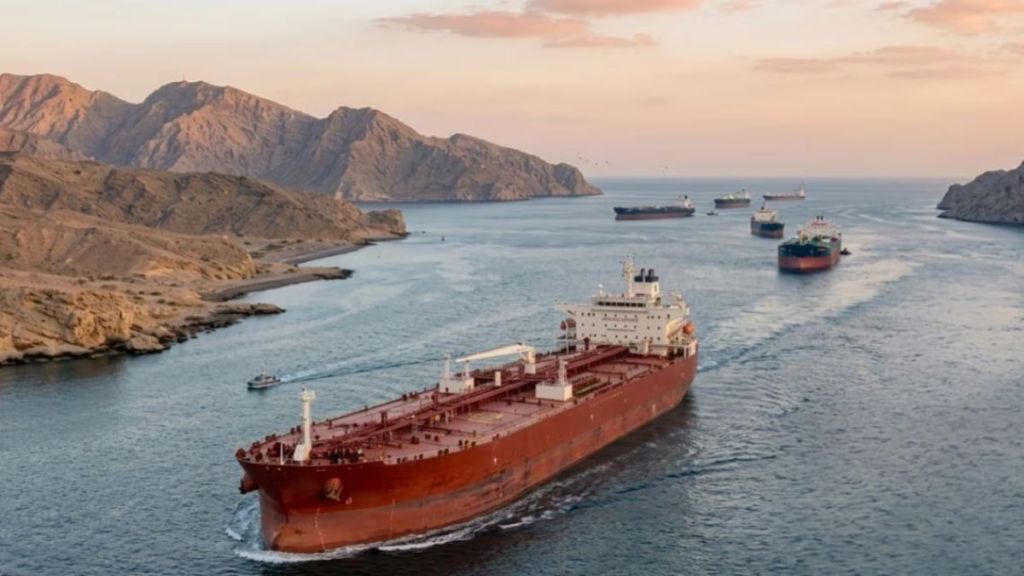

Shipping through the Strait of Hormuz has staged its strongest recovery since the West Asia conflict, with 341 vessels crossing the strategic waterway in the week following the June 17 US-Iran agreement and daily transits surging to a record 78 on June 24 from just 25 on June 17. The latest tally represents 57% of pre-war traffic, signalling a rapid revival in crude oil, LNG, LPG and commodity shipments through the world’s most critical energy chokepoint, according to S&P Global.
The recovery has gathered momentum over the past week, with daily vessel movements climbing from 25 on June 17 to 41 on June 18, 35 on June 19, 49 on June 20, 29 on June 21, 36 on June 22, 48 on June 23 and a record 78 on June 24. The sharp increase follows the reopening of the Strait under the US-Iran memorandum and reflects improving confidence among shipowners after Oman and the International Maritime Organization (IMO) established a dedicated safe transit corridor along the Omani coast.
“The new daily record high number of crossings points to early signs of normalisation and a gradual re-establishment of freedom of navigation patterns,” S&P Global said. The agency noted that while many outbound vessels had remained stranded inside the Gulf since the conflict began, a growing number of ships that entered after the agreement have already completed loading operations and exited the Strait, indicating that commercial shipping patterns are gradually returning to normal.
Safe Transit Corridors
Of the 78 vessels that crossed on June 24, 22 were oil and chemical tankers, 21 bulk carriers, 12 cargo vessels, seven container ships, four LPG carriers and two LNG carriers. More than 40% of the day’s traffic, or 33 vessels, used the newly designated Omani safe corridor, with 25 outbound vessels opting for the route. Several other ships continued to sail closer to Iranian territorial waters, while eight vessels were detected operating “dark” after switching off their tracking systems during transit.
Crude oil movements strengthened significantly. Ten crude tankers transited the Strait, including five Very Large Crude Carriers (VLCCs), three Suezmax tankers and two inbound VLCCs. Only one vessel — the US-sanctioned VLCC AMAK — was linked to Iran. Product shipments also gathered pace, with 12 product tankers evenly split between inbound and outbound voyages.
Export Volumes Lag Behind
However, actual oil export volumes remain well below pre-conflict levels despite the sharp recovery in shipping traffic. According to Kpler, around 10.8 million barrels of crude oil and petroleum products were shipped on June 24 aboard six tankers, significantly below the pre-war average of nearly 20 million barrels per day moving through the Strait of Hormuz. “The rebound reflects the adaptability of Middle East Gulf export systems rather than a clean return to pre-conflict trade,” Kpler said in a report this week.
LPG trade also showed signs of recovery. Among the outbound vessels was the compliant ZAKHER, which loaded LPG at the UAE’s Das Island before exiting through the Omani corridor and indicating Yantai, China, as its destination. Another LPG carrier, SILVIO, resumed its voyage after remaining stranded inside the Gulf since loading cargo at Qatar’s Mesaieed terminal on March 2. S&P Global said only one non-Iran-linked laden Very Large Gas Carrier (VLGC) — the Indian-flagged BW LOYALTY, which loaded cargo at Ras Laffan on April 17 — remains west of the Strait.
The June 24 traffic also highlighted the broad recovery in regional trade. Inbound movements accounted for 37% of total vessel traffic, with 41% of inbound ships linked to Iran, underscoring Tehran’s continued role in maritime commerce following the reopening of the waterway.
Separate data from the International Maritime Organization showed 57 ships carrying about 1,100 seafarers have safely transited the Strait since June 23 under the evacuation plan, further indicating the restoration of commercial navigation through one of the world’s busiest energy corridors.