


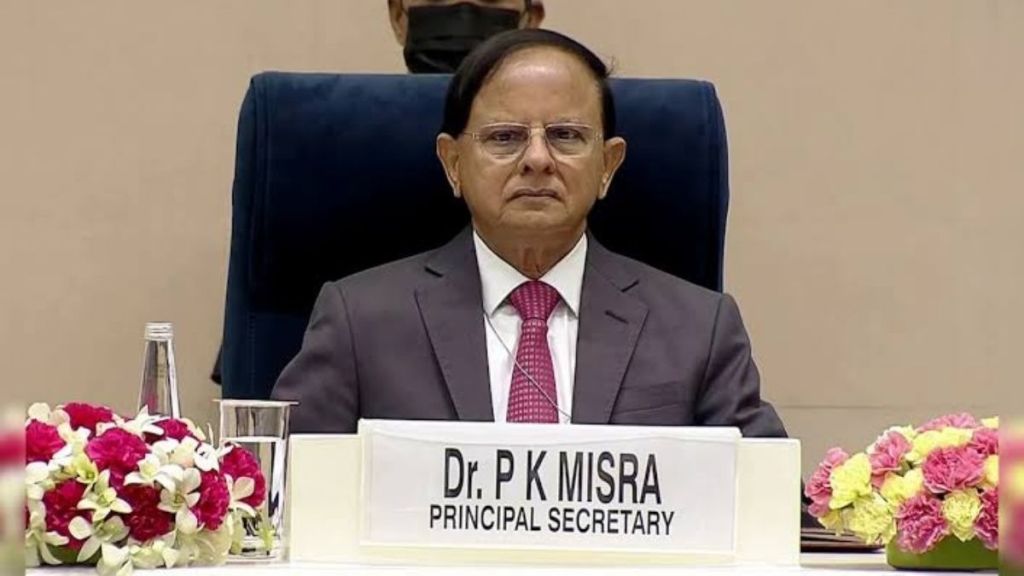

Building strategic reserves, diversifying suppliers and developing domestic capabilities may be more expensive than relying on global markets, but the premium can be justified where vulnerabilities are critical, Principal Secretary to the Prime Minister, PK Mishra, said on Saturday
“The world that is coming will belong to those who can be steady without being closed, careful without being fearful, and ambitious without being naive,” he said speaking at the Kautilya Economic Conclave here.
He said economic security can no longer be separated from geography, geopolitics and uncertainty. A disruption thousands of kilometres away, he noted, can quickly reach consumers at home through energy prices, shipping costs and broken supply chains.
“The question is whether that cost is justified by the consequences of the risk being insured against,” he said, explaining that governments cannot pay a premium against every conceivable disruption. But when a shock could impose a high economic and social cost, investing in resilience can make economic sense.
West Asia conflict has created headwinds to India’s economic growth and the government finances due to rising commodity prices and inflationary pressures.
The pandemic and geopolitical conflicts have exposed the weakness of supply chains designed almost entirely around efficiency. Critical minerals such as lithium, cobalt and rare earths have added another layer of concern because their extraction and processing remain concentrated in a handful of countries.
“We thought technology had made geography irrelevant, but it has returned to the centre of the table,” Mishra said.
Countries need to find a balance between openness and resilience, he said, stressing strategic reserves, developing alternative suppliers, strengthening domestic capabilities and building international partnerships.
Following this approach, India has expanded its sources of crude oil imports from 27 countries to 43, while investing in renewable energy, nuclear power, storage and other technologies.
The same thinking is being applied to critical minerals and electronics also. Domestic manufacturing should not simply replace imports at any cost, it must become competitive, scalable and eventually export-oriented, he said.
“Resilience has to be accompanied by productivity,” he said.
Fiscal space, foreign-exchange reserves, a sound financial system and credible institutions give a country room to respond when a crisis arrives.