


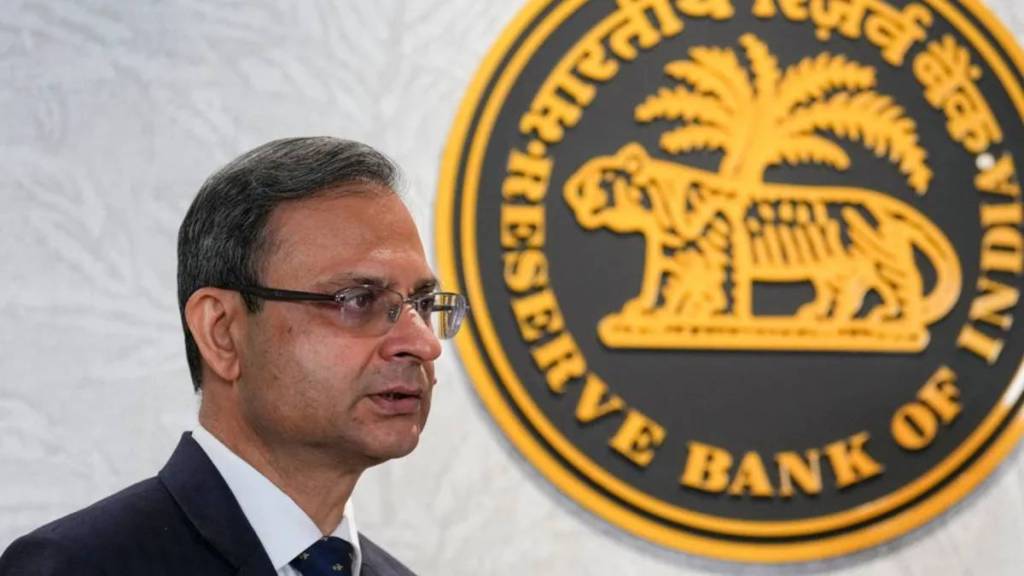

The Reserve Bank of India (RBI) is set to announce the key policy decisions tomorrow. Economists at Axis Bank and HSBC believe that an increase in the repo rate by 25 basis points (bps) to 5.5% is expected from quite some time and is no longer a question now. However, the factors that are driving the need for higher rates and the future path of interest rates and liquidity management are important.
Here are 7 key factors in focus:
Oil prices, global yields pose external risks
An increasingly challenging external environment is one key risk for the Indian economy. Oil prices are trending above $100 per barrel. HSBC’s commodities team has also raised its oil price forecast for 2027 by $20 per barrel, from $65 to $85 per barrel.
At the same time, global bond yields have risen and the US dollar has been strengthening gradually.
According to Pranjul Bhandari, Chief India Economist/Strategist and ASEAN Economist at HSBC, this combination is generally unfavourable for capital inflows into emerging markets such as India.
India has already seen foreign outflows in recent weeks, she noted.
Growth remains resilient
Another factor supporting a rate hike is the resilience of the Indian economy. Bhandari said HSBC’s database of 100 growth indicators has shown an upward trend in recent months.
According to her, the main driver of growth is gradually shifting from loose fiscal and monetary policy towards stronger goods exports.
India’s manufacturing sector is also benefiting from robust export demand. High-tech exports have been increasing, while mid-tech exports could also gain momentum as free trade agreements (FTAs) become operational.
Bhandari noted that exports to the UK rose 12% month-on-month on a seasonally adjusted basis one month after the implementation of the India-UK FTA.
This could become increasingly important if domestic consumption weakens due to the expected impact of El Nino. In such a situation, exports could provide a floor to economic growth, she said.
Inflation likely to rise sharply
Inflation is another key reason behind HSBC’s expectation of a rate hike.
Bhandari expects headline inflation to rise from 4.8% in August to around 5.5% in September. She expects inflation to average just above 6% in the fourth quarter of 2026.
Core inflation has also been rising sequentially, led particularly by services inflation. Bhandari said services inflation had been among the more stubborn components to rise so far.
HSBC expects inflation to remain above 5% on average over the next 12 months.
RBI may need to absorb excess liquidity
Bhandari also highlighted excess liquidity in the banking system as another factor that could influence the RBI’s decision.
HSBC estimates that around Rs 6 lakh crore of liquidity may need to be withdrawn from the banking system over the next few months.
Around Rs 2 lakh crore of this could be absorbed through an increase of currency in circulation. The remaining liquidity could be managed through tools already being used by the RBI, including open market operation (OMO) sales, foreign exchange spot sales, FX swaps and variable rate reverse repo (VRRR) operations.
However, Bhandari expects the liquidity reduction to happen gradually unless the RBI opts for a more direct measure such as a cash reserve ratio (CRR) hike.
She said a rate hike could also be considered as a way to counter the inflationary impact of excess liquidity.
FCNR surplus gives RBI room to manage liquidity risks: Axis Bank
Axis Bank said the surplus liquidity generated through the Foreign Currency Non-Resident (FCNR) scheme gives the RBI room to manage near-term liquidity and capital flow risks. The bank noted that these risks are already visible through the matching of short positions and continued foreign exchange intervention aimed at shielding the domestic economy from external shocks. Axis Bank said it will watch how the RBI plans to withdraw liquidity going forward, although it does not believe additional withdrawal measures are required at this stage.
Axis Bank flags electronics, telecom tariff risks
The bank is also monitoring the impact of higher global electronics prices and a possible increase in telecom tariffs. These factors have been incorporated into its FY27 inflation forecast of 5.2%.
RBI may watch consumer credit growth
The bank also highlighted the rapid recovery in consumer credit growth as an area that could create risks in the future, particularly amid higher prices.
Any indication from the RBI that it intends to slow consumer credit growth will therefore be closely watched, Axis Bank said.
Axis Bank sees rates moving towards 5.75-6%
Axis Bank said the focus is now on how far the RBI may need to go in terms of a rate hike.
Axis bank expects the upcoming monetary policy meeting to prepare markets for further rate hikes towards a neutral policy rate of 5.75-6% by early FY28.
However, another increase in fuel pump prices, stronger nominal growth and higher food prices could push inflation expectations higher. Axis Bank said, “we will therefore be watching language and tone in the upcoming policy around risks of having to raise rates above neutral.”