


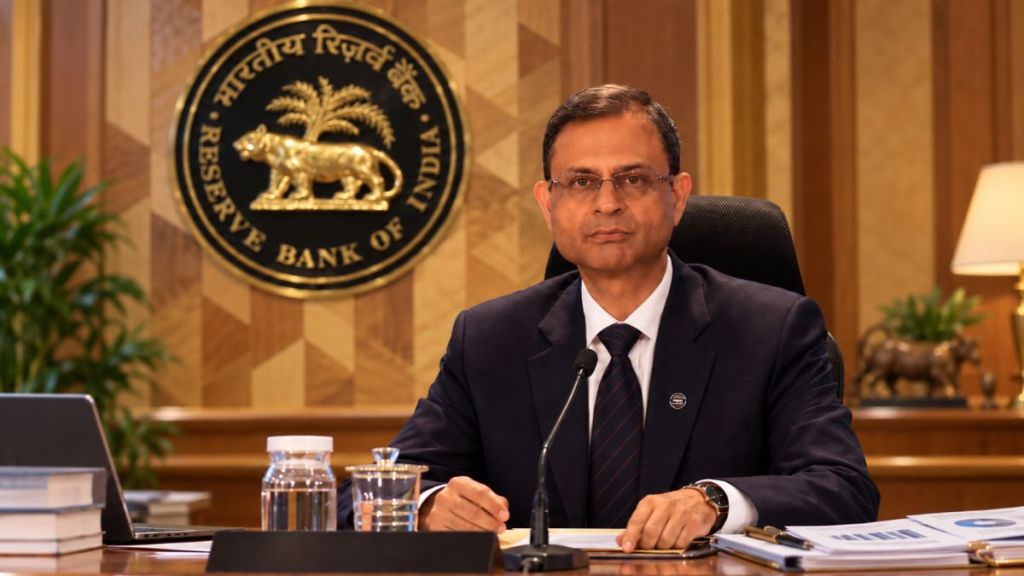

Cheaper loans just got harder to expect. Today, October 7, the Reserve Bank of India (RBI) raised policy repo rate for the first time in 4 years. It now stands at 5.50%, up by 25 basis points.
The repo rate is the rate at which the RBI lends money to banks. A basis point is one-hundredth of a percentage point, so 25 of them make a quarter of one per cent. This is the first hike since February 2023.
RBI Governor Sanjay Malhotra announced the decision. All members of the MPC, the panel that sets interest rates, voted for the hike. The committee also changed its stance to “calibrated tightening”.
Here are seven key takeaways investors need to watch now –
1. Repo rate rises to 5.50%
The MPC unanimously voted to increase the repo rate by 25 bps to 5.50%.
The policy stance also changed to “calibrated tightening”, with a 4-2 majority.
2. RBI Governor rules out rate cut in near-term
The RBI has indicated that the policy options going forward are largely between another rate hike and a pause.
Inflation risks have increased due to higher crude oil prices, food prices and global uncertainties. The West Asia conflict has added another layer of risk.
Governor Sanjay Malhotra also warned that global inflation could rise sharply and trigger tighter monetary policy across economies.
He added, “The RBI’s October hike acknowledges that cyclical inflation risks are no longer benign.”
3. FY27 GDP growth forecast raised to 7.1%
Despite the rate hike, the RBI has raised its real Gross Domestic Product (GDP) growth forecast for financial year 2026-27 (FY27) to 7.1% from 6.7% earlier.
The second-quarter growth forecast was raised to 7.2% from 6.4%, while the third-quarter forecast was increased to 6.9% from 6.5%. The fourth-quarter estimate remains at 6.8%.
However, the first-quarter FY28 forecast was trimmed to 7.1% from 7.3%.
4. FY27 inflation forecast moves higher
The RBI has raised its Consumer Price Index (CPI) inflation forecast for FY27 to 5.2% from 5% earlier. Inflation is now projected at 4.9% in the second quarter, 6% in the third quarter and 5.7% in the fourth quarter.
Core inflation, which excludes food and fuel, is projected at around 4.4%.
In August, CPI inflation rose to 4.8% from 4.5% in July. The RBI said food and fuel prices were major contributors, while core inflation also showed signs of broadening.
5. Oil, Yield and West Asia remain key risks
The RBI has pointed to geopolitical tension, elevated international commodity prices, trade frictions and tighter global financial conditions.
Crude oil is particularly important for India because higher oil prices can increase transport and input costs while also putting pressure on inflation and the rupee.
“The central bank has also projected inflation at 4.9% for the second quarter, 6% for the December quarter, Q4 at 5.7% and 5.6% for the June quarter of FY28, with risks evenly balanced,” Malhotra added. He also pointed out the hardening US Yield is a key factor to watch going forward.
6. RBI sees resilient growth despite risks
The central bank believes domestic economic activity can remain resilient despite global headwinds. At the same time, it wants to prevent temporary price pressures from becoming persistent.
7. NBFC aggregators and financial infrastructure
The policy also included developments around the financial system, including interoperability of Non-Banking Financial Company (NBFC) aggregators.
The RBI has enabled interoperability among Non-Banking Financial Company Account Aggregators (NBFC-AAs), allowing customers registered with one Account Aggregator to securely share their financial information with regulated entities through another Account Aggregator.