


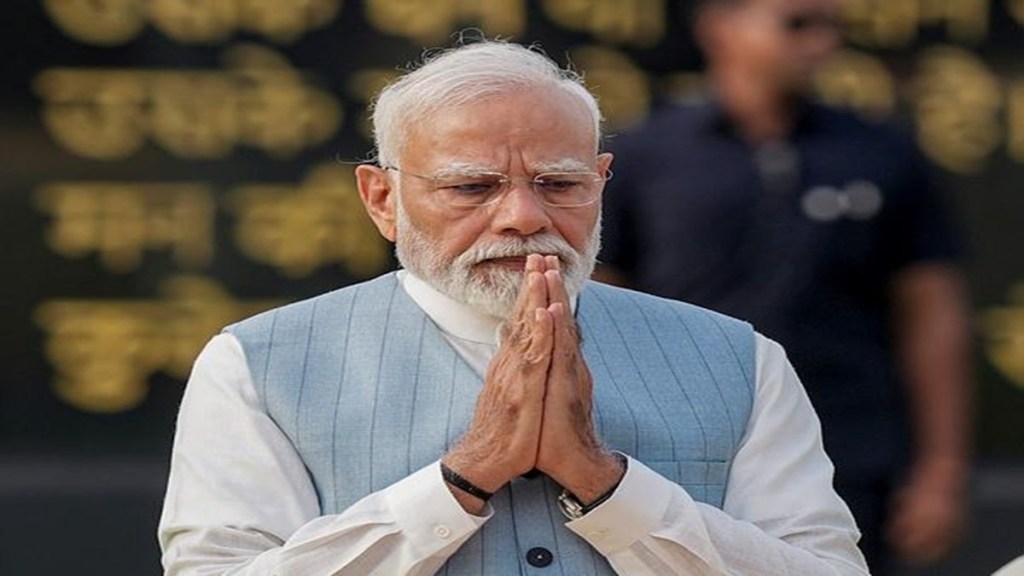

Prime Minister Narendra Modi on Saturday called for a restructuring of global institutions and proposed a 10-point action plan for international governance reforms, including in the framing of rules. Addressing the 18th BRICS leaders’ Summit here, he said the discussions within the grouping made it clear that the changing global order could not be managed through institutions designed for an earlier era. “It is clear from today’s discussions that the world’s transition cannot be carried out through old institutions. Representation, responsiveness, and rule-making are all necessary reforms,” he said, in his concluding remarks as the BRICS chair.
Earlier, in his opening statement, Modi displayed New Delhi’s impatience with the fact that the International Monetary Fund’s (IMF) decision-making process had not been reformed to reflect the changed global economic realities and the growing heft of India and other emerging market economies. International financial institutions must better reflect today’s economic realities, he said, adding that voting power, leadership positions and policy priorities should give greater weight to countries driving global economic growth.
India has repeatedly pushed for reforms in the Bretton Woods institutions, including the IMF and World Bank, to give developing countries a greater voice in global economic decision-making. “Countries experiencing global economic growth should play an important role in global economic governance,” Modi said. India currently holds 2.64% of the total voting power in the IMF.
Modi also made a strong case for reforming the United Nations Security Council, stressing that the issue could no longer be avoided. He called for negotiations to be tied to a definite timeline and clear outcomes.
Modi said AI, cyberspace, outer space, biotechnology and critical technologies will shape future global rules. He stressed that developing countries must have the expertise to help frame these rules, calling for efforts to make the Global South both a “rule-taker and a rule-shaper.”
The prime minister said the BRICS New Delhi summit showed that despite differences in perspectives, member countries remained committed to strengthening mutual cooperation. “Along with the diversity of our thoughts, our commitment to BRICS cooperation has also been clearly evident,” Modi said.
Modi also underlined the need for the Global South to have a meaningful role in shaping emerging technologies and the rules governing them. He said the gap between decisions taken at the global level and their impact on people on the ground needed to be addressed through greater cooperation. “We have also emphasised that the Global South should be equally involved in the development of future technologies and their rules,” he said.
The resolution assumes importance amidst rapid adoption of Agentic AI, tokenisation and quantum computing.
The adoption of the New Delhi Declaration provided a clear direction for the group’s shared commitments, Modi said, stressing that the real challenge would be turning those commitments into action. “The New Delhi Declaration adopted today gives a clear direction to our shared commitment. Now it is our responsibility to transform these commitments into strong results,” he said.
Outlining a 10-point action plan for global governance reforms, he said BRICS must work towards preparing a reform roadmap by the next summit. He proposed creating a Seafarers Emergency Support Network that would bring together maritime authorities and diplomatic missions of the countries concerned. The network could assist in distress situations, including medical aid, communication with families and evacuation.
Modi proposed a BRICS Continuity and Implementation Mechanism. Under the proposal, BRICS could create a secure digital repository to track decisions and initiatives, with each decision linked to a nodal point, a deadline and its implementation status.
Looking ahead to the next 20 years of BRICS, Modi called for a new and ambitious agenda that would turn the grouping’s growing cooperation into tangible outcomes.