


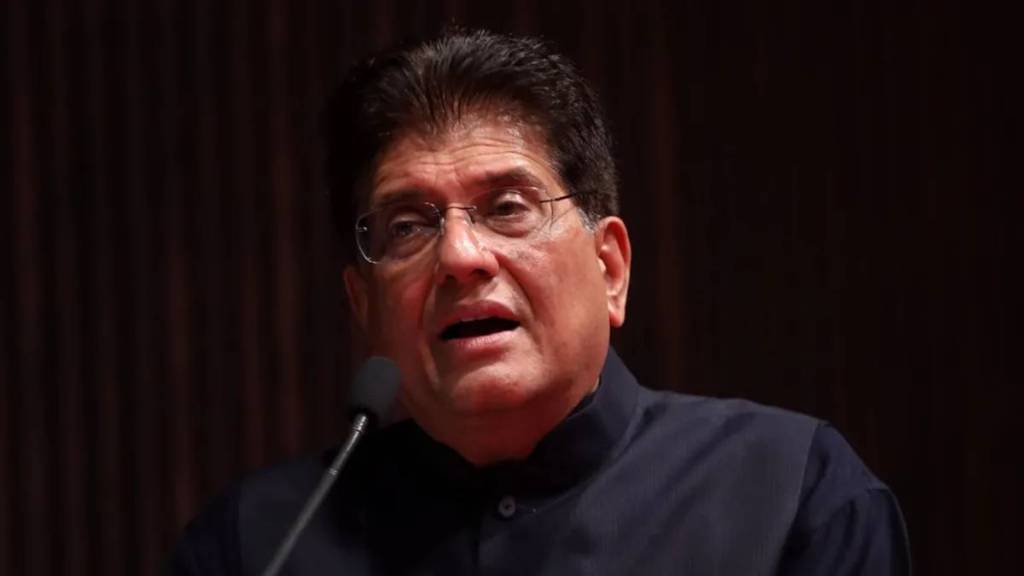

Union Commerce and Industry Minister Piyush Goyal on Thursday stated that the proposed India-US free trade agreement would not compromise the sensitive interests of Indian farmers or any other domestic stakeholders. Addressing the ISID-IDRA Fourth National Conference, Goyal emphasised that once details of the deal are made public, “the people of India will celebrate,” PTI reported.
India and the US announced the finalisation of the framework for the first phase of a bilateral trade agreement (BTA) in February. However, evolving tariff policies in the US have led to continued negotiations. India continues to seek lower tariffs for its exports in the US market to remain competitive against nations like Bangladesh, Vietnam, and Cambodia.
FTAs with Developed Nations
Goyal highlighted that India’s nine free trade and bilateral trade agreements cover 38 developed countries, according to ANI. Because these developed nations are economically prosperous, they serve as complementary trade partners rather than direct competitors to India.
The minister noted that most developed countries traditionally maintain high tariffs on labor-intensive goods, often using them as negotiating leverage that restricts Indian exports. However, through strategic trade agreements with these 38 nations, India has successfully navigated and overcome these trade barriers, Goyal added.
Access to Preferential Markets
Goyal further emphasised that India has unlocked preferential market access to economies representing a combined GDP of USD 60 trillion through nine trade agreements—a substantial increase from the USD 10 trillion covered by pacts signed prior to 2014. Goyal said, “All the agreements prior to 2014 only covered USD 10 trillion because they were largely signed with countries in direct competition with us.”
Opting Out of the RCEP
While referencing the Regional Comprehensive Economic Partnership (RCEP), Goyal explained that India walked away from the mega trade deal to protect its domestic manufacturing sector.
India decided not to join the RCEP in November 2019 after determining that the pact failed to address key national concerns. The 15-member RCEP bloc includes 10 ASEAN countries (Brunei, Cambodia, Indonesia, Laos, Malaysia, Myanmar, the Philippines, Singapore, Thailand, and Vietnam) alongside Australia, China, Japan, South Korea, and New Zealand.
Goyal asserted that joining the RCEP would have dealt a fatal blow to Indian manufacturing, warning that the agreement risked turning India into “a nation of salesmen and saleswomen marketing Chinese goods.”