



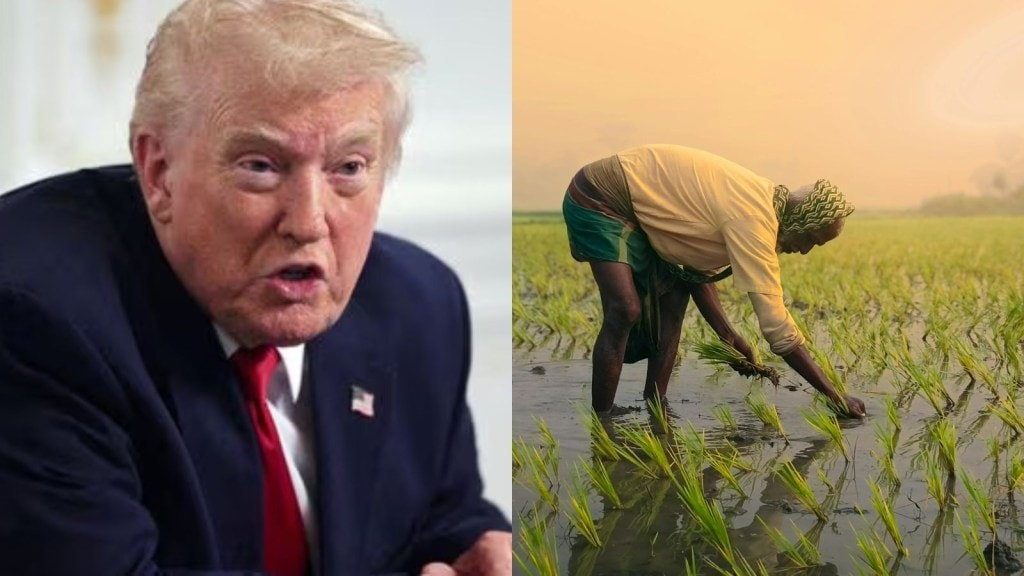
On 9 December, the US President Donald Trump threatened to impose fresh tariffs on imports of Indian rice. Responding to the same, Indian Rice Exporter Federation’s Vice President, Dev Garg, said that the Indian exports are likely to remain steady.
At a roundtable discussion in the White House, the US President threatened to impose new tariffs on agricultural products, including new tariffs on Indian rice. He alleged that Indian rice is being dumped into the US and mentioned that imposition of tariffs would solve the problem in “two minutes.”
Indian Rice Exporters Federation responds to Trump’s threats
Addressing the remarks made by Donald Trump, Dev Garg in an interview with CNBC-TV18 said that despite the imposition of 50% tariffs by the Trump administration, exports have continued to grow. Prior to these additional tariffs the Indian rice faced a 10% tariff.
Garg further noted that mostly the impact of these additional duties has been borne by US consumers .He explained that the domestic price of a 10-pound bag of rice in the US, which used to cost around $13–14, now costs approximately $18–19 following the imposition of the additional duties.
The industry representative also stated that the cost burden is largely falling on American importers and consumers because Indian rice is preferred by choice. He added that the primary consumers of rice in the US are people from countries such as India, Pakistan, Bangladesh, and the Gulf region, who prefer the taste of Indian rice. He also emphasized that rice grown in the US is not a like-for-like replacement for Indian rice.
“You don’t import food because you’re doing a favour to the Indian economy or the exporter… You import food because it is your requirement,” Garg said.
The average comparable price of Indian rice to US rice is around $950 per metric tonne, though it may vary depending on the quality.
India is the world’s largest rice producer, accounting for a 28% share in the global market. For marketing year 2024, India exported rice worth $386.33 million to the US, making the latter country account for over 3% of its total export market. The US is the fourth-largest market for Indian basmati rice. Last year, India exported 270,000 metric tonnes of basmati rice worth $372 million to the US. For FY 23–24, the US accounted for 5.22% of India’s global basmati export market.
For non-basmati rice, India supplies around 60,000 tonnes to the US, making the US the 24th-largest market for Indian non-basmati rice.
As per official data for 2024, Saudi Arabia was the highest importer of Indian rice, followed by Iraq and Benin. The US is the 10th-largest importer of Indian rice; this includes basmati, non-basmati, and other varieties as well.
Market Reaction
KRBL (India Gate), LT Foods (Daawat), and GRM Overseas are some of the most prominent exporters of rice to the US market. Following Trump’s remarks, the stock of KRBL fell nearly 2%, shares of LT Foods dropped 8% during intraday trade, and the shares of GRM declined by nearly 1%.