



Prime Minister Narendra Modi and Russian President Vladimir Putin on Friday reviewed bilateral ties, focusing on expanding economic and industrial cooperation amid geopolitical disruptions and growing trade and energy linkages. The two leaders met on the sidelines of the 18th BRICS Summit in New Delhi, their second meeting this year after talks in Bishkek on August 31 on the margins of the SCO Summit.
The next major engagement will be the 24th India-Russia Annual Summit in Russia. Putin invited Modi to visit Russia for the summit, and the Prime Minister accepted the invitation. The dates will be finalised through diplomatic channels.
The discussions on Friday covered trade and investment, defence, energy, space, skill mobility and people-to-people ties. They welcomed Russia’s International Industrial Exhibition, INNOPROM India, held in New Delhi from September 9 to 11, and visited the exhibition, underscoring efforts to expand the relationship beyond its traditional pillars of defence and energy.
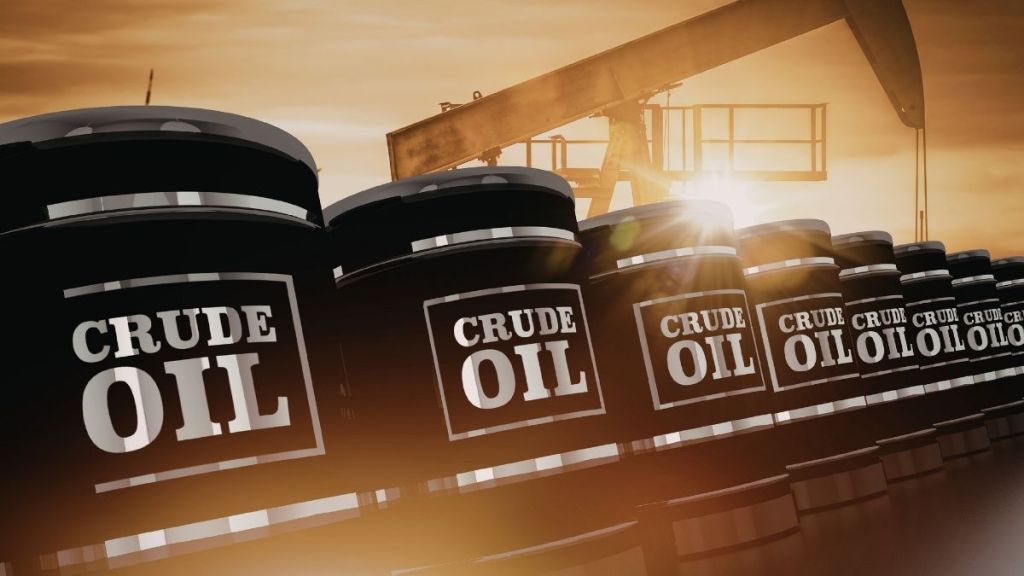
Russian crude remains at the heart of that equation. Russia accounted for an average 43.3% of India’s crude imports during April-July 2026, with its share touching a record 51% in July.
The oil trade, however, moderated in August. India’s Russian crude imports fell 26.3% month-on-month to 2.08 million barrels per day (bpd) from a record 2.82 million bpd in July, while Russia’s share of India’s crude basket declined to about 45% from 55.9%, according to Kpler data. India’s overall crude imports stood at 4.62 million bpd.
The price advantage that drove much of India’s Russian buying has also narrowed sharply. Urals cargoes arriving in September were offered at discounts of only around $1-2 a barrel to Dated Brent, while October-delivery cargoes were offered at premiums of up to $1 a barrel. More recent purchases have also been assessed at around a $1-a-barrel premium to Brent, effectively eroding the discount cushion that Indian refiners enjoyed earlier.
The economic push comes as the two countries seek to lift bilateral trade to $100 billion by 2030, while widening commerce beyond an import-heavy relationship dominated by Russian energy. Commerce and Industry Minister Piyush Goyal this week also called for faster industrial cooperation to meet the $100-billion trade and $50-billion two-way investment targets by 2030.
Bilateral trade touched a record $68.7 billion in FY25 before moderating to $59.863 billion in FY26. India’s exports to Russia were $4.88 billion last year, while imports stood at $55.369 billion, highlighting the wide trade imbalance. Pharmaceuticals, chemicals, iron and steel and marine products are among India’s major exports, while imports include oil and petroleum products, fertilisers, sunflower oil, coking coal, precious stones and metals.
The leaders also discussed India’s engagement with Russia in BRICS under India’s 2026 chairship and exchanged views on conflicts in West Asia and the Black Sea region, which have affected maritime trade and the safety of Indian seafarers. Modi reiterated that dialogue and diplomacy were the way forward. The two sides reaffirmed their commitment to strengthening the “Special and Privileged Strategic Partnership”, which they said had remained resilient despite geopolitical uncertainties.