


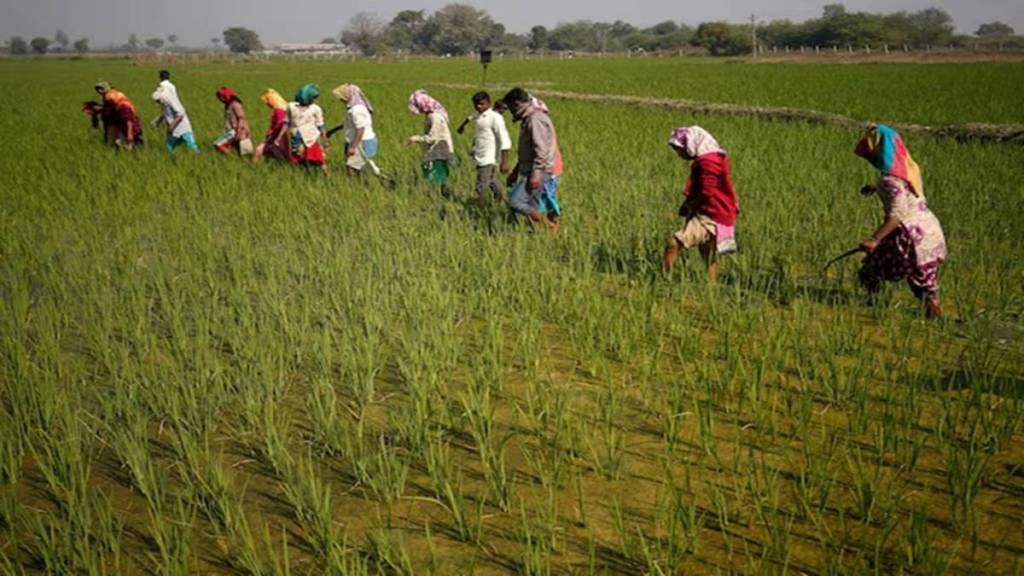

A 13% monsoon deficit, a decline in sowing area, and prospects of super El Nino are likely to impact foodgrain output, especially rice, the country’s largest agri-produce.
The prospects of lower output have already led to a rise in retail prices for several rice variants in the last month, and traders and exporters expect prices to rise further in the coming months. The average retail price of rice, according to the Department of Consumer Affairs’ Price Monitoring Cell, increased to Rs 48.23/kg on Friday, a 12% year-on-year increase.
“While the crop outlook for the season remains mixed, with weather-related variability emerging as a key factor to watch, paddy is likely to see a yield decline of up to 4% to 5%,” Pushan Sharma, Director, Crisil Intelligence, told FE. Paddy harvesting commenced in northern states including Punjab, Haryana and Uttar Pradesh from the beginning of the month.
According to the agriculture ministry, the area under paddy declined by 4% to 42.68 million hectares (Mha) in the kharif season of 2026 compared to the previous season. A major decrease in paddy area was reported in states including Karnataka (0.46 Mha), Telangana (0.43 Mha), Andhra Pradesh (0.18 Mha), and Tamil Nadu (0.15 Mha).
Trade sources said rice output is likely to decline to 147 million tonnes (MT) in the 2026-27 crop year (July-June) from a record 154 MT in 2025-26. India emerged as the world’s largest rice producer, surpassing China in the 2025–26 season.
Increasing rice prices could lead to a further spike in food inflation in the cereal category, although the rise in wheat prices is likely to be modest due to huge surplus stocks held by the government. Retail inflation in rice in September was 8.25% compared to 5.89% in August, 2026.
“Prices of premium non-basmati rice variants such as Sona Masoori and Kollam have risen sharply as production is affected by drought and lower acreage in southern states. Wholesale Sona Masoori has risen to Rs 65- Rs 70/kg from Rs 50/kg a month ago,” Suraj Agarwal, co-founder & CEO, Rice Villa, told FE.
Mandi prices of the newly harvested major varieties of basmati crop in key growing states, including Punjab and Haryana, have crossed a record Rs 5,000/quintal, up from Rs 4,000/quintal a year ago, exporters said. The prices have surged due to strong demand from West Asia and domestic prices of aromatic rice have started to rise significantly in the last one month.
“The kharif season has been challenging in rainfed areas, while untimely and excessive rainfall in irrigated areas has impacted crop health. We are seeing that production is likely to be affected in the coming season,” Union Agriculture Secretary Atish Chandra recently stated.
The Food Corporation of India currently holds 37.65 MT of rice stock against a buffer of 10.25 MT for October 1. This stock does not include 17.7 MT of grain receivable from millers.
The United States Department of Agriculture (USDA) said in a report that India’s rice exports next year are projected to decline by 4% to 24 MT in 2027 due to lower shipments of broken and white rice.