


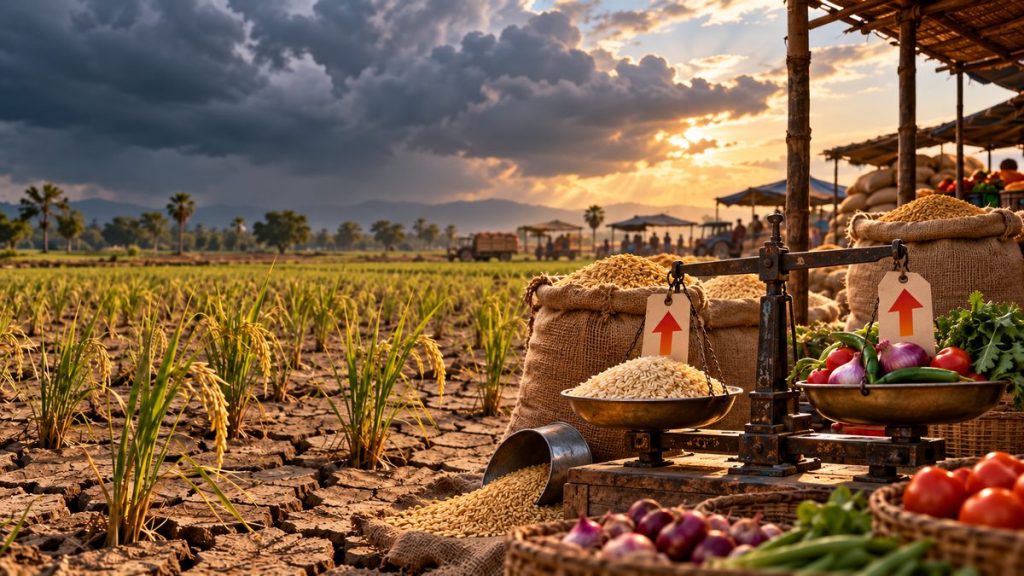

India’s Southwest monsoon season ended with a cumulative rainfall deficit of 12.5% below normal levels and below initial predictions of 10% by the India Meteorological Department. The dry spell has created immediate headwinds for farm output, depleted key reservoirs, and heightened risks for rural consumption in the coming quarters. What does this mean for India’s inflation?
Japanese brokerage firm Nomura believes that “the overall inflation and price increases (mid-single-digit) are in a manageable range and it seems they may not materially put pressure on volumes as of now.”
However, “any further product price hikes and impact on agricultural yield this year could add to the pressure on overall demand/consumption,” Nomura added.
Foodgrain stocks may help curb inflation
Food inflation may be curbed by massive government foodgrain buffer stocks, according to Nomura, despite deep reservoir deficits in Southern and Northern regions that continue to raise concerns over water replenishment for the upcoming Rabi sowing season.
Water levels across India’s 178 primary reservoirs fell to 11.5% below their 10-year average, holding just 70.8% of total live capacity.
Total Kharif crop sowing dropped 1.5% year-on-year by mid-September, recovering slightly from a 23% plunge seen in late June. Sowing for rice and maize fell by 3.8% and 2.6%, respectively, though area under cultivation for pulses grew by 1.5% due to better late-season rains in central belts.
Nomura flags pressure on rural demand
Rural demand is what analysts are concerned about. The Nomura analysts observed that rural consumption growth has already begun moderating and converging with urban growth rates as lower agricultural yields weigh on farm incomes.
“We remain watchful of rural demand as we believe that it will likely face multiple headwinds of below-normal monsoon, El Nino, and product price increases being taken by companies due to the West-Asia conflict,” noted Nomura research analysts Mihir P. Shah and Riya Patni in the report.
Nomura believes the current strong El Nino conditions and weather models to persist through February. This may increase the likelihood of a warmer winter, threatening high-margin seasonal consumer categories like skin creams, lotions, and health supplements.
Severe rainfall deficit across key farming belts
Nearly 42% of the country’s sub-divisions suffered rainfall deficits, leaving around 75% of Maharashtra and Karnataka under severe drought conditions.
Regionally, Eastern and North-Eastern India logged the highest rainfall deficit of 25%. The South Peninsular region suffered a 24% shortfall.
Central India limited its deficit to just 2% below normal, cushioning major national Kharif crops such as cotton, oilseeds, and pulses. Northwest India recorded a 6% deficit, causing only moderate disruptions to rice and sugarcane output.