


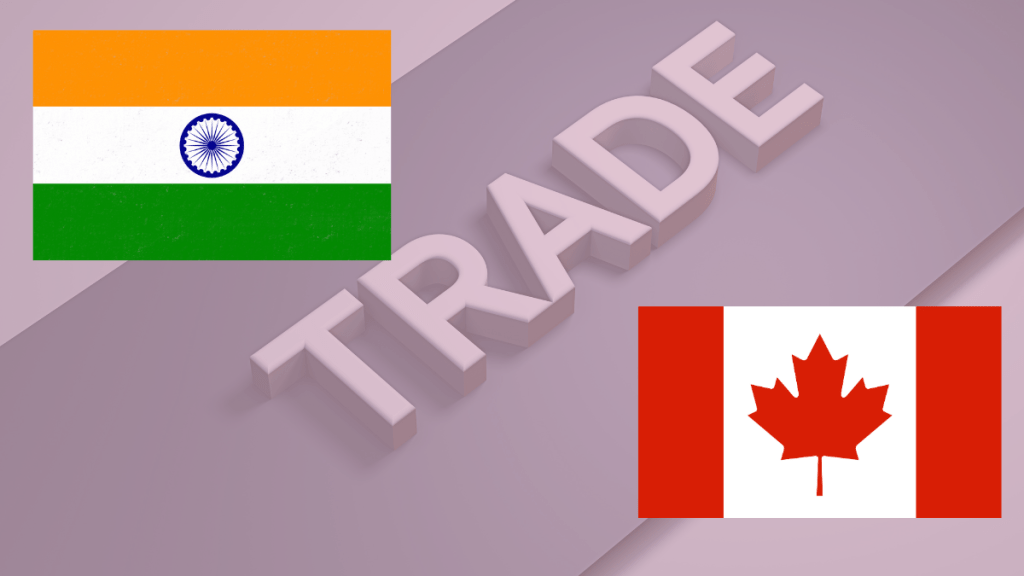

India and Canada on Friday reaffirmed their commitment to expedite negotiations for a Comprehensive Economic Partnership Agreement (CEPA) and conclude the pact at the earliest as both sides concluded the 4th round of negotiations held here over the past five days.
Commerce and Industry Minister Piyush Goyal and Canada’s International Trade Minister Maninder Sidhu, who is visiting India, held discussions on advancing the CEPA.
“Both sides reaffirmed our leadership’s commitment to expedite negotiations and conclude CEPA at the earliest, unlocking new opportunities across trade in goods, services, and investment, among others,” Goyal posted on social media after meeting Sidhu.
Canadian International Trade Minister’s visit to India this week includes meetings with Indian business representatives and investors as Canada seeks to attract greater investment while diversifying its trade beyond the US market.
“From aerospace and artificial intelligence to clean energy and critical minerals, there is enormous potential,” Sidhu said in a social media post prior to the meeting.
The fourth round of CEPA negotiations in New Delhi was held from September 14-19. Canada sent a 48-member team to the negotiations. Commerce Secretary Rajesh Agrawal had said on Tuesday that two chapters have already been concluded and that both sides are working against a tight timeline to complete the agreement by the end of 2026.
The Terms of Reference for the CEPA negotiations were signed in March during Canadian Prime Minister Mark Carney’s visit to India.
Canada has set an ambitious trade target as part of the negotiations. Two-way trade in goods and services reached $30.4 billion in 2025, according to the Canadian government, which is targeting an increase to $70 billion annually by 2030.
According to commerce ministry data, in 2025-26 India’s goods exports to Canada were up 10.6% to $3.28 billion while imports from Canada fell 26.1% to $4.44 billion. Total trade fell 8.2% year-on-year to $7.9 billion. Services accounted for the rest of the trade.
The proposed CEPA is also being negotiated against the backdrop of a broader reset in India-Canada economic relations following a period of diplomatic tensions. The agreement is intended to provide a comprehensive framework covering market access and other areas of economic cooperation.
The two countries are simultaneously expanding cooperation in strategic sectors, particularly energy, critical minerals and nuclear power. During Carney’s March visit, India and Canada announced a Strategic Energy Partnership covering LNG, LPG, uranium, solar and hydrogen.
A key outcome was a C$2.6 billion agreement with Canadian uranium producer Cameco to supply nearly 22 million pounds of uranium ore concentrate to India between 2027 and 2035. The two sides also signed an MoU on critical-minerals value chains covering areas including exploration, processing, investment promotion and technical cooperation.
For India, the CEPA would provide an opportunity to expand exports of goods and services to Canada while seeking greater access for the Indian market. The agreement is also expected to provide a framework for investment and supply-chain cooperation in sectors where the two economies have complementary strengths.
This is the third attempt to establish a comprehensive trade agreement between the two countries. Negotiations were first launched in 2010 but failed to make substantial progress. They were relaunched in 2022 before being suspended in 2023 amid a deterioration in bilateral political relations. The March 2026 decision to restart formal CEPA negotiations marked a renewed effort to place economic ties at the centre of the relationship.