


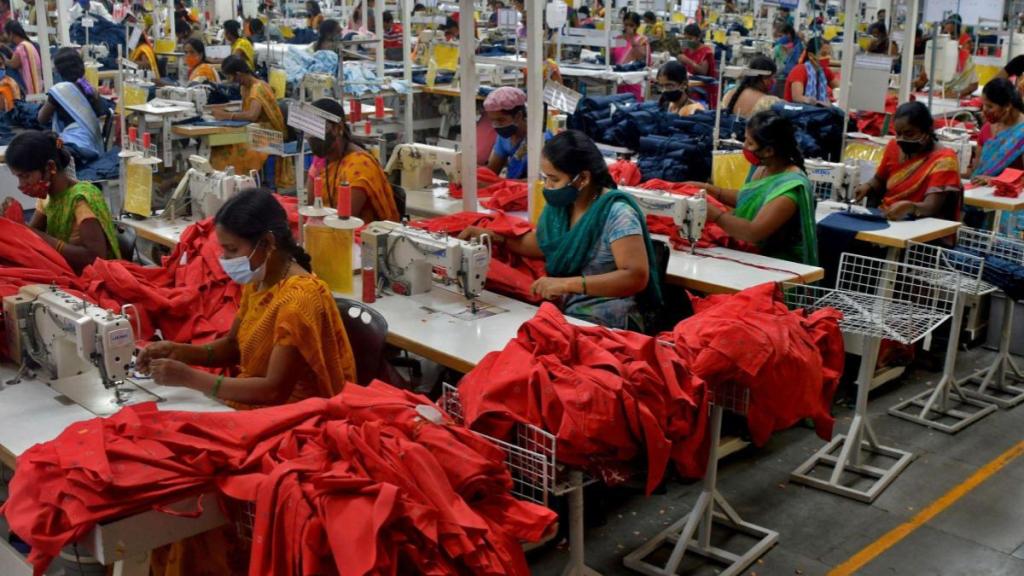

The Gujarat government’s decision to impose a weekly 8-hour power cut just a fortnight before Diwali has left industries grappling with mounting production and business losses while putting workers’ salaries and livelihoods at risk.
The power curbs are a fresh setback for Gujarat’s industrial sector, which had already faced disruption during the Hormuz crisis earlier this year.
The staggering began soon after the notices were issued last week. On October 16, Gujarat’s power demand reached a record high of 29,822 MW due to various factors, including more electricity consumption, the festive Navratri, and more industrial activity because of the upcoming Diwali.
This is part of several measures to tackle the severe power crunch. While securing central coal allocation, getting additional power grid allocation, or even asking non-operational plants to start operating are steps that would help the industries, the power staggering is hitting them hard.
Gujarat has traditionally been a power-surplus state. Industry representatives said restrictions of this scale were being imposed after nearly 15 years.
Ashish Gujarati, president of Pandesara Weavers Cooperative Housing Society Ltd., said there was hardly any notice given. Pointing out that there are an estimated three lakh MSMEs, not only of textiles but other sectors as well, in South Gujarat, he said that the production loss in the textile sector alone can be around Rs 300 crore per week due to the weekly one-day-eight-hour power staggering. The amount does not factor in the probable losses the industry can face if Diwali orders are not met.
Industry sources said that the problem is compounded as several large units having captive power plants (CPPs) have started drawing electricity from the state government’s grid as coal and gas have become costly.
In fact, the Southern Gujarat Chamber of Commerce and Industry (SGCCI) in a letter to Gujarat chief minister Bhupendra Patel warned that the move could jeopardize the livelihoods of nearly 25 lakh workers across South Gujarat.
After the state government’s notice, the engineering sector of Rajkot district has taken weekly staggering on Wednesday. Rajkot Engineering Association’s president Narendra Panchani said they received a request to have staggering from 4 p.m. to 11 p.m. daily. However, the Association refused to accept the request. He said daily staggering would mean the loss of Rs 20 lakh per day for the workers in terms of salary. Rajkot district has more than 2 lakh engineering units.
Morbi’s sanitaryware and tiles industry needs to run Kiln 24×7. “The electricity company had come up with a request of staggering for 8 hours for one day in a week. This is totally impossible and will lead to the wastage of a lot of material. We sarcastically told them that instead of 8-hour staggering once in a week, it will be better to shut the units for a fortnight,” said a leader from the industry, who did not wish to be quoted.
In Ahmedabad and Sanand, the staggering has started affecting the shifts and altering the production schedules. Amit Shah, president of the Sanand Industries Association, claimed the impact on industries has not been felt so far, but expressed hope that the curbs would not last long.
Amid this crisis, so far Surat’s famed diamond industry has remained unaffected, as the majority of the units are situated in the city, unlike textile units. The diamond units are located on mixed urban and commercial grids, and power shut down is not possible without cutting off the supply in residential areas.