


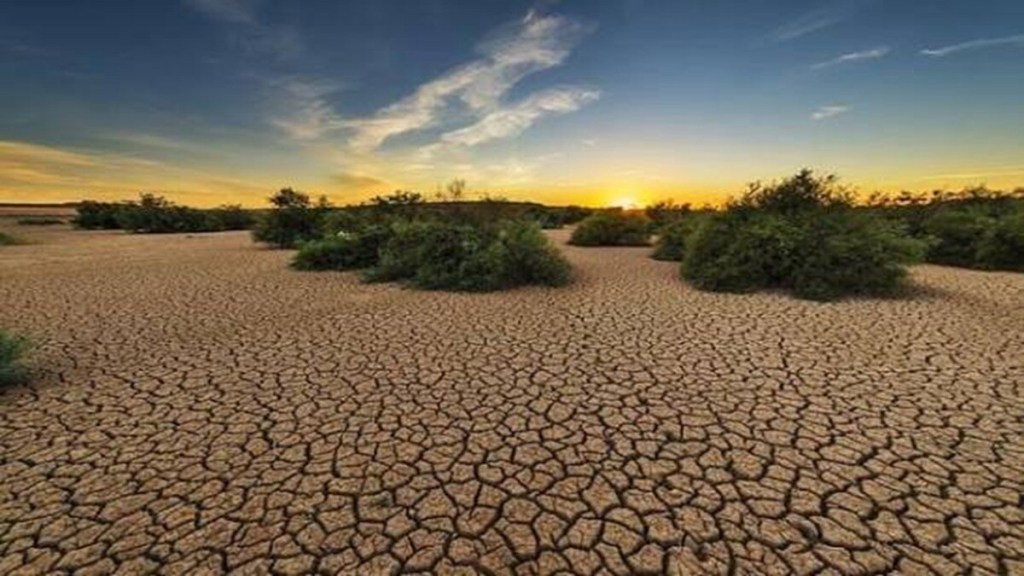

Even as drought fears loom large across the country, the Agriculture Minister Shivraj Singh Chouhan said India is unlikely to see a significant decline in Kharif food grain production. The Minister reassured that the production in the FY27 crop year may not be affected much despite concerns over El Nino, drought and floods in several parts of the country.
According to PTI, Chouhan said the government had started preparations in April itself to deal with weather-related challenges. “I do not believe that production will be significantly impacted by this level of deficit,” Chouhan said, referring to the current rainfall deficit of around 12%, worse than the IMD’s forecast of a 10% deficit.
The minister said the overall Kharif-sown area remains broadly comparable with last year, although some crops have seen a decline in acreage. The government is expected to release the final Kharif production estimates shortly.
Crop Diversification: Pulses Gain Ground as Paddy Acreage Shrinks
The steepest decline in acreage has been recorded in paddy, with the area under cultivation falling by around 16.32 lakh hectares. Maize, soybean and cotton have also reported a decline in acreage.
On the other hand, acreage under urad, bajra, jowar, sesame, sunflower, moong and tur has increased.
“This indicates a shift towards pulses and coarse cereals,” Chouhan said.
The Kharif foodgrain production target for 2026-27 has been set at 196.21 million tonnes, compared with actual production of 174.14 million tonnes in the previous year.
Regional Weather Stress: Floods Affect 6.11 Lakh Hectares Across Six States
Heavy rain and floods have affected crops across around 6.11 lakh hectares in Maharashtra, Tamil Nadu, Telangana, Andhra Pradesh, Rajasthan and Gujarat. Detailed assessments of the damage are currently underway.
Chouhan said the government is closely monitoring the possibility of El Nino becoming stronger towards the end of 2026.
The minister said crop planning is being adjusted according to regional rainfall, water availability and soil moisture. Contingency plans will also be used in areas facing drought conditions.
Although rainfall is currently deficient by around 12%, Chouhan said there is no major crisis at the national level. According to him, the difficulties are concentrated in specific regions.
Concerns have been reported in Karnataka and Maharashtra, along with parts of Andhra Pradesh, including Rayalaseema, parts of Telangana and parts of Rajasthan.
A Central team will visit Karnataka on October 3 after the state sought an assessment. Maharashtra has also requested a Central assessment team, which will be sent, Chouhan said.
Rabi target set at 177.72 million tonnes
The government has set a Rabi foodgrain production target of 177.72 million tonnes for 2026-27, higher than the actual output of 174.51 million tonnes recorded in the previous year.
Chouhan asked states to approach Rabi planning scientifically and consider the availability of water and soil moisture before deciding which crops to sow.
“Since water resources are limited, we must plan strategically and must not delay preparations,” he said.
The minister said crop selection should be based on water availability rather than encouraging water-intensive varieties in regions facing shortages.
| Parameter | current status | Change / detail |
|---|---|---|
| Southwest monsoon rainfall | Around 12% below normal | Higher deficit than IMD’s earlier 10% forecast |
| Paddy acreage | Down 16.32 lakh hectares | Among the biggest acreage declines |
| Flood-affected crop area | 6.11 lakh hectares | Across six states |
| Kharif MSP procurement approved | Rs 5,547.99 crore | Pulses and oilseeds in 3 states |
| Uttar Pradesh procurement | Rs 3,992.57 crore | Tur and moong |
| Karnataka procurement | Rs 1,107 crore | Soybean, moong and sunflower |
| Telangana procurement | Rs 448.42 crore | Soybean and moong |
The Centre will help states identify seeds and crop varieties that require less water, have shorter maturity periods and are suited to local soil and weather conditions.
States have also been asked to prepare district-level plans to increase the cultivation of pulses in rice-fallow areas. Chana, masoor and mustard cultivation should be increased in suitable regions, Chouhan said.
Price Support: Centre Sanctions Rs 5,548 Crore MSP Procurement for Three States
Separately, Chouhan has approved procurement worth Rs 5,547.99 crore at Minimum Support Price (MSP) under the Price Support Scheme (PSS) for the Kharif Marketing Season 2026-27.
The procurement will cover pulses and oilseeds in Uttar Pradesh, Karnataka and Telangana.
Uttar Pradesh has received the largest allocation of Rs 3,992.57 crore. This includes procurement of 4.66 lakh tonnes of tur worth Rs 3,937.70 crore and 6,250 tonnes of moong worth Rs 54.87 crore.
Karnataka has approved procurement worth Rs 1,107 crore. This includes 1.155 lakh tonnes of soybean worth Rs 659.27 crore, 38,250 tonnes of moong worth Rs 335.83 crore and 13,413 tonnes of sunflower worth Rs 111.90 crore.
In Telangana, procurement worth Rs 448.42 crore has been approved. This covers 62,000 tonnes of soybean valued at Rs 353.90 crore and 10,766 tonnes of moong valued at Rs 94.52 crore.
The government said the procurement will protect farmers from falling market prices and support remunerative returns for pulse and oilseed growers. Payments will be made directly into farmers’ bank accounts.
With the input from PTI