


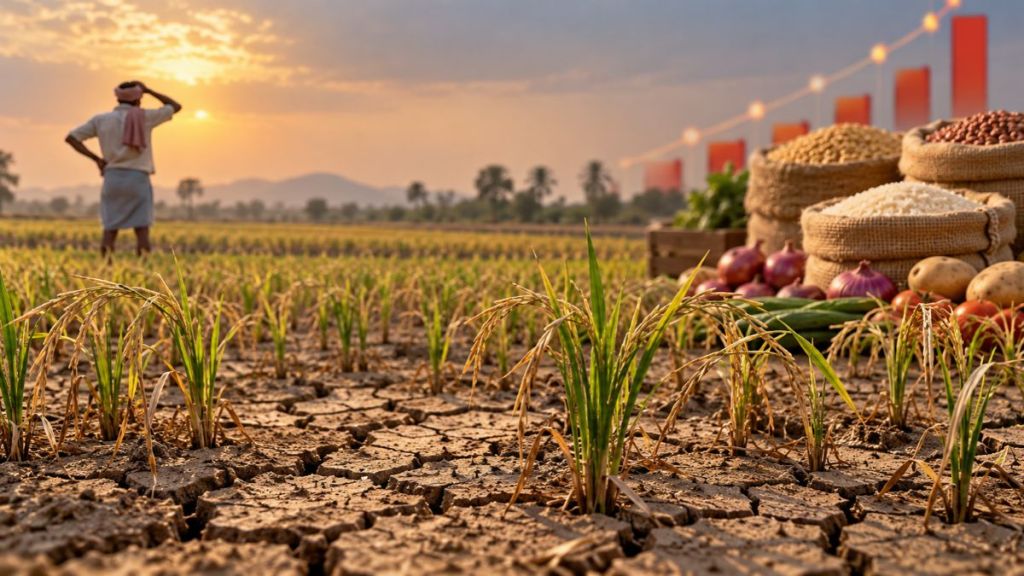

Maharashtra has officially announced drought, but as India battles its driest monsoon in 11 years, the fear of a drought-like situation for many other states too. Several states with extended dry spells and deficient rains including Karnataka, Maharashtra, parts of Andhra Pradesh, Telangana and Rajasthan are in the focus.
The question is, what does deficient monsoon or a drought-like situation mean for India ?
13% Rain Deficit: Sowing holds firm at -1%, but crop output at risk
Rainfall has recorded a deficit of approximately 13% for this monsoon season. However, sowing has been rather healthy, with only -1% deviation from normal.
However, Nuvama believes that good sowing doesn’t automatically mean good output.
“Historically, high rainfall deficit has had much less bearing on sowing but significant bearing on crop output. And this year, the regional distribution of rainfall has been highly skewed. Thus, good sowing does not necessarily guarantee good crop output.” Nuvama noted.
Key Kharif staples—including paddy, pulses, and cotton—remain particularly vulnerable in the water-stressed southern and eastern agricultural belts.
El Niño Threat: Nomura warns food prices could pressure CPI
El Nino and drought like situations in Indian states may also keep pressure on inflation. Nomura said weaker agricultural yields may push up food prices. However, the brokerage said the impact on overall inflation should remain manageable for now, helped by ample government foodgrain stocks. It warned that if El Nino conditions persist and further hurt crop yields, the resulting food-price pressures could add to broader inflation and weigh on rural demand.
“The overall inflation and price increases (mid-single-digit) are in a manageable range and it seems they may not materially put pressure on volumes as of now, any further product price hikes and impact on agricultural yield this year could add to the pressure on overall demand/consumption,” noted Nomura.
Farm Income Squeeze: Subdued Rural Sentiment To Drag
The anticipated hit to crop yields threatens a second consecutive year of subdued farm income, further depressing rural consumer sentiment and spending.
Simultaneously, supply-side pressures are straining consumer inflation. Headline Retail Inflation (CPI) has risen above 5%, driven primarily by higher food and beverage prices. International commodity price volatility and localised crop stresses threaten to keep food prices elevated heading into the winter harvest season.
Outlook: Rabi Season to test Economic Resilience Ahead Of Winter
India’s driest monsoon since 2015 highlights a growing divergence between initial agricultural planning and actual crop yield. While strong sowing metrics and comfortable foodgrain reserves offer an immediate buffer, persistent regional rainfall deficits present a multi-pronged threat to food inflation, rural consumption, and overall economic growth. The real test for India’s economy will emerge heading into the winter harvest season as the winter crop will get impacted