


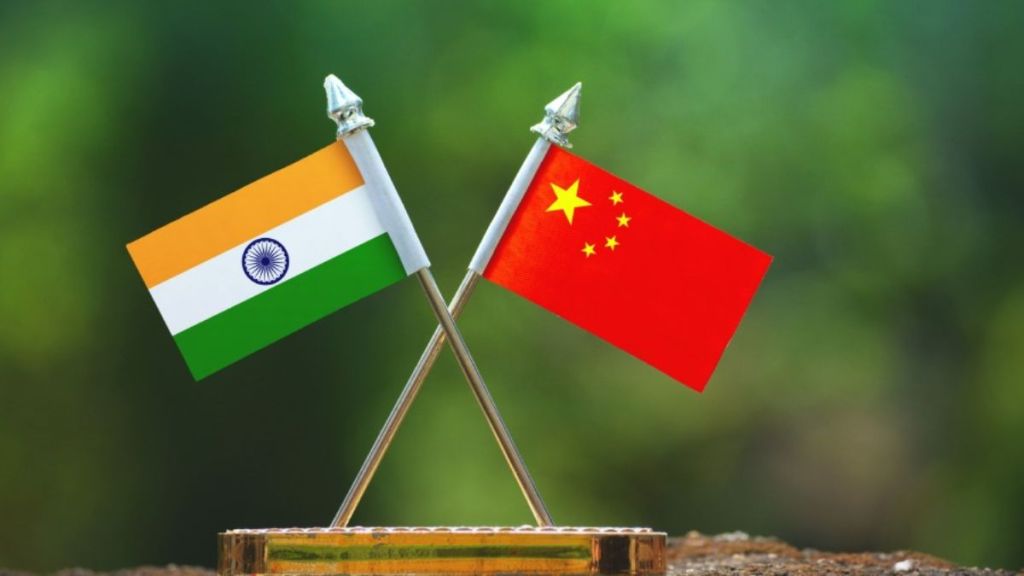

The outcome of a scheduled bilateral meeting between Prime Minister Narendra Modi and Chinese President Xi Jinping will be as closely watched as the New Delhi Declaration that will follow the 18th BRICS Summit here from September 12 to 13.
Modi will also meet Russian President Vladimir Putin on the sidelines of the meeting of leaders of the 11-member grouping.
According to sources, the summit will see discussions on trade and investment, technology, energy and food security, resilient supply chains and global governance. Reforming the multilateral trading system anchored by the World Trade Organization is a key agenda India is likely to pitch for, they added.
Disruptions in global trade due to US tariff actions, the war in West Asia, and soaring energy prices provide the context for the deliberations.
India’s presidency is seeking concrete economic deliverables rather than another broad political statement.
The economic agenda is likely to be dominated by the Strategy for BRICS Economic Partnership 2030, which India wants as a longer-term framework for expanding intra-BRICS trade and investment, strengthening supply chains, promoting technology and innovation and improving financial and digital connectivity. The 2030 strategy proposed at the 17th BRICS Summit in Rio de Janeiro last year will succeed the Strategy for BRICS Economic Partnership 2025.
The BRICS economic agenda could provide India with a platform to push greater South-South trade and investment without turning the grouping into an explicitly anti-US or anti-Western bloc, the sources added.
India is also expected to favour practical financial cooperation, including cross-border digital payments, local-currency settlements and greater interoperability among payment systems, rather than making de-dollarisation the central political objective.
The first day, September 12, will focus on leaders’ discussions on global issues during the closed session “Inclusive Global Governance and Strengthening Multilateralism”. The second day will include expanded discussions with BRICS partner countries on economic issues in the session on “Resilience, Innovation, Cooperation and Sustainability: Shaping the Future for Inclusive Global Growth” and is expected to culminate in the New Delhi Declaration.
Bilaterals with Russia, China
Xi will be visiting India for the first time since the 2020 Galwan clash. Modi and Xi in their meeting on September 12 are expected to discuss the overall bilateral relationship, the border situation and economic ties, with trade, investment and technology access likely to figure prominently.
Indian industry continues to seek greater access to Chinese capital goods, components and technology, particularly for manufacturing, renewable energy, electronics and other emerging sectors. At the same time, New Delhi remains concerned about the widening trade imbalance and China’s dominance in several strategic supply chains.
With Russia the bilateral meeting on September 11 is expected to focus on energy, defence and the wider strategic partnership, at a time when India’s continued purchases of Russian oil have become contentious in its relations with Washington.
India and Russia are set to place defence technology, military production and wider strategic cooperation at the centre of their upcoming talks, with Moscow confirming that discussions over the possible transfer of technology for the Su-57 fifth-generation fighter have already begun. Talks on upgrading Brahmos missile systems is another area that is likely to be discussed.
India is also expected to use the presence of leaders from Brazil, South Africa, the UAE, Saudi Arabia, Iran, Indonesia, Egypt and Ethiopia to expand economic partnerships and discuss trade, investment, energy security and supply-chain diversification.
The summit will also have to negotiate a difficult geopolitical environment. The US-Israeli war against Iran has exposed differences among BRICS members, while disruption around the Strait of Hormuz has created fresh energy-security risks.
The Ukraine conflict presents another test, with Russia seeking stronger political support while India continues to advocate dialogue and diplomacy.
For India, the central challenge will be to prevent geopolitical divisions from overwhelming the economic agenda.