



The Strategy for BRICS Economic Partnership 2030 is set to emerge as the central economic deliverable of the upcoming BRICS summit in New Delhi, with members seeking to provide the grouping a longer-term roadmap for trade and investment as US tariff actions and geopolitical tensions reshape global supply chains.
At an August meeting of the 11-member BRICS trade ministers in Jaipur, ministers commended India’s progress towards finalising the strategy and agreed to submit it, along with the presidency’s priorities, to BRICS leaders for endorsement at the 18th summit in New Delhi.
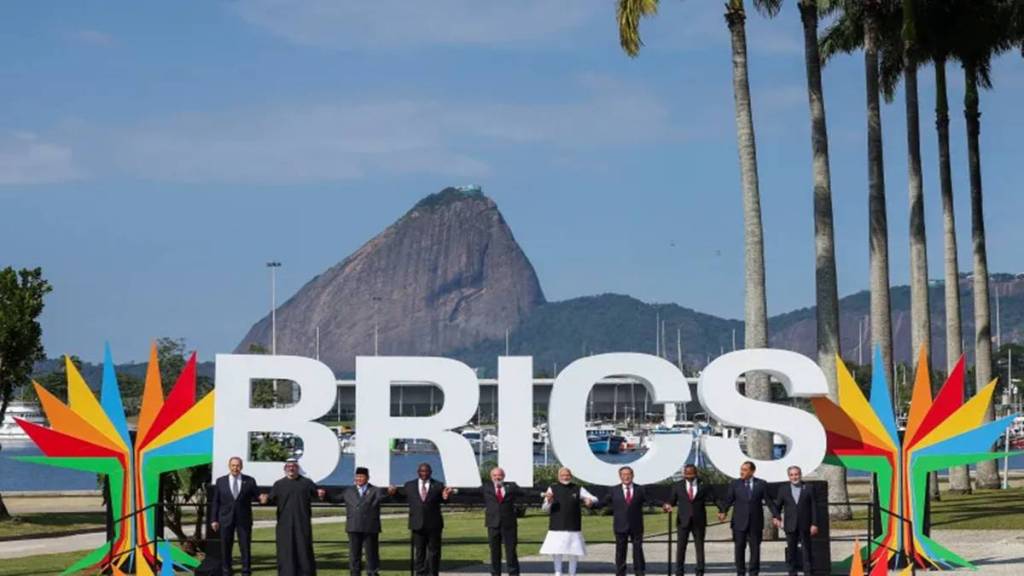
The 2030 strategy will succeed the Strategy for BRICS Economic Partnership 2025, which was proposed at the 17th BRICS Summit in Rio de Janeiro last year. It is expected to provide an overarching framework for cooperation in trade and investment, the multilateral trading system, digital economy, financial cooperation, industry, innovation and sustainable development.
The New Delhi summit could therefore seek to move the BRICS economic agenda beyond individual initiatives towards a longer-term roadmap with specific areas of cooperation and implementation mechanisms.
The Jaipur meeting provided several building blocks for the strategy, including cooperation on global value chains, digital trade and services, trade finance for MSMEs, local-currency financing, and customs and standards.
India is likely to use the 2030 strategy to push for greater coordination among BRICS members on World Trade Organisation (WTO) reform, protection against discriminatory trade measures and preservation of policy space for developing countries.
The Rio declaration had criticised unilateral tariff and non-tariff measures and reaffirmed the WTO as the centre of the multilateral trading system.
“Ideally the BRICS should come out with a statement naming and shaming the US for its actions on the trade front. Unfortunately it is unlikely to happen,” international trade policy expert Abhijit Das said.
A key objective of the strategy is also likely to be deeper integration of BRICS supply chains. However, India is expected to favour diversification rather than integration that increases dependence on Chinese manufacturing.
The Workplan on the BRICS Shared Understanding on Global Value Chains includes a GVC Action Plan for 2026-2030, including the possibility of establishing a strategic supply chain and investment promotion platform covering sectors such as pharmaceuticals and food security.
The Jaipur meeting also advanced market opening and economic diversification among BRICS members. For India, these initiatives could help attract investment into electronics, pharmaceuticals, food processing, engineering and critical minerals as companies seek to diversify production across countries.
Priority for India’s presidency
“For India, the priority should therefore not be to position BRICS as an alternative to the West. It should be to make BRICS a credible platform for economic diversification, resilience and strategic optionality,” Executive Director, Nangia Global, Sivakumar Ramjee said.
The expanded BRICS represents 11 major economies, nearly half of the world’s population, around 32% of global GDP and about 26% of global merchandise trade. More than two-thirds of Global South GDP comes from BRICS economies, but only around 20% of South-South trade is intra-BRICS.
Intra-BRICS merchandise exports reached approximately $1.17 trillion in 2024, having increased more than 13-fold since 2003. The gap between BRICS’ economic weight and its relatively low level of economic integration could therefore be one of the biggest opportunities for India’s presidency, Ramjee said.
Payments and finance
Financial and payments cooperation is another major pillar of the 2030 strategy.
The Rio declaration backed greater interoperability of BRICS payment systems and increased use of local currencies. The Jaipur meeting also discussed local-currency financing for intra-BRICS trade.
India is expected to favour local-currency trade through bilateral understandings, rather than a common BRICS currency, as Commerce and Industry Minister Piyush Goyal has stated.
The emphasis could instead be on cheaper and faster cross-border payments, greater local-currency financing and a stronger role for BRICS financial institutions in supporting trade.
“A common currency is neither necessary nor immediately realistic. The more practical objective is financial diversification—greater use of local currencies where commercially viable, interoperable payment mechanisms, stronger development finance and reduced dependence on a limited number of international financial channels,” Ramjee said.
The strategy is also expected to give greater weight to smaller exporters. The Jaipur Consensus proposed a study of a BRICS Invoice Discounting Mechanism and principles for assessing export-oriented MSMEs, aimed at improving access to trade finance by giving lenders greater weight to business performance and cash flows rather than traditional collateral.
Digital trade is another potential growth area. Jaipur produced principles to facilitate digitally delivered services across borders, building on the Rio declaration’s emphasis on e-commerce and digital services. For India, this could help expand exports of IT, professional and other digitally delivered services across BRICS markets.