


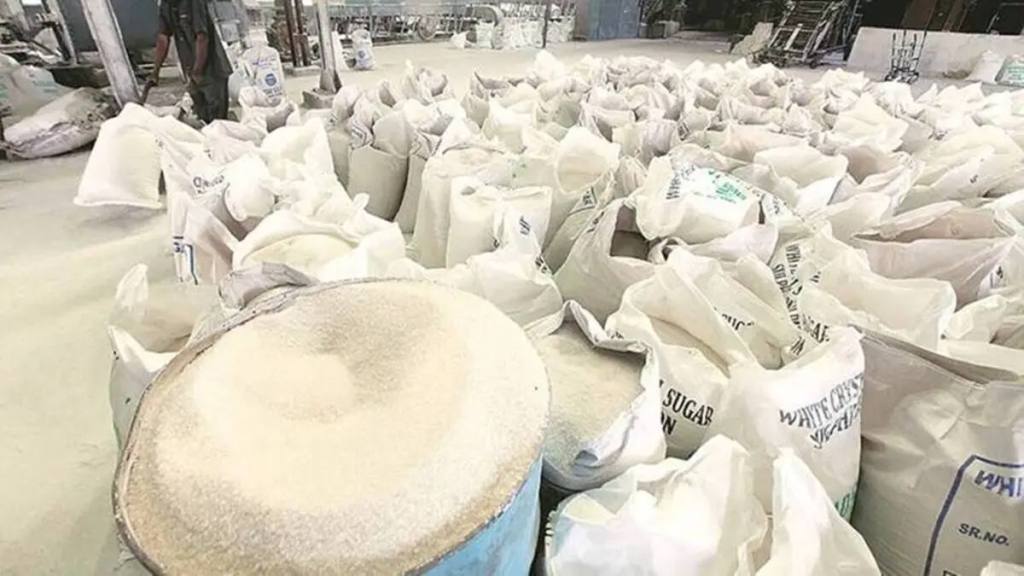

The opening stock of sugar with mills at the beginning of the new season (October–September, 2026-27) has declined to 3.75 million tonnes (MT), the lowest in over a decade, due to lower production, industry sources said. This heightens the prospect of re-imposition of a ban on sugar exports; the ban imposed on overseas shipments of the sweetener in May expired on Wednesday.
On October 1, 2025, carry-forward stocks of the sweetener were 5 MT.
Opening stock is maintained to meet supplies in the October–November period as sugarcane crushing commences by the end of October.
Sugar production declined by 27% to around 28.1 MT in the 2025-26 season from 35.8 MT in 2021-22. Consumption increased marginally, according to industry estimates, to 28.7 MT from 27.3 MT over the last five seasons.
To curb the spike in prices, the government last month allowed duty-free imports of 1 MT of raw sugar for the first time in the last decade to augment supplies, alongside initiating a wider crackdown on hoarding and capping sugar inventories held by bulk industries.
After allowing exports of around 1 MT of sugar last year, in May 2026, the government imposed a ban on sweetener shipment until September 30, 2026. Sources said the ban on sweetener exports is likely to continue.
Last month, the government attributed the sharp spike in sugar prices to factors including a fall in domestic production due to weather-related damages, a demand spike ahead of the festive season, high global prices and hoarding by some producers.
The sugar industry stated that the recent price spike resulted from speculative buying by traders and bulk consumers, as well as lower-than-estimated production, while maintaining that there is no sweetener shortage.
The average retail price of sugar stood at Rs 56.02 a kg on Wednesday, up 20% year-over-year. However prices have declined by 12% month-on-month, according to the Department of Consumer Affairs’ price monitoring cell.
Indian Sugar and Bio-Energy Manufacturers Association (ISMA) stated that gross sugar production, excluding diversion to ethanol, was revised to around 30.9 MT from the initial estimate of 34.5 MT, mainly due to weather-related effects, lower cane yield and lower recovery, including a higher crush rate in Maharashtra and red-rot-related varietal issues in Uttar Pradesh, an official said.
The government ruled out attributing the recent increase in sugar prices to the diversion of sugar for ethanol production. “The share of sugar diverted for ethanol has declined from around 12% in 2022-23 to around 9% in 2025-26. Moreover, nearly three-fourths of the ethanol produced in the country now comes from grains, particularly maize,” according to an official note.