


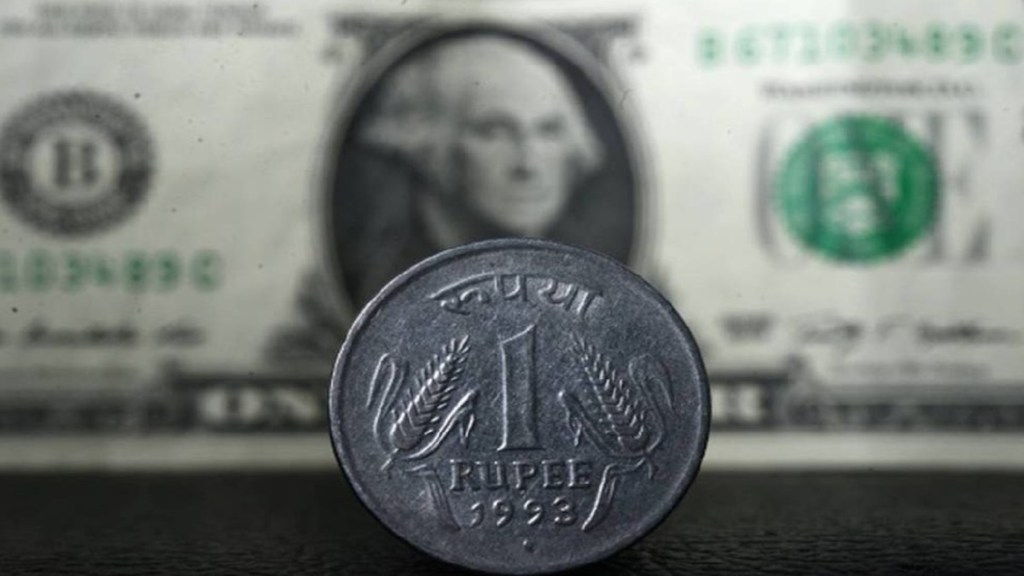

The rupee weakened to near its record low on Wednesday despite the Reserve Bank of India’s 25-basis-point rate hike, as elevated crude oil prices, a strong dollar and persistent foreign portfolio outflows outweighed the impact of monetary tightening.
The domestic currency closed at 96.78 against the dollar, down 34 paise from its previous close and within striking distance of its record low of 96.82 touched in May.
The RBI’s decision to raise the repo rate to 5.5% and a shift in stance to “calibrated tightening”, was seen as less aggressive than what some sections of the market had expected.
“The shift to ‘calibrated tightening’ signalled a less hawkish stance than markets had expected, suggesting that the rate-hike cycle is likely to be shallow. This has weighed on the rupee, as it is insufficient to support the currency,” said Anil Kumar Bhansali, head of treasury at Finrex Treasury Advisors.
The rupee has declined 7.7% so far this calendar year, making it the worst-performing Asian currency.
“The market may be looking for stronger liquidity tightening or direct FX intervention rather than just a rate hike,” said Kunal Sodhani, treasury head at Shinhan Bank.
Pressure on the currency has intensified amid crude oil prices above $100 a barrel, elevated global bond yields and continued foreign portfolio investor outflows. Oil prices rose 1.37% to $101.96 a barrel on Wednesday. Currency traders said the RBI likely intervened through dollar sales to contain excessive volatility.
Sodhani said the rate hike had largely been priced in, while a strong dollar, elevated crude prices, persistent FPI outflows and higher US yields continued to generate significant dollar demand.
“The weakening despite the rate hike and a tightening stance suggests that external factors are currently overpowering the positive impact of monetary policy,” he said.
Market participants expect the rupee to trade in the 96-97 range in the near term.
“Given that the RBI has revised its crude oil price assumption upward, it now expects inflation to remain elevated for longer. Higher crude prices would also translate into a larger import bill,” said a dealer at a state-owned bank.
Asked about the rupee at the post-policy press conference, RBI Governor Sanjay Malhotra said markets could be “quite irrational” in the short run. “It is only in the long run that they are able to find the right value,” he said, adding that the rupee may currently be undervalued.
Meanwhile, government bond yields rose after the policy announcement, with the benchmark 10-year yield climbing five basis points to 7.24%, its highest level in three years.
“Given that the policy outcome was largely in line with market expectations, we believe short-term rates are likely to remain stable, with adequate liquidity prevailing in the banking system. Long-term rates are likely to settle higher, with the 10-year G-sec expected to trade in the 7.20%-7.40% range,” said Amit Somani, deputy head–fixed income at Tata Asset Management.
Beyond monetary policy, global bond yields and geopolitical risks will continue to drive both short- and long-term domestic yields, he added.