


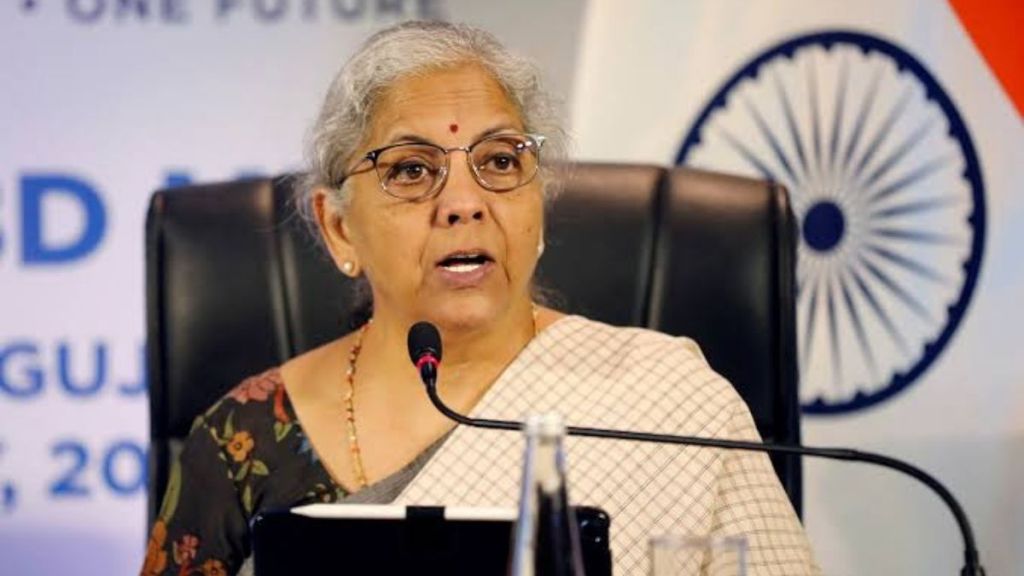

After reducing the number of tax slabs under the Goods and Services Tax (GST) last year, the upcoming GST Council meeting will focus “only on process reforms,” Finance Minister Nirmala Sitharaman said on Wednesday.
“GST 2.0 focused on rate rationalisation and also worked on process reforms. The process reform agenda was kept for the next meeting, which is now scheduled for the first week of October,” Sitharaman said at the International Tax Research and Analysis Foundation’s (ITRAF) 8th International Tax Conference in Bengaluru.
At the last Council meeting, held on September 3, 2025, the four GST slabs of 5%, 12%, 18%, and 28% were merged into a two-tier structure of 5% and 18%, along with a 40% rate for ultra-luxury and sin goods. These changes came into effect on September 22, 2025.
The next GST Council meeting is scheduled for October 7, where it expected to prioritise issues related to e-invoicing, litigation, and input tax credit (ITC). The Council can also take up the simplification in GST registration for businesses with tax credit of over Rs 2.5 lakh per month. In August, Central Board of Indirect Taxes (CBIC) Member Sanjay Mangal said that the central and state governments were working on a uniform circular for the registration of large businesses.
Sitharaman invited industry to submit specific representations on anomalies in the GST framework that the government may not have yet addressed.
The Central government will also focus on customs reforms, Sitharaman said. The government is committed to ensuring that India’s tax system continues to evolve with the economy, she added.
Several challenges exist for India’s growth and development path, and tax policy should not add to those challenges or become a deterrent to investment and innovation, Sitharaman said.
The finance minister asked tax professionals and industry bodies to move beyond demands for lower tax rates and exemptions, and instead asked them to identify tax provisions which should be removed. Sitharaman also called for continued dialogue between government, industry, and institutions.
Sitharaman also flagged the complexity of taxing the digital economy, including cryptocurrency.
The issue of taxing cryptocurrency remains under discussion with stakeholders in India and with other countries. The government currently taxes such transactions at source, and the tax is reconciled with the final tax liability, she said.
On a question about taxation of the space sector, Sitharaman said commercial operations should be subject to taxation. However, it would be ideal to take a more lenient approach towards taxing research and innovation in the space sector, the finance minister said.
Sitharaman said she is worried about the “negative commentary” around India’s growth story, and asked the industry to engage with “counterparts elsewhere” to get a sense of how challenging the environment is everywhere.
Thanks to the government’s steps, India is far better placed than other countries despite global challenges, which should give businesses confidence to invest more moving forward.
The next six months will be difficult for the economy because of looming tariff threats, the ongoing wars, and challenges to secure crude oil and fertiliser imports. India will navigate through all this so that people do not have to suffer, Sitharaman said.
Growth is always the government’s priority and investors all over the world are keen to invest in India, Sitharaman said.