


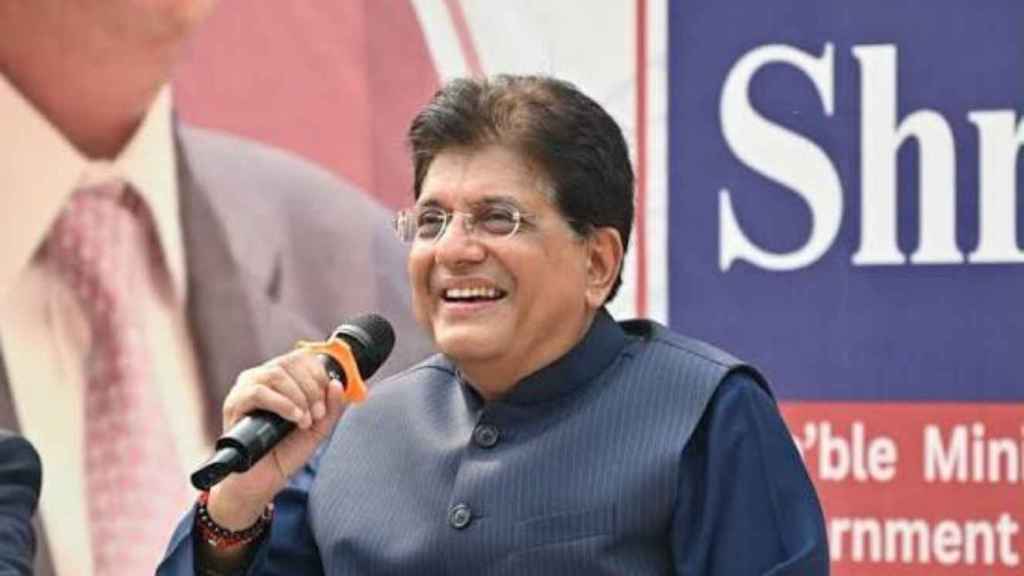

India will not allow genetically modified (GM) products into the country and will continue to keep its dairy sector closed to imports under free trade agreements (FTAs), Commerce and Industry Minister Piyush Goyal said on Tuesday, underlining that the government would not compromise on sensitive products and sectors.
He also said India was mindful of religious sensitivities associated with the use of animal-derived inputs in dairy production in foreign countries. Imported dairy products must carry certification to ensure that prohibited animal-derived ingredients, including calf-derived rennet, are not used in their manufacture.
Rennet is an enzyme used in cheese-making, traditionally obtained from the stomach lining of young calves.
“In fact, till date, we have never opened up dairy for anybody,” Goyal said while speaking at Kirori Mal College of Delhi University.
“We are very sensitive not to allow any GM products to come to India. And we have never allowed it and we’ll never allow it in the future,” he said.
The minister said India’s FTA strategy involved identifying sectors where the country could secure better market access for its exports while protecting sensitive domestic producers and products.
He asserted that India had not compromised on any such sensitive item in its trade negotiations, whether relating to farmers, fishermen or micro, small and medium enterprises (MSMEs).
On the export front, India is seeking preferential market access for textiles, processed foods, marine products, agricultural and horticultural produce, floriculture, footwear, leather, gems and jewellery, and pharmaceuticals.
Goyal said the government’s objective was to secure lower import duties for Indian products in partner markets compared with competing suppliers such as Indonesia, Malaysia, Vietnam, China and the Philippines.
These sectors constituted India’s offensive interests in trade negotiations, where domestic producers had pricing and quality advantages and could expand exports with preferential access, he said.
The minister said India was particularly sensitive about opening up certain agricultural products and marine items such as shrimp, where domestic producers had significant interests.
The broader objective of FTAs, he said, was to unlock export markets and generate employment and business opportunities without compromising the interests of domestic stakeholders.
“Our effort is to unlock new opportunities, new employment opportunities, new job opportunities, new opportunities for our produce where we are competitive and where our larger part of India, our MSMEs, our agricultural farmers, everybody can benefit in a big way,” he said.