


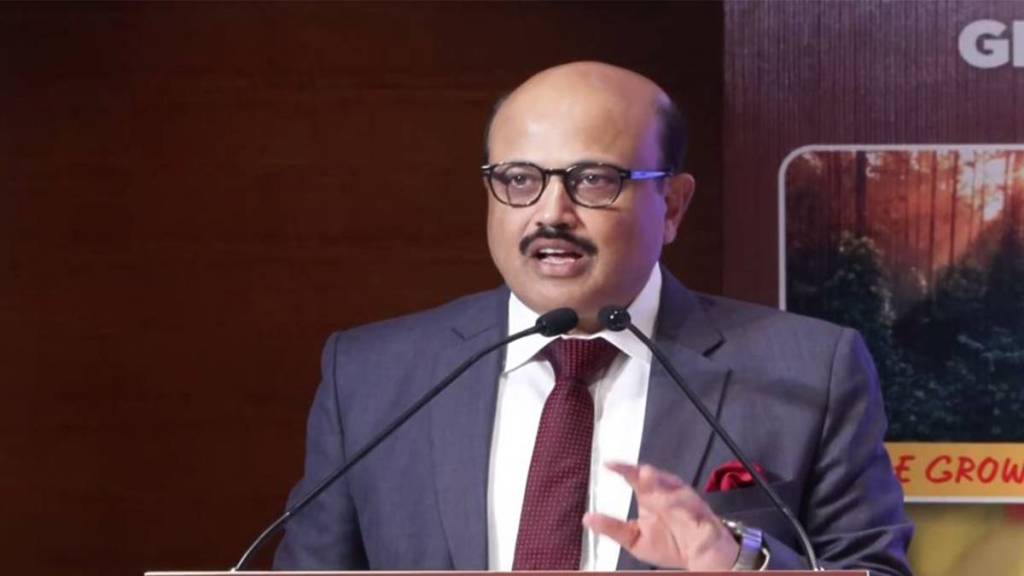

Commerce Secretary Rajesh Agrawal said on Thursday that new-generation free trade agreements (FTAs) aim to give investors greater predictability and confidence to set up or expand operations in India, while integrating the country more deeply into global supply chains.
“Investments need predictability,” he said, stressing that companies operating in global value chains need certainty on tariffs, trade procedures and the movement of goods across markets.
He added that modern FTAs provide a stable framework for companies to plan sourcing, production and investment decisions.
“Because from India, you can invest in a global supply chain, yet you can access markets in India, which is a rising market,” Agrawal said while addressing an event organised by the Public Affairs Forum of India.
Some of the FTAs signed by India also carry investment commitments. The Trade and Economic Partnership Agreement (TEPA) with the four-member European Free Trade Association (EFTA), which came into force on October 1 last year, includes a $100-billion investment commitment over 15 years. The India-New Zealand FTA, which comes into force on October 20, carries an investment commitment of $20 billion over 15 years.
Agrawal said predictable tariff reductions under FTAs could lower costs and improve the global competitiveness of Indian products.
He cited textiles as an example, saying that if an Indian textile product facing a 12% duty in the UK market gets duty-free access under the India-UK FTA, the tariff reduction would improve returns and competitiveness.
India’s FTA strategy, he said, was based on leveraging the comparative advantages and strengths of partner economies, with both sides seeking to provide what the other needs.
The secretary also said the role of FTAs had become more important as global trade was being reshaped by geopolitical tensions, supply-chain disruptions and the lessons of the Covid-19 pandemic.
“The core will remain a comparative advantage and unique strengths of the economy,” Agrawal said, while noting that resilience, multiple sourcing and domestic manufacturing capacity had emerged as additional drivers of trade.
The pandemic demonstrated that relying solely on the most efficient producer could leave companies vulnerable to disruptions, he said. Countries and businesses were therefore increasingly diversifying suppliers, strengthening domestic manufacturing ecosystems and building greater resilience into their supply chains.
FTAs can also help Indian exporters diversify markets and reduce dependence on individual destinations, Agrawal said. An exporter serving one geography could potentially leverage the same supply chain to access other markets covered by India’s trade agreements.
“Time is also a cost,” Agrawal said, adding that the Commerce Department was moving towards providing most services online with minimal physical interface.
Improving cost competitiveness and ease of doing business would remain an ongoing priority as global trade continued to evolve, he said