


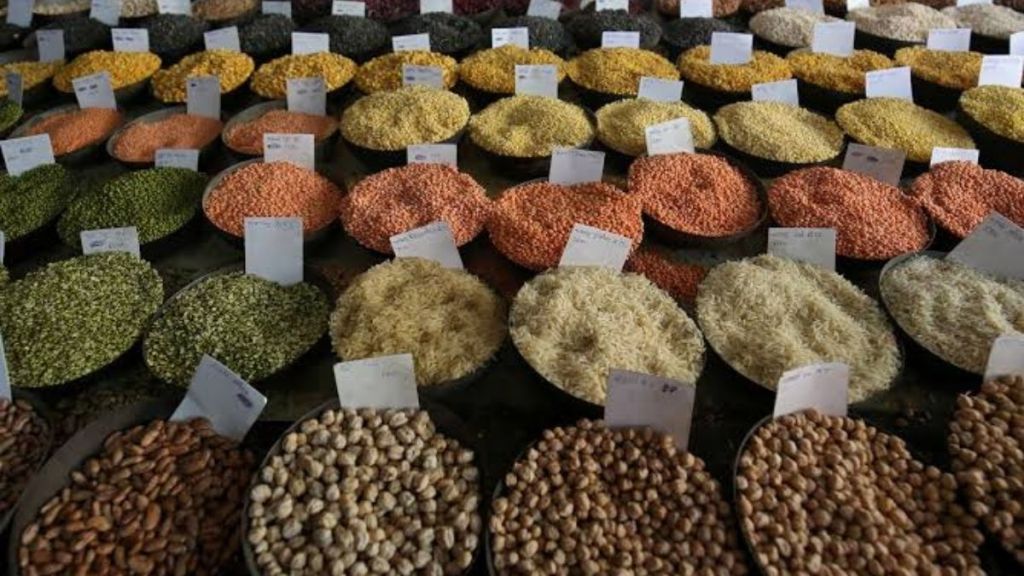

Mandi prices of mustard and gram, major rabi crops, are currently ruling significantly higher than the minimum support price (MSP) announced by the government for the 2027-28 marketing season (April-June), keeping concerns over food inflation alive.
Trade sources said higher global prices of edible oils and pulses have pushed up domestic market prices for these commodities ahead of winter crop sowing.
In Bharatpur, Rajasthan, a major trading centre, farmers are currently selling mustard from the previous season at over Rs 8000/quintal, 21% more than the MSP of Rs 6613/quintal announced for the next marketing season.
“The sowing of mustard is likely to start soon; farmers have been realising far higher prices than what the government has offered through MSP,” Roop Singh, CEO, Uttan Mustard Producer Company, a Bharatpur-based farmers’ collective, told FE. In the previous season, the government agencies could not purchase oilseeds under the price support scheme because market prices were significantly above MSP.
High global prices of imported crude oils – palm, soybean and sunflower – have pushed up domestic demand for oilseeds as India imports about 58% of its annual oil consumption.
Mandi prices of gram, which has a 50% share in the country’s pulses production, are ruling in the range of Rs 7000/quintal – Rs 7200/quintal against the announced MSP of Rs 5,958/quintal for next season, an increase of 17%. “This increased MSP of rabi crops will ensure remunerative prices for the farmers and incentivise crop diversification,” an official note stated.
Traders have urged the offloading of close to 2 million tonnes (MT) of chana held by government agencies – Nafed and NCCF – as buffer stock to bring down current market prices. The sowing of mustard and chana will commence by the end of October.
The MSP of wheat, a major rabi crop, has been raised by just Rs 25/quintal or less than 1%, to Rs 2,610/quintal for the 2026-27 season from Rs 2585/quintal in the previous season. Sources said the modest MSP hike for wheat is due to surplus grain stock and the need to boost oilseeds and pulses production.
The farmer group Samyukta Kisan Morcha has criticised the government for a marginal hike in the remunerative price offered to farmers.
Market prices of wheat at Kota, Rajasthan, a major hub of wholesale trade, are currently in the range of Rs 2550/quintal to Rs 2800/quintal. The grain prices are likely to soften as the government plans to launch an open market sale scheme for wheat for bulk buyers from the surplus stock of grain held by the Food Corporation of India (FCI) shortly.
The government has fixed the reserve price of Rs 2600/quintal and Rs 2585/quintal for Fair and Average Quality and under-Relaxed Specifications of wheat for the current fiscal year, respectively. At present, the FCI has over 46.76 MT of wheat as the central pool stock against a buffer and strategic reserve norm of 20.52 MT for October 1.
“Wheat remunerative prices have been hiked as per market conditions and supplies, as the government holds surplus grain stock currently,” said Dharmendra Jain, President, Roller Flour Millers Federation of India. Rabi crops are sown during October and November, and the produce is harvested from February, depending on the maturity period of the crop.