


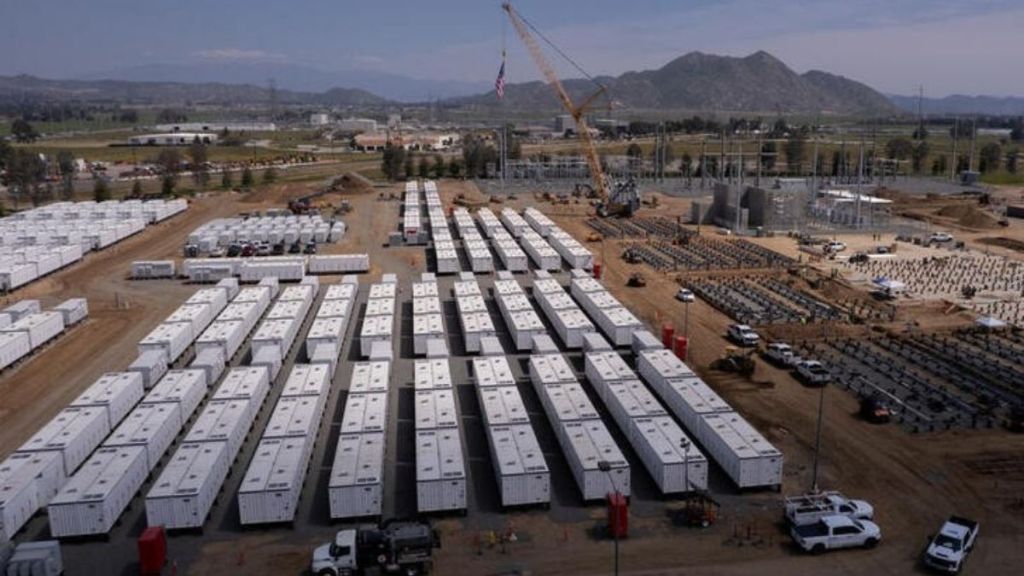

India’s renewable energy battery storage capacity is set to jump to 45-50 GWh over FY27 and FY28 from barely 1 GWh at the end of FY26, but nearly 8-9 GWh of projects face a higher risk of delay as battery prices rise and developers grapple with thin returns and limited execution experience, Crisil Ratings said.
Overall, 50-55 GWh of BESS capacity is scheduled for commissioning over the two fiscals. Of this, around 40 GWh has been awarded through government-led auctions with distribution utilities as buyers, while another 10-15 GWh is expected to serve commercial and industrial consumers or the merchant market.
The storage push has accelerated as renewable energy’s share rose to around 39% of India’s installed power capacity and 15% of generation in FY26. Battery systems can store surplus solar electricity during high-generation hours and release it during the evening peak, when solar output is negligible.
Projects with BESS made up nearly 40% of total renewable capacity auctioned in FY26, against just about 5% in FY24 and FY25.
However, Crisil said around 12 GWh, or 21% of under-construction capacity, faces weak return potential after battery prices rebounded in 2026 even as developers had bid aggressively on expectations of continued price declines.
“Nearly 21% of the under-construction BESS capacity, equivalent to about 12 GWh, faces weak return potential which may lead to some delays in commissioning,” said Manish Gupta, Senior Director and Deputy Chief Ratings Officer, Crisil Ratings.
The lowest stationary-storage battery price range rising to $70-75/kWh in 2026 from $50-55/kWh in 2025, while the average tariff declined to Rs 2.12 lakh per MW per month from Rs 2.30 lakh.
Crisil said projects with tariffs of around Rs 2.2-2.5 lakh per MW per month and battery prices of $55-65/kWh could generate a typical internal rate of return of 12-14%.
“Approximately 8-9 GWh out of this 12 GWh… is exposed to an additional challenge: limited implementation experience among project sponsors,” said Ankit Hakhu, Director, Crisil Ratings. Dependence on overseas suppliers for batteries and critical components could further raise procurement and execution risks, he added.