


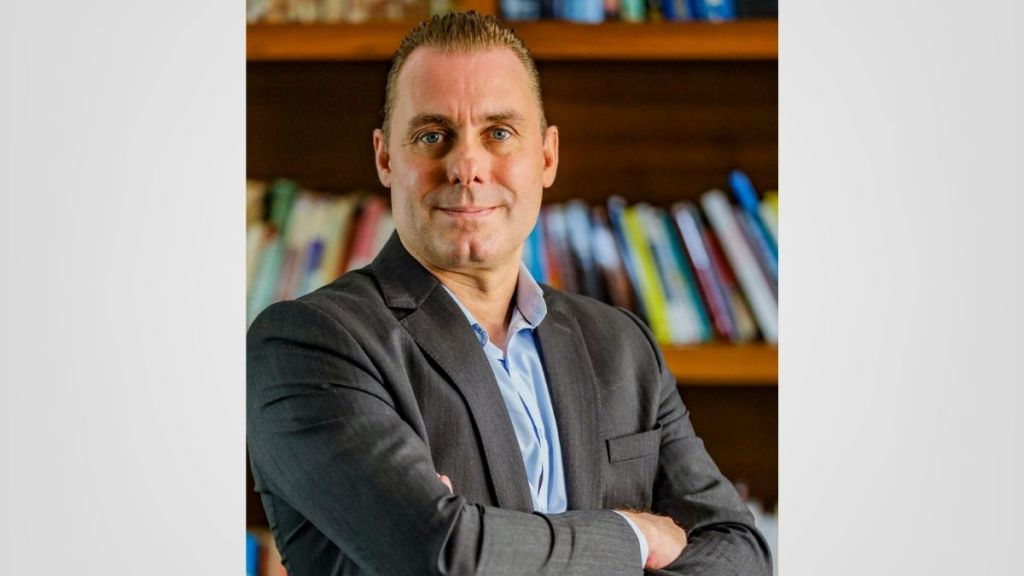

Global biotech major Bayer has been a major player in India’s hybrid seeds business, particularly in cotton, corn and vegetables, and the company is associated with over 30 million smallholder farmers. Simon Wiebusch, managing director and CEO, Bayer Crop Science spoke to Sandip Das on the need to boost farm incomes in the country.
Q. On the regulatory aspects of genetically modified (GM) crops, no new cotton seed varieties have been approved for commercial cultivation in the last two decades. What is your view?
India has an effective regulatory system. I know there’s always lot of discussions around whether it is fast enough or timely. It is not really predictable especially in terms of timing. When you have topics such as genetically modified (GM) organisms getting caught up in court cases, and it is not clear whether there is a route to market, it becomes very, very hard to commit to investing in something which I personally believe is very important for the agriculture sector. I don’t think an Indian farmer should be deprived of any technology that is out there to make them successful. We need advances in cotton productivity.
Q: What are the key challenges facing the Indian agricultural system?
India is one of the few countries around the world with an accelerated agricultural potential. The difficulty we find in India is that there are a lot of ingrained systems. Most crop rotation is based on rice and wheat, especially in Punjab. We know that this is not the ideal crop rotation given the weather conditions or water availability.
In the agri-ecosystems, we see a more concerted effort to move towards direct-seeded rice (DSR), for example. If you look at DSR, in Punjab you could move to a very different cropping system, where you grow pulses or corn ( maize). All of a sudden, you have three crops. Pulses are also a crop that Indian imports in large quantities. We need to look at crop systems that help reduce water usage, such as direct-seeded rice, along with adding pulses and improving fertiliser usage. Farmers are encouraged to grow corn or maize which is becoming a very important crop.
Q: What is Bayer’s role in supporting farmers to improve their agri-system?
Our most prominent approach is Better Life Farming (BLF), where we have centres primarily in less-developed areas of the country. We are trying to work with farmers and help them improve the agri-ecosystem and link them to the food value chain. Launched in 2018, the BLF alliance is a long-term tie-up between Bayer, International Finance Corporation, Netafim, and Yara. Thes centres provide knowledge transfer on the latest technologies in seeds, crop protection, crop nutrition, drop irrigation, soil management, financial literacy, etc. It gives farmers access to the right agronomy to produce what somebody ideally wants and acts as an intermediary to support the food value chain’s expansion. Our network of BLF centers in India is about 1,600 at this point.
Q: What is the zonal spread of these BLF centres?
These centres are currently functioning primarily in eastern states, including Odisha, Jharkhand, and eastern Uttar Pradesh. We have food value-chain partnerships in Gujarat on potatoes. We are also working with a number of dairies on silage. I think the Better Life Farming concept is the most comprehensive in terms of really trying to move the ecosystem of a farming community towards greater prosperity.
Q: What are the company’s plans for introducing more hybrid seed varieties?
We would be focusing on hybrids because we believe that is what adds the most value to agriculture. Hybrid rice still accounts for about 7-8% of the total rice-growing area in India. What we have been doing, especially over the last eight years, is really employing what you heard about here as well—precision breeding techniques for hybrid rice. In the past, we have been very traditional in our breeding approach. We are now launching the first hybrid from this new breeding pipeline. We are quite excited about being able to offer farmers seeds that either fit their taste profile better or offer other benefits. Hybrids are adaptable and, especially when you look at direct seeding, they can withstand water shortages better.
(The writer was in Huxley on invitation from Bayer)