


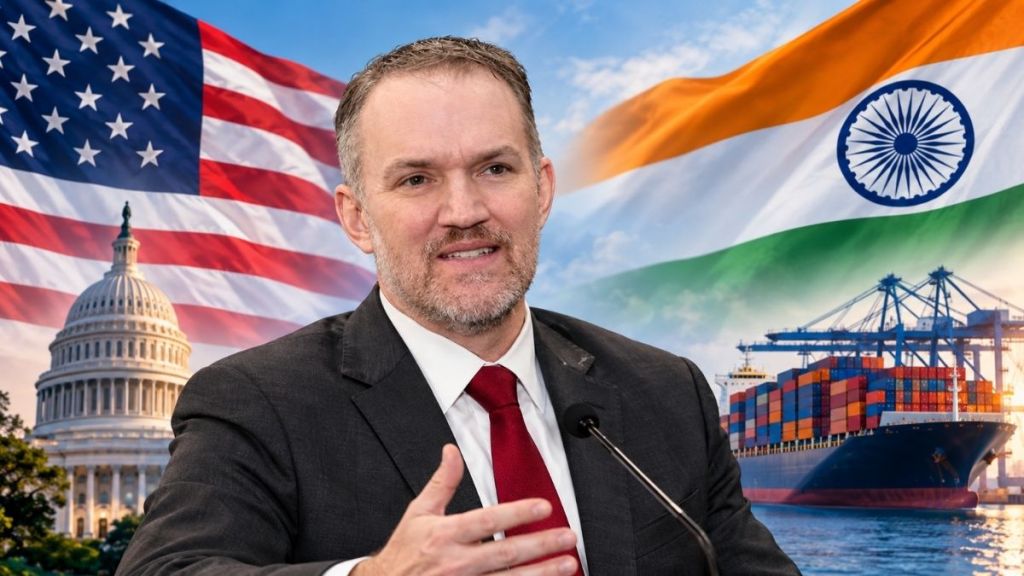

US Trade Representative Jamieson Greer on Thursday cautioned against expectations of an early India-US trade deal, saying an interim agreement is “not imminent” despite negotiations being in their final stretch and the two sides having identified the remaining sticking points.
“We are in the short strokes. So I think we’re toward the end of it,” Greer said, but added: “At the same time I don’t think there’s something imminent.”
The statement came a day after Greer held talks with Commerce and Industry Minister Piyush Goyal on the sidelines of the G20 Trade Ministers’ Meeting in Milwaukee, with both sides pushing for an interim agreement under the broader India-US Bilateral Trade Agreement (BTA).
“We truly have identified the universe of items that are sticking points. We are working diligently toward them,” Greer said, describing his conversation with Goyal as “very constructive”.
“Minister Goyal and myself, our staff is meeting right now. Since they are in the country and we are here, we are continually trying to finish the trade deal with India,” he said.
The comments followed Goyal’s statement after Wednesday’s meeting that the two sides had a “productive discussion” towards the “early conclusion of a mutually beneficial interim agreement” under the BTA.
Greer’s assessment also followed a phone conversation between Prime Minister Narendra Modi and US President Donald Trump. The two leaders reviewed bilateral cooperation, including trade, defence, energy and critical technologies, with Greer describing the call as “very constructive”. He indicated that Modi and Trump could speak again soon to assess progress.
“My sense is that the president, the prime minister may have another call very soon on this just to assess progress and where we are,” Greer said.
The negotiations are taking place against the backdrop of uncertainty over possible US action concerning countries buying Russian energy. President Trump signed the Lindsey O. Graham Sanctioning Russia and Iran Act of 2026 into law on September 18, providing for possible tariffs of up to 100% on imports from countries meeting specified criteria relating to purchases of Russian crude oil or natural gas.
Other than the uncertainty around Russian oil related tariffs, India is facing 10% additional tariffs under Section 301 of the Trade Act for allowing use of inputs made with forced labour for goods manufactured for export. There is another Section 301 probe that is ongoing on excess industrial production capacities fuelled by subsidies that could bring another layer of tariffs.
India, a major buyer of Russian crude, has been closely watching the implications of the legislation for its trade relationship with Washington.
Goyal is in the US from September 29 to October 5 for the G20 Trade Ministers’ Meeting and bilateral discussions.