


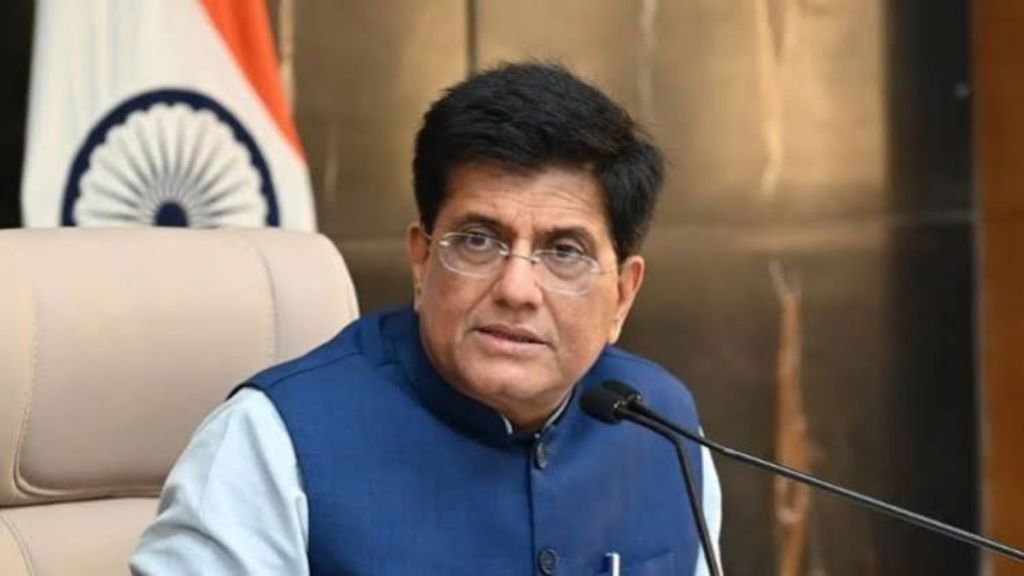

Commerce and Industry Minister Piyush Goyal on Wednesday expressed confidence that India-US relations would strengthen irrespective of changes in political thinking as it draws its strength from economic, political and security imperatives.
Speaking at the Bloomberg New Economy Forum in New Delhi, Goyal said bilateral ties extend well beyond trade to defence, technology, critical minerals and people-to-people engagement. He also sought to allay concerns that closer India-US ties could adversely affect other countries, describing the relationship as a “safe” one.
His remarks come amid uncertainty over the India-US trade agreement and frequent moves in the US to keep tariff uncertainty festering, whether through Section 301 investigations or the Sanctioning Russia and Iran Act that empowers the US President to impose 100% tariffs on buyers of fuel from these countries.
External Affairs Minister S Jaishankar, speaking at the same forum a day earlier, said trade negotiations were “pretty far advanced” and that both sides were working to resolve outstanding issues. “When countries negotiate with an economy like the US, obviously one part is what you work out between yourselves and the US and another part is how you fare vis-a-vis the competitive economies. That part is not entirely clear because not everybody has worked out a deal,” he said.
Jaishankar also indicated that the talks were moving in the right direction but declined to disclose details.
Goyal said the US remained India’s largest trading partner and was likely to retain that position in the coming years.
Open to China, but on fair terms
In a separate exchange, Goyal said India is working to develop a relationship with China once again but “the last word has not been scripted on this journey”.
“We are open to all countries around the world as long as we get a fair deal, as long as we are ensured continuity in the engagement and as long as the geopolitical situation does not deteriorate,” he said.
At the onset of COVID in 2020 India put all investments from countries sharing a land border on the government approval route to prevent opportunistic takeovers of companies when their stock market valuations fell. Later border clashes in Galwan valley in Ladakh led to further deterioration in ties.
India banned 250 Chinese mobile applications and restricted participation of Chinese companies in government procurement and public infrastructure tenders and tightened visa processes.
As border areas started settling down in 2024, the relationship is moving towards normalcy. Earlier this year the government allowed overseas companies with a Chinese stake of less than 10% to invest in India through an automatic route. It has also created a fast-track mechanism that would approve proposals within 60 days for Chinese investment in capital goods, electronic capital goods, electronic components, polysilicon and ingot-wafer. However, these investments must be in joint ventures with Indian companies, which would have to continue to hold a majority stake.
Jaishankar had on Tuesday said India-China relations were moving towards normalcy as peace and tranquillity were restored along the border, but flagged a severely tilted bilateral trade balance and the lack of a level playing field for Indian businesses in China.