


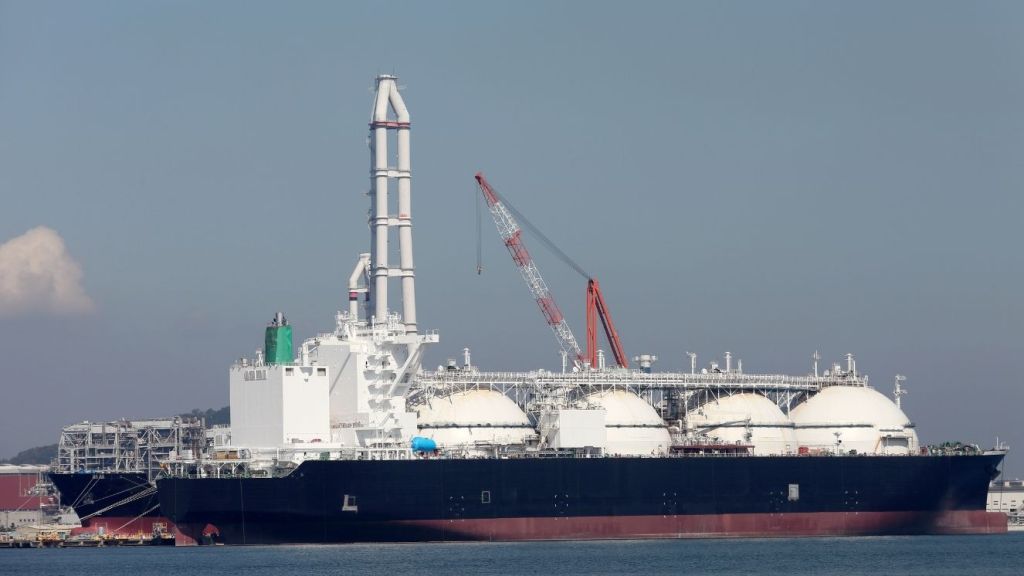

India paid an additional $1.6 billion or 23% more for importing natural gas in the first half of FY27 despite purchasing just 4.4% more of the hydrocarbon shipped in liquid form, as the West Asia conflict pushed up prices and disrupted supplies.
India’s LNG import bill rose to $8.5 billion during April-September from $6.9 billion a year earlier, according to Petroleum Planning and Analysis Cell (PPAC) data. The increase comes at a time when domestic gas production is falling and more than half of the country’s consumption is being met through imports.
According to energy consultancy Rystad Energy, South Asia’s LNG import costs are projected to reach $23.1 billion this year, against $17.3 billion estimated before the conflict. The increase is considerably higher than the projected 18% rise in global LNG spending.
The pressure is already visible in India’s import figures. LNG purchases increased to 18,189 million standard cubic metres (MMSCM) during April-September from 17,414 MMSCM a year earlier. In September alone, the country spent around $1.2 billion despite import volumes falling 8.5% to 2,957 MMSCM.
Meanwhile, domestic gas production declined 4.4% to 16,804 MMSCM in the first half, pushing import dependence to 52.3% from 50.1%. Overall consumption remained almost unchanged at 34,769 MMSCM.
Rystad estimates that global LNG importers will spend at least $39 billion more in 2026 despite purchasing 60.7 million tonnes less gas. The combined import bill could reach $256.3 billion, compared with $217.8 billion before the conflict.
The projections assume that LNG supplies from Qatar and the UAE remain unavailable from March through December 2026 because of disruptions through the Strait of Hormuz.
South Asian buyers are responding mainly by reducing imports, with Pakistan cutting purchases more sharply than India, the consultancy said.
Europe faces the largest increase in absolute spending. Its LNG bill is projected to rise $12 billion to $79 billion, despite demand falling by 24 million tonnes. The region could lose 20.6 million tonnes of the 24.7 million tonnes of Qatari LNG originally scheduled for delivery this year.
East Asia, however, is relatively better placed, with import costs projected to increase just 9.7% to $104.6 billion from $95.3 billion.
The difference lies largely in how gas is purchased. Europe buys around 65% of its LNG on the spot market, where prices fluctuate with supply and demand. In East Asia, spot purchases account for only 14.5% of imports.
Moreover, 82% of East Asia’s long-term LNG contracts are linked to oil prices. These contracts have become around 28% costlier, compared with a 72% increase for contracts linked to gas trading hubs and spot prices. Europe’s average LNG price has risen 47%.
Elsewhere, Southeast Asia’s import costs are projected to increase to $22.3 billion from $17.9 billion, Africa’s to $10.7 billion from $3.5 billion and South America’s to $7.9 billion from $5.4 billion. The Middle East’s bill is expected to fall to $8.6 billion from $11.3 billion as demand declines.
Christoph Halser, senior analyst at Rystad Energy, said the conflict had exposed differences in countries’ ability to manage rising gas prices and supply disruptions.
“Ultimately, when cargoes can disappear overnight, the resilience of supply matters as much as the price paid for it,” Halser said.
The consultancy stressed the need to diversify both suppliers and delivery routes. While US LNG shipments to Europe can avoid the Strait of Hormuz, shipments to Asia may face longer voyages or Panama Canal constraints, making Australian and Canadian Pacific supplies important alternatives.